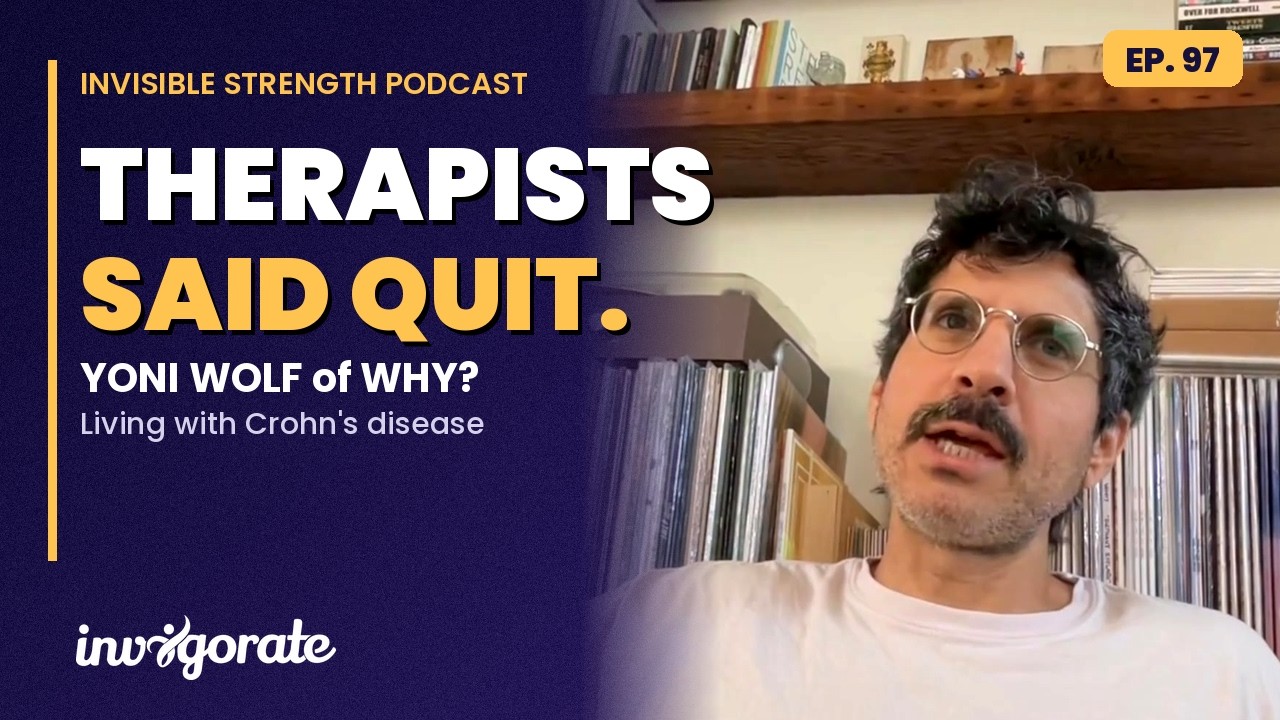
EP. 97: How Yoni Wolf of WHY? Keeps Making Music With Crohn’s Disease

Episode 97 · Invisible Strength Podcast

How Yoni Wolf of WHY? Keeps Making Music With Crohn’s Disease

October 28, 2026 · Hosts: Karin Wagner & Chris Burton
▶ Listen on Spotify

About This Episode

If you live with a chronic illness and have a creative dream, you’ve probably asked yourself at some point whether your body will let you keep chasing it. Yoni Wolf has asked himself that question for most of his adult life. He’s the songwriter and driving force behind the band WHY?, and he has lived with Crohn’s disease for almost 20 years. On this episode of Invisible Strength, he sits down with Karin Wagner and Chris Burton to talk about touring, flares, and why he never stopped, even after therapists told him to quit.

Key Takeaways

  • Yoni got sick in his late 20s with no health insurance, moved back home to Cincinnati, and spent years in trial and error with diet, doctors and biologics.
  • He has kept writing, recording and touring through flares, food poisoning, the mumps in Stockholm, and a broken hand before a festival show for 10,000 people.
  • Songwriting is how he processes his illness. He made a whole album, Mumps, Etc., about it.
  • Living with Crohn’s made him softer and more patient with the people around him.
  • His advice for anyone with a creative dream: there is no shortcut. It comes down to effort.

Getting sick with no safety net

Yoni grew up in Cincinnati as “mostly a drawing kid” before music took over. He moved to California, co-founded the record label Anticon, and spent about a decade there. Then, in his late 20s, he got sick. He had no health insurance, so he moved back in with his parents to figure things out.

What followed will sound familiar to a lot of our listeners: a long stretch of guessing. He cut out hard liquor, then alcohol, then wondered about coffee and spicy food. “I didn’t have insurance, so I didn’t go to the doctor,” he told us. “It was just a long, protracted period of trying to figure out on my own what was going on, and failing.” Even once he did start seeing doctors, answers didn’t come quickly.

“Is my music career over?”

When Crohn’s first hit, Yoni wondered whether his career was finished. He laughs about it now, because that fear never fully went away. He still finishes a record and thinks, “All right, that’s it.” Instead of hiding the hard parts, though, he put them into the work. Mumps, Etc. is about his illness, and on his Substack, Wet Paint, he shares rough demos and works in progress.

Touring with an unpredictable gut takes planning. Yoni shared some of the stories he’s survived on the road, and he meets them with a dark sense of humor: “There’s no point in being morose. It’s life, and life only.”

“You don’t freaking quit”

The moment that stayed with us most came when Karin asked what invisible strength means to him. “I wake up a lot of mornings and I’m like, I don’t want to do this today,” Yoni said. “But after all these years, I feel like I’ve been relentless. If I step back, it’s like, man, you don’t freaking quit. I could have. I’ve had therapists tell me to quit.”

That’s what invisible strength looks like. It isn’t the absence of hard days. It’s choosing, again and again, to keep making the thing that matters to you.

A softer heart, and no magic

Twenty years in, Yoni says living with Crohn’s has changed how he treats people. He used to be “really pushy and specific” in rehearsals, and now he feels softer and lets people do their thing more.

He’s also refreshingly honest about what a creative career takes. “If you’re really trying to express yourself in ways that are a little more atypical, or a little rough around the edges, there is no magic,” he said. “It’s about putting the effort in.”

What’s next for Yoni

Yoni’s 2008 album Alopecia is getting an 18th-anniversary vinyl reissue, and WHY?’s new album, Oh Golly / Yes Lord, comes out October 30, 2026. Follow him at @yoniwolf on all socials, find WHY? at whywithaquestionmark.com, and read Wet Paint at yoniwolf.substack.com.

Notable Quotes

“You don’t freaking quit. I could have. I’ve had therapists tell me to quit.”
“There’s no point in being morose. It’s life, and life only.”
“There is no magic. It’s about putting the effort in.”

Episode Chapters

  • 00:00 — Welcome: meet Yoni Wolf of WHY?
  • 01:07 — From drawing kid to recording artist
  • 02:56 — Getting sick in his late 20s and moving home
  • 03:38 — Breath control and performing
  • 04:40 — “Is my music career over?” Making Mumps, Etc.
  • 06:03 — Wet Paint: sharing rough demos
  • 07:46 — How music helps him process Crohn’s
  • 09:29 — Touring, planning ahead and flare-ups
  • 10:40 — Food poisoning, the mumps and a broken hand on tour
  • 14:15 — Looking back at Alopecia
  • 16:32 — Isolation, no insurance and years of trial and error
  • 19:37 — Unexpected gifts: a softer, bigger heart
  • 21:09 — How his relationships and music have changed
  • 22:15 — New album: Oh Golly / Yes Lord
  • 24:02 — What invisible strength means to Yoni
  • 25:21 — “There’s no magic” in a creative career
  • 26:42 — When therapists told him to quit
  • 28:21 — The song he wrote before his diagnosis
  • 29:07 — Advice for anyone newly diagnosed
  • 30:37 — What’s next and where to find Yoni

Watch the full episode above, or listen to Invisible Strength wherever you get your podcasts. Not sure where to start on your own journey? Take our free 2-minute Autoimmune Journey Quiz: https://invigorateyourjourney.com/quiz/

Never Miss a Story

Subscribe to Invisible Strength on YouTube, where new episodes go up every Wednesday, and join our email list for new episodes, free resources and support.

Join Our Email List →

Medical disclaimer: This post is for education and shared experiences only and is not medical advice. Yoni’s story is his personal experience. Always talk with your healthcare team before making changes to your treatment, diet or lifestyle.
EP. 96: MS Took Her Ability to Walk in 6 Months: Bobbi’s Multiple Sclerosis Story

Episode 96 · Invisible Strength Podcast

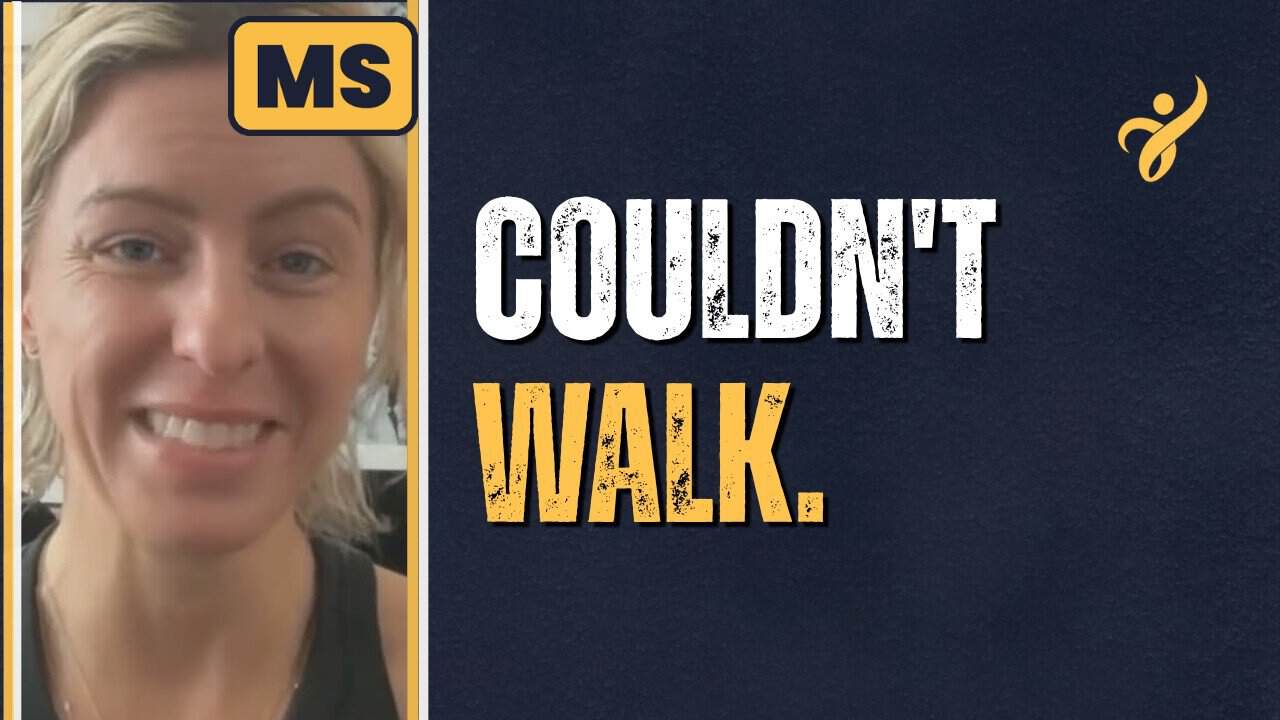
MS Took Her Ability to Walk in 6 Months: Bobbi’s Multiple Sclerosis Story

October 20, 2026 · Hosts: Karin Wagner & Chris Burton
▶ Listen on Spotify

About This Episode

What do you do when every test comes back “normal” and your body is clearly telling you it isn’t? At 38, Bobbi woke up unable to use her leg. Within six months of her first multiple sclerosis symptoms, she couldn’t walk or finish a sentence. On this episode of Invisible Strength, Karin talks with Bobbi, founder of the Healing Well Method and an integrative health practitioner, about the long road to an MS diagnosis, learning to advocate for herself, and the hope she holds onto now.

Key Takeaways

  • Bobbi’s MS symptoms escalated fast: she went from a healthy, very fit life to being unable to walk or talk in about six months.
  • She saw a neurologist over and over and had EEGs, EKGs and blood work, but struggled to get the MRI that finally confirmed MS.
  • Her self-advocacy started years earlier, at 20, when a cervical cancer diagnosis and a surprise pregnancy taught her to question what she was told.
  • She’s candid that some of the detox steps she tried made her sicker before things improved.
  • Her advice for anyone in the thick of it: surround yourself with people who believe you are healing.

Learning to question the first answer

Bobbi’s story with doctors started long before MS. At 20 she was diagnosed with cervical cancer and saw five doctors. Pre-op bloodwork showed she was 15 weeks pregnant, which she had been told would never happen. That experience planted something in her. Friends would say, “I really like my doctor, you should see my doctor,” and she began to realize she was allowed to look for another opinion.

“One day, I just woke up unable to walk”

Years of migraines came first. Then, one morning, everything changed. “One day I just woke up unable to walk,” Bobbi said. “I had excruciating pain from my hip to my pinky toe.” She and her husband wondered whether it was a side effect of her migraine medication.

What followed was months of tests that came back normal. “They did EEGs, EKGs, every test under the sun, all the blood work,” she said, “except for some reason I couldn’t get them to do an MRI.” She began blacking out mid-step and falling, and gave herself concussions because she couldn’t brace herself. An ER visit made things worse, not better. When she finally got the MRI, it confirmed multiple sclerosis. “Within six months, I went from living a perfectly healthy life to not being able to walk or talk.”

If you’re reading this from your own waiting room, Bobbi’s story is a reminder that persistence and asking specifically for the tests you need are part of advocacy.

When her daughter asked to pray over her

One of the most tender moments in this conversation is when Bobbi describes her daughter asking to pray over her. Watching her family see her struggle was heartbreaking. “I’ll take all the suffering and all the pain, but I do not want to see them suffer,” she said. That feeling is part of why she does the work she does now: “I want them to know that you can heal, and that even in the most devastating times, there is a light at the end of that tunnel.”

Searching for root causes, with honesty about setbacks

Bobbi talks about functional medicine, emotions and trauma, common food irritants, and the 21-day reset she uses. She’s also honest that not everything worked. Some detox steps made her sicker before she improved. These days, she tells people the first place she looks is digestion, and she shares the three daily habits she focuses on.

As always on Invisible Strength, this is one person’s lived experience. What helped Bobbi may not be right for you, so please bring any changes to your care team first.

Words for anyone in the thick of it

When Karin asked what she’d tell someone who doesn’t know what’s going to happen next, Bobbi didn’t hesitate: “Surround yourself with people who tell you you are healing. Tell yourself you are healing.”

Connect with Bobbi on Instagram at @holy.healing.mama or at thehealingwellmethod.com.

Notable Quotes

“One day I just woke up unable to walk.”
“Within six months, I went from living a perfectly healthy life to not being able to walk or talk.”
“Surround yourself with people who tell you you are healing. Tell yourself you are healing.”

Episode Chapters

  • 00:00 — Welcome & meet Bobbi
  • 00:36 — From MS diagnosis to integrative health
  • 03:08 — Functional medicine, emotions & trauma
  • 05:10 — Common food irritants & the 21-day reset
  • 07:08 — Stress, food fear & a mealtime ritual
  • 08:33 — Cervical cancer at 20
  • 10:25 — Five doctors, one surprise pregnancy
  • 13:16 — Learning to self-advocate
  • 14:18 — Years of migraines: early warning signs?
  • 17:05 — Waking up unable to walk
  • 19:12 — The ER visit that made things worse
  • 21:31 — Finally getting the MRI
  • 24:30 — Six months from healthy to unable to talk
  • 25:25 — Advice for anyone in the thick of it
  • 27:25 — When her daughter asked to pray over her
  • 29:20 — Searching for root causes
  • 30:55 — When detox made her sicker
  • 37:27 — Where she says to start: digestion
  • 41:03 — Three daily habits she focuses on
  • 44:00 — Faith, hope & not having to suffer
  • 45:36 — Where to find Bobbi

Free resource: Grab the free RESET workbook mentioned in this episode. It’s the same first step we walk clients through before coaching: https://invigorateyourjourney.com/reset-workbook/

Never Miss a Story

Subscribe to Invisible Strength on YouTube and join our email list for new episodes, free resources and support.

Join Our Email List →

Medical disclaimer: This post is for education and shared experiences only and is not medical advice. Bobbi’s story reflects her personal experience. Please work with your care team before changing treatment, diet or supplements.

EP. 95: Doctors Blamed Her Weight. It Was Lupus: Catisha’s Story

Episode 95 · Invisible Strength Podcast

Doctors Blamed Her Weight. It Was Lupus: Catisha’s Story

October 13, 2026 · Hosts: Karin Wagner & Chris Burton
▶ Listen on Spotify

About This Episode

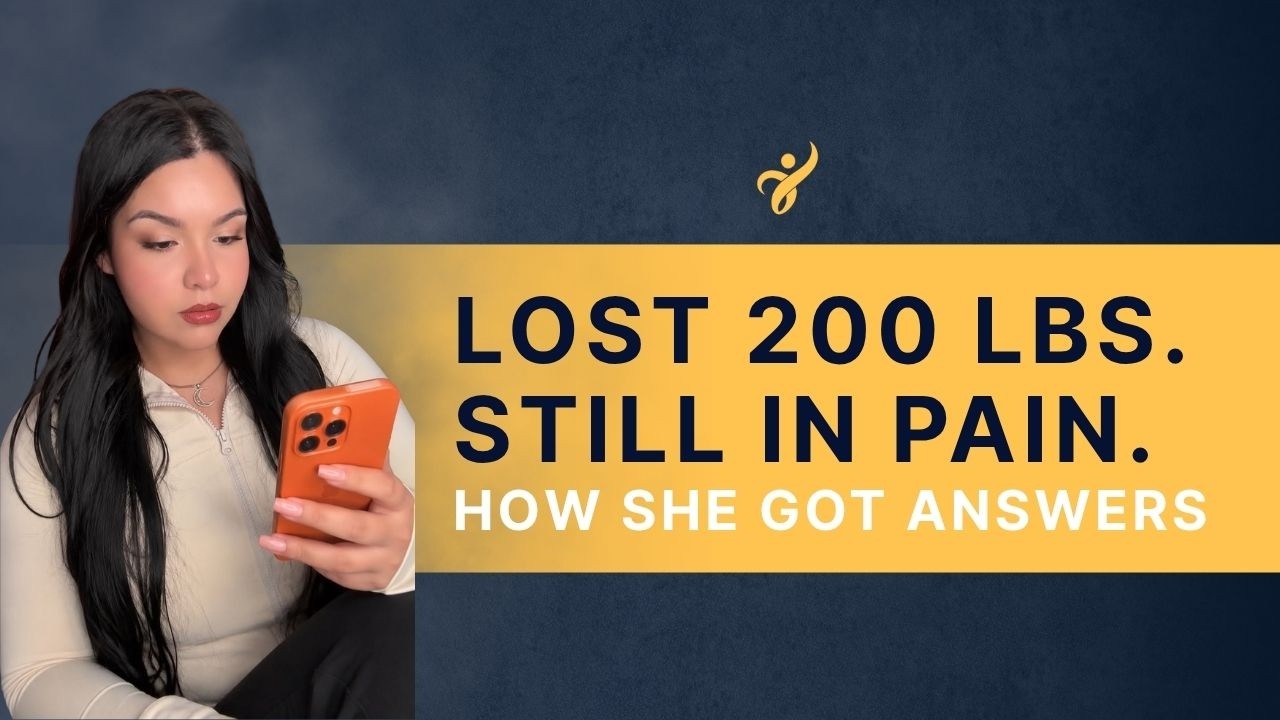
Weight stigma in healthcare is real, and it can delay a diagnosis for years. Catisha lost more than 200 pounds, and she was still in pain every day. When she finally got a referral to a rheumatologist, she was told her pain was about her weight. On this episode of Invisible Strength, Catisha shares how she kept advocating until she got answers, what losing her hair to lupus meant to her as a beauty creator, and how she’s learning to give herself grace.

Key Takeaways

  • Catisha’s pain was dismissed as a weight issue, even after she had lost more than 200 pounds.
  • She kept pushing for labs and testing, and that persistence led to her lupus diagnosis.
  • Losing more than half her hair was devastating, because her hair was a big part of how she saw herself.
  • She started over without speaking English, and later moved from culinary teacher to content creator.
  • For her, invisible strength includes resting without apologizing, and she’s still working on that.

“Lose 50 more pounds”

When Catisha finally saw a rheumatologist, she hoped for answers. Instead, she heard this: “You seem fine to me. I just think that your pain is related to obesity. I recommend you lose 50 more pounds.”

“I was shocked,” she told Karin. “How do you tell that to someone that has lost 200 pounds?” She was proud of what she had accomplished, and she loved being able to look in the mirror and like herself. “But my pain was real. And I just kept advocating for myself and told him, I want labs done.”

If you’ve ever had your symptoms explained away by your size, your age or your stress level, you’re not imagining it, and you’re allowed to ask for more.

Losing her hair as a beauty creator

Hair loss is a common lupus symptom, and for Catisha it hit hard. “Losing more than half of my hair has been extremely emotional, because hair is such a big part of how I see myself,” she said. Her hair used to be long and full. Now, seeing new growth has become something more. “To me it’s not just hair, it’s hope.”

She also shared what a doctor recently told her: give yourself grace, because with everything your body is going through, it could be much worse. Catisha shares the hair care routine she uses in the episode.

Grief, consistency and pain days

Catisha has been in pain every day since February, and she talks honestly about the grief of not remembering what her body used to feel like. She’s someone who is used to “go, go, go,” so the days she has to stay in bed feel terrible. She’s learning that rest is part of getting up the next day.

Starting over, again and again

This isn’t Catisha’s first reinvention. She started over without speaking English, and she moved from teaching culinary arts to creating content. That resilience shows up in how she talks about her illness, too: slowing down, watching the sunset, and doing the things she loves “just at a different pace.”

What invisible strength means to Catisha

“Invisible strength can be getting up and trying again when nobody knows how hard yesterday was,” she said. “It’s smiling while you’re hurting. It’s asking for help when you’re used to being so independent. It’s advocating for myself. It’s resting without apologizing.”

Follow Catisha at @catishadaneylix.

Notable Quotes

“Yes, it felt good to put on the clothes that I wanted to put on… but my pain was real.”
“To me it’s not just hair, it’s hope.”
“Invisible strength can be getting up and trying again when nobody knows how hard yesterday was.”

Episode Chapters

  • 00:00 — Welcome
  • 01:03 — Meet Catisha
  • 01:34 — Starting over without speaking English
  • 03:24 — Moving pain and the first warning signs
  • 05:32 — Self-advocacy and what acceptance really means
  • 07:22 — Losing her hair as a beauty creator
  • 11:17 — What consistency looks like on pain days
  • 13:15 — The 200-pound weight loss journey
  • 15:31 — “Lose 50 more pounds”: being dismissed by a doctor
  • 17:48 — Grieving, crying, and staying hopeful
  • 19:40 — Working toward remission
  • 22:58 — Learning to give yourself grace
  • 24:40 — From culinary teacher to content creator
  • 27:22 — Push through or rest?
  • 29:14 — Silver linings
  • 30:05 — What invisible strength means to her
  • 32:03 — What’s next for Catisha

Your turn: Have you ever had to fight for a diagnosis? Tell us in the YouTube comments. And grab the free RESET workbook, the same first step we walk clients through before coaching: https://invigorateyourjourney.com/reset-workbook/

Never Miss a Story

Subscribe to Invisible Strength on YouTube and join our email list for new episodes, free resources and support.

Join Our Email List →

Medical disclaimer: This post is for education and shared experiences only and is not medical advice. Always consult your healthcare team before making changes.

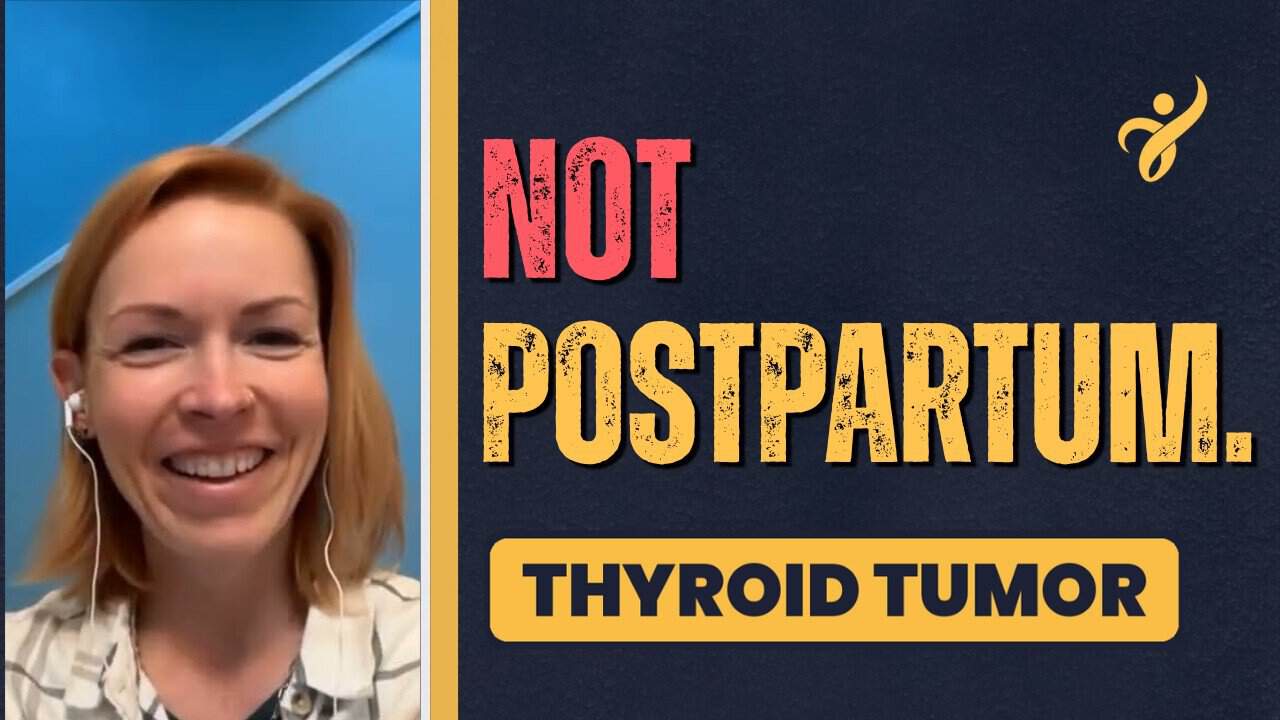
EP. 94: “Just Postpartum”? It Was a Golf Ball-Sized Thyroid Tumor: McKenzie’s Story

Episode 94 · Invisible Strength Podcast

“Just Postpartum”? It Was a Golf Ball-Sized Thyroid Tumor: McKenzie’s Story

October 7, 2026 · Hosts: Karin Wagner & Chris Burton
▶ Listen on Spotify

About This Episode

So many women hear some version of the same sentence: “That’s just postpartum.” For McKenzie Bovard, a military spouse and mom of two who has lived in seven states, that explanation covered up years of crushing fatigue, painful bloating and hair loss. It took a plasma center turning her away three times and one question from her husband to uncover a golf ball-sized thyroid tumor. On this episode of Invisible Strength, McKenzie shares what she learned about trusting her gut, and why her mantra is now “do less to heal more.”

Key Takeaways

  • McKenzie’s symptoms (extreme bloating, exhaustion, losing parts of her eyebrows) were attributed to postpartum changes for years.
  • A plasma donation center rejected her blood three times, which pushed her to keep looking for answers.
  • A year of tests and four-hour round trips ended when her husband asked a doctor a simple question.
  • She calls herself the CEO of her own body: the number one advocate for her own care.
  • After surgery and a gastroparesis diagnosis, she found she felt best when she treated her illness “like the flu.”

“This can’t be normal”

McKenzie had a two-year-old and a newborn, and the family was living on a small island in Alaska with very little sunshine. There were plenty of reasons she might feel run down. But what she felt went well beyond tired. “I felt pregnant again,” she said. The bloating came with “excruciating pain,” along with an exhaustion she describes as gravitational. She started losing parts of her eyebrows. “I just don’t get how we could be surviving as a species if this was normal postpartum feeling,” she remembers thinking.

The plasma center that wouldn’t take her blood

Back in the lower 48, McKenzie tried donating plasma to earn a little extra money for the family. Before you donate, the center runs your blood. “They took me in the back room and they’re like, ‘We can’t take your blood,’” she said. At the time she was running marathons and eating a whole-foods diet. It happened three times, and it became one of the clues that something bigger was going on.

“Have you touched my wife?”

After a year of tests, McKenzie and her husband sat with a doctor who was drawing a diagram of what he thought was a pituitary issue. Her husband looked up and asked, “But have you touched my wife?” The doctor put on gloves, tilted her neck back and examined it for the first time. That’s when he felt something. It turned out to be a golf ball-sized thyroid tumor.

Becoming the CEO of your own body

Even with a diagnosis, McKenzie’s road wasn’t over. She talks about surgery, a frightening ER visit afterward, food fear and gastroparesis. Looking back, she says the biggest shift was internal. “You just realize you have to be your own CEO of your body. You have to be the number one advocate for yourself,” she said. “But it takes a lot of bad moments to realize that’s what you have to do.”

Her advice is direct: if you feel in your soul that something isn’t normal, keep looking. “If that doctor pushes you aside and gaslights you, go find another doctor.”

Treating chronic illness like the flu

After trying every wellness trend she could find, McKenzie noticed that her best days came after she’d rested. “I basically started treating my chronic illness like the flu,” she said. That meant gentle walks and stretching instead of intense workouts, and simple, easy-to-digest food. “How would you treat your child if your child told you they didn’t feel well? You wouldn’t ask them to go do a 45-minute HIIT workout.” That’s where her mantra comes from: do less to heal more.

Follow McKenzie at @thrivekenzie.

Notable Quotes

“But have you touched my wife?” (McKenzie’s husband, to her doctor)
“You have to be your own CEO of your body. You have to be the number one advocate for yourself.”
“I basically started treating my chronic illness like the flu.”

Episode Chapters

  • 00:00 — Welcome and intro
  • 00:57 — Meet McKenzie: military spouse, mom, seven states
  • 03:00 — Is positivity born or built?
  • 05:47 — Early symptoms: Alaska, postpartum and “this can’t be normal”
  • 09:47 — Fatigue that lives in your bones
  • 11:05 — The plasma center that wouldn’t take her blood
  • 13:52 — A year of tests and four-hour round trips
  • 15:25 — “Have you touched my wife?”
  • 17:45 — Living with uncertainty before answers
  • 20:00 — Surgery and the aftermath
  • 23:27 — The ER visit that changed everything
  • 26:58 — Becoming the CEO of your own body
  • 28:25 — Finally, validation
  • 32:15 — Trying every wellness trend
  • 33:47 — Treating chronic illness like the flu
  • 35:45 — Food fear and gastroparesis
  • 37:12 — Packing to prevent a flare
  • 39:44 — Slow down now, or your body will make you
  • 41:28 — McKenzie’s final advice
  • 43:38 — Where to find McKenzie

Free resource: Grab the free RESET workbook mentioned in this episode: https://invigorateyourjourney.com/reset-workbook/

Never Miss a Story

Subscribe to Invisible Strength on YouTube and join our email list for new episodes, free resources and support.

Join Our Email List →

Medical disclaimer: This post is for education and shared experiences only and is not medical advice. McKenzie’s story is her personal experience. Always consult your healthcare team before making changes.

EP. 93: Living With MCAS, POTS & EDS: “My 10 Isn’t Your 10”

Episode 93 · Invisible Strength Podcast

Living With MCAS, POTS & EDS: “My 10 Isn’t Your 10”

September 29, 2026 · Hosts: Karin Wagner & Chris Burton
▶ Listen on Spotify

About This Episode

When you’ve been in pain for as long as you can remember, how do you answer the question “On a scale of 1 to 10, how bad is it?” Lauren (@nourishing_lauren) lives with mast cell activation syndrome (MCAS), postural orthostatic tachycardia syndrome (POTS) and hypermobile Ehlers-Danlos syndrome (hEDS). On this episode of Invisible Strength, she talks with Karin about being dismissed by doctors, managing her own care, the surprising trigger hiding in everyday products, and the practice she calls “rest maxing.”

Key Takeaways

  • Lauren’s symptoms started around age 10 with a UTI that never went away, and other issues layered on from there.
  • She was told things like “painful periods are normal” before getting diagnoses that explained a lifetime of symptoms.
  • She keeps a large folder of her medical history and acts as her own “medical manager.”
  • Her biggest MCAS trigger is lemon, and citric acid shows up in food, shampoo and cleaning products.
  • “Rest maxing” means making your rest truly restful, and it’s how she works full time and studies.

“It’s not normal”

Lauren was about 10 when she got a UTI that never fully went away. “When you’re that age you don’t talk about it. You don’t really know that that’s not normal,” she said. Over the years, more symptoms built on top of each other, and doctors often brushed them off. “Doctors are like, ‘It’s not that bad. Painful periods are normal,’” she said. “It’s not normal.”

In the last year things spiraled, and she was diagnosed with MCAS, POTS and hypermobile EDS. The diagnoses helped many of the things she’d always dealt with make sense.

Being your own medical manager

Lauren lives in the UK, where she says waiting times for appointments can be long. “You have to be your own medical manager,” she said. “No one’s going to do that for you.” She brings a big folder to every appointment, with specific examples written down, because brain fog makes it hard to remember what happened last week, let alone months ago.

“My 10 is not your 10”

One of the most relatable moments in this episode is about pain scales. “I’ve had pain my entire life, so my 10 is not your 10,” Lauren said. “My 10 is like we’re in A&E and I’m having to get morphine.” When pain is your baseline, your sense of what counts as “bad” shifts, and that makes it even more important for clinicians to listen to the whole story.

The lemon trigger hiding in everything

Lauren has avoided gluten and dairy for years, but her biggest trigger surprised even her. “Honestly, the main one for me is lemon. And it’s so annoying, ’cause lemon’s in everything,” she said. Citric acid shows up in food, shampoo and household cleaning sprays, so she reads labels on all of it.

What “rest maxing” really means

Lauren works full time and studies. Her job is on her feet all day but low stress, which she says makes a big difference. When she does get time to rest, she makes the most of it. “Don’t be like, ‘Oh yeah, I’m just going to chill and do this at the same time.’ Like no, get in bed, shut your eyes, have a nap, rather than watching TV.” Pajamas are essential, and complete darkness if she can get it.

Silver linings

Living with these conditions has given Lauren something many people don’t have. “I understand my body a lot more than other people do,” she said. “I know what means what.” Her closing reminder is one we come back to often: everyone’s chronic illness looks different.

Notable Quotes

“My 10 is not your 10.”
“You have to be your own medical manager. No one’s going to do that for you.”
“Get in bed, shut your eyes, have a nap, rather than watching TV.”

Episode Chapters

  • 00:00 — Intro
  • 00:50 — Who Lauren is outside of chronic illness
  • 01:39 — A UTI at age 10 that never went away
  • 03:28 — “That’s not normal”: being dismissed
  • 03:55 — Self-advocacy after a rough GP appointment
  • 05:37 — The diagnosis process & being your own medical manager
  • 07:45 — “My 10 is not your 10”: pain scales
  • 08:40 — Adapting daily life & working full time
  • 10:07 — How to explain chronic illness to others
  • 12:22 — Low-histamine diet & a surprising lemon trigger
  • 15:20 — Social life, friends & eating out
  • 18:56 — Juggling work and school
  • 19:57 — What “rest maxing” really means
  • 22:39 — Communicating with work & school
  • 27:18 — Self-kindness when you can’t show up
  • 28:56 — Silver linings
  • 30:31 — Advice for anyone in the thick of it
  • 32:12 — What Invisible Strength means to Lauren
  • 32:52 — Everyone’s chronic illness looks different
  • 35:09 — Where to find Lauren

Free resource: Grab the free RESET workbook mentioned in this episode: https://invigorateyourjourney.com/reset-workbook/

Never Miss a Story

Subscribe to Invisible Strength on YouTube and join our email list for new episodes, free resources and support.

Join Our Email List →

Medical disclaimer: This post is for education and shared experiences only and is not medical advice. Lauren’s triggers and routines are her own. Always consult your healthcare team before making changes.

EP. 92: Lupus at 16: “It Would Be Easier If It Were Cancer”

Episode 92 · Invisible Strength Podcast

Lupus at 16: “It Would Be Easier If It Were Cancer”

September 23, 2026 · Hosts: Karin Wagner & Chris Burton
▶ Listen on Spotify

About This Episode

No one should ever hear a doctor say their illness would be “easier” if it were cancer. Sakshi Chauriwar (@lupuswithsakshi) did. Diagnosed with lupus at 16, she’s now 24, working a full-time corporate job and also living with avascular necrosis (AVN), a condition where bone doesn’t get enough blood supply and can collapse. Karin, a fellow lupus warrior who has also had AVN, talks with Sakshi about her path to diagnosis, the comment that made her switch doctors, and why she wants every warrior to get a second opinion.

Key Takeaways

  • Sakshi’s path to a lupus diagnosis took about a year and began with a dermatologist visit that missed the bigger picture.
  • A hematologist told her it would be better if her biopsy showed cancer “because lupus is incurable,” and she changed doctors.
  • She balances a corporate job with daily joint pain, and being open with her manager has helped.
  • She tracks her symptoms before doctor visits so nothing gets lost.
  • Her biggest piece of advice: get a second opinion, and a third if you need it.

Lupus at 16

Sakshi’s first symptoms started when she was a teenager, and it took around a year to get answers, starting with a dermatologist appointment that didn’t connect the dots. She talks about getting through the hardest months and how lupus changed her sense of who she was.

“Is that really how you talk to a patient?”

Years later, a PET scan showed swollen lymph nodes and lesions on her bones, and her rheumatologist sent her for a second opinion with a hematologist. What he said stayed with her. “He basically said that it would be better if the bone marrow biopsy showed cancer, so that we can treat the cancer, because lupus is incurable,” Sakshi said. She was sitting there with her father. “I was like, what did I just hear? Is it really how you talk to a patient?”

She’s careful to say that not all doctors are like this, and that she’s had good experiences too. But that comment is part of why she’s so passionate about patients finding care that respects them.

Working a corporate job with daily joint pain

Sakshi works full time in a corporate role while managing joint pain every day. Being open with her manager has made a real difference. She also tracks her symptoms ahead of appointments, which helps her give doctors a clear picture.

Visible and invisible symptoms

Lupus is often invisible, but AVN left Sakshi limping for years, so she’s experienced both sides: people assuming she’s fine, and people staring. “No one can tell just by looking at our picture that we have an illness, but we do,” she said. Her parents have been a steady support, and she’s helped educate them about her condition along the way.

Get a second (and third) opinion

When Karin asked for her advice, Sakshi spoke from hard experience. “I only trusted one doctor,” she said, and she now has hip implants. “If you’re not sure with your doctor, please take a second opinion, third opinion. You can take as many as you want until you get satisfied with the doctor’s answer.”

What invisible strength means to Sakshi

“Invisible strength is, we look completely normal from outside, and behind it we deal with joint pain, fatigue, fevers,” she said. People see a photo and think she looks fine, “but then they don’t know what it took me to get prepared to just go out normally.”

Notable Quotes

“Is it really how you talk to a patient?”
“Please take a second opinion, third opinion. You can take as many as you want.”
“They don’t know what it took me to get prepared to just go out normally.”

Episode Chapters

  • 00:00 — Intro: lupus and avascular necrosis (AVN)
  • 01:12 — Meet Sakshi
  • 02:12 — Working a corporate job with daily joint pain
  • 04:15 — Being open with her manager
  • 05:46 — Lupus at 16: first symptoms and diagnosis
  • 09:08 — Getting through the hardest months
  • 11:36 — “Easier if it were cancer”: the hematologist
  • 13:07 — Tracking symptoms for doctor visits
  • 14:32 — How lupus changed her identity
  • 15:46 — The rheumatologist who missed her AVN
  • 17:18 — Visible vs. invisible symptoms
  • 19:10 — Letting go of the guilt
  • 20:54 — Silver linings and finding community
  • 22:20 — What invisible strength means to Sakshi
  • 23:19 — Advice for anyone in the thick of it
  • 25:20 — Living with uncertainty
  • 26:31 — Where to find Sakshi and what’s next
  • 28:07 — Get a second (and third) opinion

Free resource: Grab the free RESET workbook mentioned in this episode: https://invigorateyourjourney.com/reset-workbook/ and connect with Sakshi at instagram.com/lupuswithsakshi.

Never Miss a Story

Subscribe to Invisible Strength on YouTube and join our email list for new episodes, free resources and support.

Join Our Email List →

Medical disclaimer: This post is for education and shared experiences only and is not medical advice. Always consult your healthcare team before making changes to your treatment.

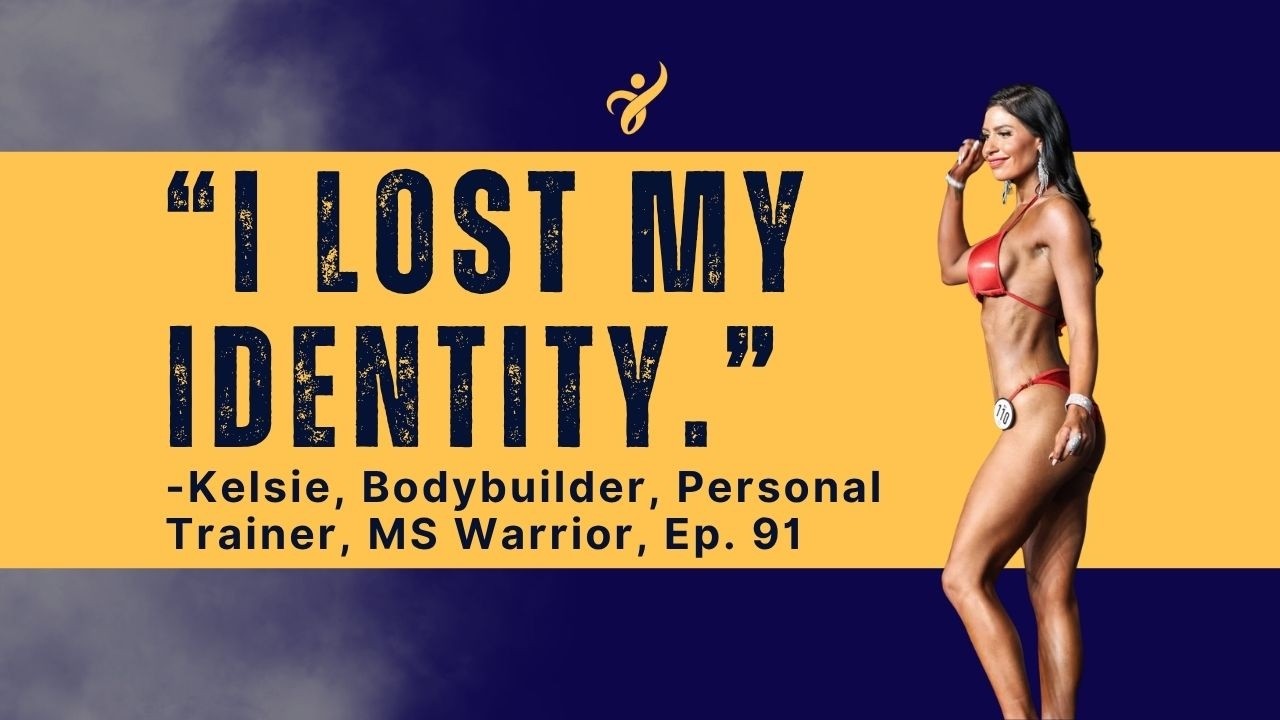
EP. 91: Bodybuilder Diagnosed With MS Mid-Prep: Kelsie’s Story

Episode 91 · Invisible Strength Podcast

Bodybuilder Diagnosed With MS Mid-Prep: Kelsie’s Story

September 15, 2026 · Hosts: Karin Wagner & Chris Burton
▶ Listen on Spotify

About This Episode

What happens when the body you’ve trained for years suddenly stops cooperating? Kelsie was a competitive bodybuilder, personal trainer and single mom, deep in prep for what she called her “redemption show,” when strange symptoms started. She thought it might be an electrolyte imbalance. The hospital visit ended in a multiple sclerosis diagnosis. On this episode of Invisible Strength, Kelsie joins Karin and Chris to talk about losing and rebuilding her identity, the voice that calls rest “lazy,” and why “slow cooking” her goals beat giving up.

Key Takeaways

  • Kelsie ignored early symptoms because of an all-or-nothing mindset and a show that meant everything to her.
  • At the hospital, doctors initially prepared her for the possibility of brain cancer before she was diagnosed with MS.
  • Her diagnosis made her realize how much of her identity was tied to bodybuilding.
  • She hasn’t given up her goals. She’s “slow cooking” them, with a redemption prep still in the works.
  • She’s learning to answer the voice that says rest is lazy: “You’re listening to what your body needs.”

Pushing through for the redemption show

Kelsie had an all-or-nothing approach. She was prepping for a show that mattered deeply to her, because the season before hadn’t gone the way she wanted. When symptoms showed up, she ignored them. “I said, ‘Body, you’re not allowed to be doing this, so let’s just keep pushing on,’” she remembered. “Honestly, if it weren’t for my son, I would have kept going.”

The hospital visit and diagnosis

The days in the hospital were some of the hardest. “Initially, they were preparing me for brain cancer,” Kelsie said. The diagnosis turned out to be MS, and in that moment she knew prep was over, at least for now.

“Who am I anymore?”

Bodybuilding is a 24/7 job, and Kelsie had built her whole sense of self around it. “It made me realize, wow, I almost lost my entire identity,” she said. “I just saw myself as a bodybuilder, and in the blink of an eye, I lost it. I had this intense grief, because I was like, who am I anymore?”

Karin and Chris point out how common this is in our community. A diagnosis can take away the identity you built before you’ve had time to imagine a new one.

Training with MS: slow cooking the goal

Kelsie didn’t walk away from fitness. She changed the timeline. “I don’t want to say that I put it on the back burner, because it’s not on the back burner, but let’s just say we’re slow cooking now,” she said. As a single mom, she’s restarted her fitness journey many times before. “There’s many ways to get to the finish line.” Her redemption prep and show are still coming, and she’s embraced the longer road.

The “lazy” voice on rest days

For someone used to pushing, slowing down is the hardest part. “There’s this voice in my head that is telling me that I’m being lazy,” Kelsie said. She’s practicing a new answer: “No, you’re not lazy. You’re listening to what your body needs.” Rest days now look like lying down for a bit and baking with her son instead of chasing 10,000 steps.

Grief and acceptance aren’t opposites

Kelsie also coaches clients through their own setbacks, and she talks about holding grief and acceptance at the same time. You can accept your diagnosis and still grieve the life you planned. Both can be true.

Follow Kelsie on Instagram at @kelsielonsocoaching.

Notable Quotes

“Let’s just say we’re slow cooking now.”
“I just saw myself as a bodybuilder, and in the blink of an eye, I lost it.”
“No, you’re not lazy. You’re listening to what your body needs.”

Episode Chapters

  • 00:00 — Intro
  • 00:54 — Kelsie’s fitness background
  • 01:54 — From coach to patient
  • 03:25 — When symptoms first started
  • 06:19 — Pushing through for her “redemption show”
  • 07:18 — The hospital visit and diagnosis
  • 09:19 — Hard days and finding purpose
  • 12:23 — Losing her identity as a bodybuilder
  • 13:27 — Training with MS: “slow cooking” the goal
  • 15:30 — Advice for someone newly diagnosed
  • 16:50 — Coaching clients through setbacks
  • 18:21 — Life beyond fitness and motherhood
  • 19:34 — Rest days and the “lazy” voice
  • 21:14 — Grief and acceptance
  • 24:14 — What “invisible strength” means to her
  • 24:52 — What’s next: the redemption prep
  • 26:45 — Closing

Free resource: Grab the free RESET workbook mentioned in this episode: https://invigorateyourjourney.com/reset-workbook/

Never Miss a Story

Subscribe to Invisible Strength on YouTube and join our email list for new episodes, free resources and support.

Join Our Email List →

Medical disclaimer: This post is for education and shared experiences only and is not medical advice. Always consult your healthcare team before making changes to your treatment or exercise routine.

EP. 90: She Hid Her Chronic Illness for 10 Years: Cindy Beltre’s Story

Episode 90 · Invisible Strength Podcast

She Hid Her Chronic Illness for 10 Years: Cindy Beltre’s Story

September 9, 2026 · Hosts: Karin Wagner & Chris Burton
▶ Listen on Spotify

About This Episode

Have you ever downplayed your symptoms at work, turned down accommodations, or pushed through so no one would know? Cindy Beltre, a NASA program analyst, hid her autoimmune diagnosis for 10 years. On this episode of Invisible Strength, she joins Karin and Chris to talk about why she hid it, how masking made her sicker instead of stronger, and the changes, from therapy to an electric wheelchair, that helped her build a fuller life.

Key Takeaways

  • Cindy carried shame about her diagnosis for a decade and believed hiding it was the only way to reach her goals.
  • Hiding it made her sicker and made everything harder. She believes accepting help sooner would have gotten her there faster.
  • For years her symptoms were written off as anxiety, including a military discharge that called her healthy.
  • A 12-mile hike, where her husband carried her the final mile, was the moment she knew something was wrong.
  • Therapy, pacing and assistive devices, like an electric wheelchair, have changed her daily life and her family’s vacations.

A decade of hiding

“I carried a lot of shame and guilt with the condition,” Cindy said. “At the end of the day, I knew it wasn’t my fault, but for some reason I still carried this sense of shame.” She believed the only way to have her dreams come true was to hide it: “If nobody knew and I acted like it wasn’t there, then it wasn’t there. And that wasn’t the case. It made me sicker.”

She went on to build the life she wanted: a child, a family, a house and a career. Looking back, she says it would have happened anyway, and probably more easily, if she’d accepted the help and accommodations she needed. “There’s no shame in it,” she said.

Misread as “just anxious”

Cindy was an anxious child and teenager, so she wrote off a lot of early signs. She could never pass the run in high school, even though she was in the gym all the time. She enlisted in the military, went through basic training, and didn’t pass the run there either. She was discharged and told she was healthy and just didn’t want to run.

The hike that changed everything

The turning point came on a 12-mile hike through the redwoods in California with her husband. It kept getting harder, and in the last mile she couldn’t breathe. She told him to go ahead and get help. Instead, “that man lifted me up over his shoulder and carried me the last mile of the hike.” That was the moment she realized something might really be wrong.

Why therapy made the difference

Cindy always followed her medical treatment. “But the help I needed the most was a therapist, and I didn’t go to seek that help until I was at my low,” she said. By then she was depressed, her marriage was struggling, and she was angry at God and at herself. Therapy helped her learn that her health matters and that she has to put herself first. “You can’t pour from an empty cup.”

Pacing, and the wheelchair story

Cindy still overdoes it some days, but she’s made small changes, including buying an electric wheelchair. Using it on a family cruise was eye-opening. “I’m baffled at the fact I’ve never thought to buy something like this,” she said. “Why have I been killing myself on vacation?” Assistive devices aren’t giving up. They can be what lets you actually enjoy the trip.

Advocacy, community and a future nonprofit

Today Cindy builds online community for others with chronic illness and writes about her journey for rarediseases.com, with the goal of helping doctors spot symptoms sooner. She dreams of starting a nonprofit that hosts events designed for people like her, with shade, seating and accessible bathrooms, instead of fundraisers built around running.

Her advice for anyone early in their journey: “Advocate for yourself. If you have a doctor and you feel like that doctor is not listening to you… find another doctor.”

Follow Cindy on Instagram at @sin_der_ellaaaaa.

Notable Quotes

“If nobody knew and I acted like it wasn’t there, then it wasn’t there. And that wasn’t the case. It made me sicker.”
“The help I needed the most was a therapist.”
“Why have I been killing myself on vacation?”

Episode Chapters

  • 00:00 — Intro & Meet Cindy
  • 00:52 — Life Outside the Diagnosis
  • 02:12 — A Decade of Hiding Her Diagnosis
  • 04:14 — Hitting Rock Bottom & Starting Therapy
  • 05:45 — Misread as “Just Anxious” — the Military Discharge Story
  • 07:22 — The Hike That Changed Everything
  • 08:10 — Turning Failure Into Fuel
  • 09:38 — Why Therapy Made the Difference
  • 11:48 — Everyday Mindset Shifts
  • 12:45 — Finding a Partner Who Gets It
  • 14:42 — Loving Family From a Distance
  • 18:27 — Pacing & Assistive Devices (the Wheelchair Story)
  • 20:27 — Parenting with a Chronic Illness
  • 22:12 — Her Diagnosis Process
  • 24:23 — Rebuilding Self-Confidence
  • 25:36 — Building an Online Support Community
  • 28:26 — Writing, Advocacy & a Future Nonprofit
  • 31:30 — What “Invisible Strength” Means
  • 32:10 — Where to Find Cindy + Her Advice

Your turn: What condition or challenge do you want to hear about on the show? Leave us a comment on YouTube.

Never Miss a Story

Subscribe to Invisible Strength on YouTube and join our email list for new episodes, free resources and support.

Join Our Email List →

Medical disclaimer: This post is for education and shared experiences only and is not medical advice. Always consult your healthcare team before making changes.

EP. 89: Scuba Diving With Myasthenia Gravis: Deanna Steinle’s Comeback

Episode 89 · Invisible Strength Podcast

Scuba Diving With Myasthenia Gravis: Deanna Steinle’s Comeback

September 1, 2026 · Hosts: Karin Wagner & Chris Burton
▶ Listen on Spotify

About This Episode

“You will never ever dive again.” That’s what Deanna Steinle was told after her diagnosis with generalized myasthenia gravis (gMG), a rare autoimmune condition. Her answer was, “Watch me.” Deanna was a professional diver and a PR pro, including work as a shark diver at Ripley’s Aquarium of the Smokies. On this episode of Invisible Strength, she talks with Karin and Chris about her diagnosis, the four and a half years she couldn’t be left home alone, the grief that arrived a year after the crisis, and her return to diving in 2022.

Key Takeaways

  • Deanna’s road to a gMG diagnosis included an MG crisis, when her body declined rapidly.
  • She celebrates her “diagnosis day” because a diagnosis brought answers and relief.
  • Her grief didn’t hit until about a year later, once the new routine had settled in.
  • For four and a half years she couldn’t be left home alone, and trust with her husband was key to moving forward.
  • She returned to diving with disability-certified dive teams and went back to school using a disability education benefit.

Celebrating diagnosis day

For a lot of us in this community, a diagnosis is a strange mix of relief and fear. Deanna leans into the relief: she celebrates her diagnosis day. In the conversation, it brought to mind a poem about celebrating every day that something tried to kill you and failed.

Grief that arrived a year later

At first, there was no time to process. “Forget career, forget, you know, just make sure the bills are paid,” Deanna said. “It was only once the dust settled, this is going to be your routine now, that I had to start processing the grief of the life that I had. And that happened about a year after the fact.”

If your grief showed up late, or keeps coming back, you’re not doing it wrong.

Four and a half years of not being left alone

During her diagnosis process, Deanna went through an MG crisis, and for four and a half years she couldn’t be left at home alone. She talks about how she and her husband handled that, and about trust. “There’s a trust between your caregiver, your spouse, other people in your lives. You have to trust the person with the illness,” she said. “You have to let us live a little.”

“Watch me”: returning to scuba diving

Water was Deanna’s life. When she was told she’d never dive again, she talked with her doctors about how to do it safely. One said she could swim or dive in a swimming pool, and Deanna realized aquariums offer those same controlled conditions. She found disability-diver-certified facilities that work with adaptive divers, and teams that already knew her professional background. She got back in the water in 2022.

Going back to school at 2 a.m.

When she couldn’t sleep, Deanna wanted something she could put her energy into without getting out of bed, and a checklist she could see herself finishing. She learned that her permanent disability benefits included an education benefit, and she used it to go back to school, studying biological anthropology. She talks about what studying death and dying taught her, too.

Redefining hope

As a marketing and PR person, Deanna is wary of hope that’s been sold as something out of reach. “Hope to me is all about the present,” she said. For her, it’s small victories: seeing her grandkids, or cooking them breakfast on their first day back at school. “It all looks different. And I want people to understand that, and be like, yes, that’s celebration in and of itself.”

Follow Deanna at @resilience.is.beautiful.

Notable Quotes

“They said, ‘You will never ever dive again.’ And I said, ‘Watch me.’”
“You have to trust the person with the illness. You have to let us live a little.”
“Hope to me is all about the present.”

Episode Chapters

  • 00:00 — Intro
  • 00:48 — What is generalized myasthenia gravis
  • 02:47 — First symptoms and the road to diagnosis
  • 05:47 — Getting diagnosed, and celebrating diagnosis day
  • 07:40 — The new normal — career, family, insurance
  • 10:44 — Four and a half years of not being left alone
  • 12:18 — Returning to scuba diving
  • 17:26 — Mental health during isolation
  • 19:12 — Going back to school at 2am
  • 22:10 — What studying death and dying taught her
  • 25:03 — What advocacy looks like day to day
  • 26:57 — Redefining hope
  • 28:26 — Small victories and momentum
  • 31:14 — Her hopes for sharing this story
  • 32:28 — The pipe burst and the car accident
  • 33:57 — Helping others communicate their diagnosis
  • 38:17 — What Invisible Strength means to Deanna
  • 39:30 — Where to find Deanna

Support and resources: https://www.invigorateyourjourney.com

Never Miss a Story

Subscribe to Invisible Strength on YouTube and join our email list for new episodes, free resources and support.

Join Our Email List →

Medical disclaimer: This post is for education and shared experiences only and is not medical advice. Deanna returned to diving with her doctors’ input and specialized dive teams. Always consult your healthcare team before making changes or starting a new activity.

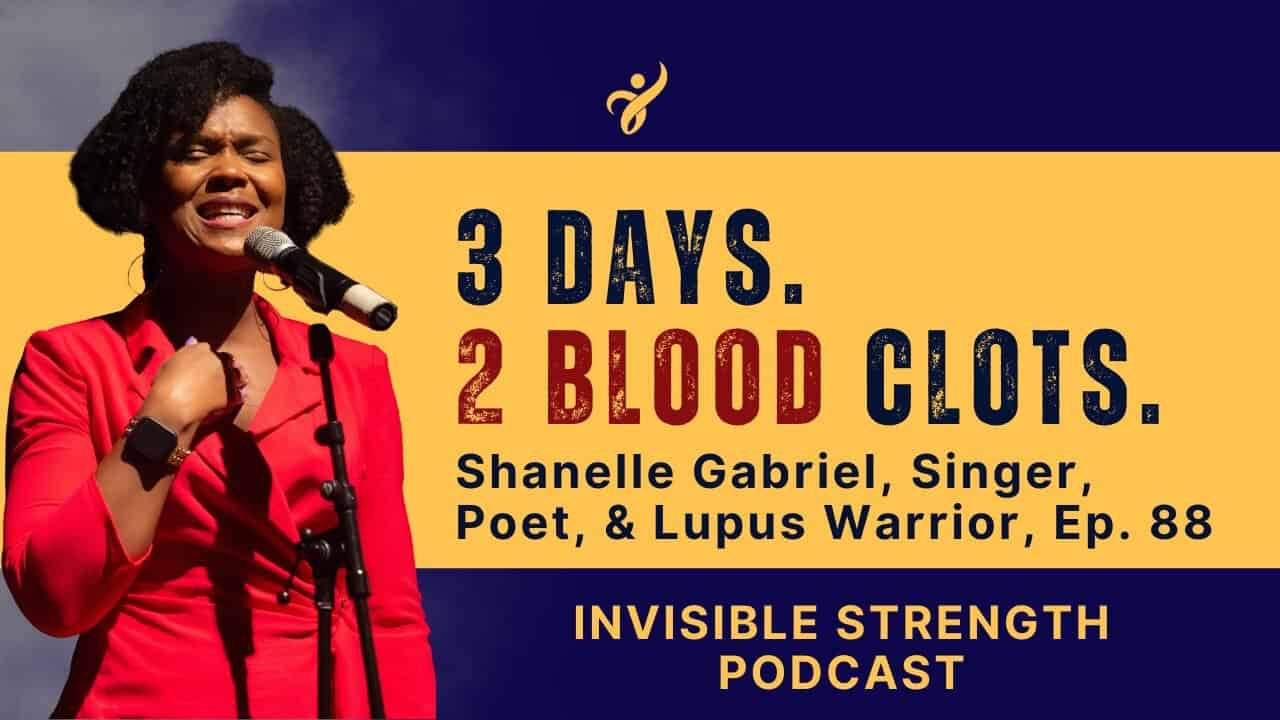
EP. 88: Lupus & Blood Clots: Shanelle Gabriel Performed 3 Days Anyway

Episode 88 · Invisible Strength Podcast

Lupus & Blood Clots: Shanelle Gabriel Performed 3 Days Anyway

August 26, 2026 · Hosts: Karin Wagner & Chris Burton
▶ Listen on Spotify

About This Episode

Shanelle Gabriel has performed at Carnegie Hall, at the Vatican and on HBO’s Def Poetry Jam. She’s also lived with lupus since 2004, and about 10 years after her diagnosis she developed antiphospholipid syndrome (APS). On this episode of Invisible Strength, the Brooklyn-born poet and singer talks with Karin and Chris about the year of symptoms she explained away, the three days she performed with two blood clots in her lungs, and why she believes every newly diagnosed person needs a mental health professional.

Key Takeaways

  • In college, Shanelle wrote off headaches, joint pain, hair loss and brain fog, even telling herself she was “getting older” at 19.
  • She was diagnosed partly by luck: her primary care office was right next door to a rheumatologist.
  • She performed for three days while carrying two blood clots in her lungs, a lupus-related complication called APS.
  • She’s learned to see her worth in “the gift” she brings, not in any single title, including “patient.”
  • Her advice for the newly diagnosed: find a therapist, not just a support group.

“I’m getting older. I’m 19.”

Shanelle’s first symptoms showed up in college: headaches, joint pain, hair loss and brain fog. Her fingers would turn white, hurt and then turn red, and she assumed it was because she was cold. “All the things I excused all ended up being symptoms for lupus,” she said. “I was just like, ‘Oh, I’m getting older. I’m 19.’”

Diagnosed by the rheumatologist next door

Her primary care doctor happened to be right next door to a rheumatologist, and that doctor knocked on the rheumatologist’s door. She came over and said, “Everything is swollen on you.” Shanelle knows how lucky that was. If it had been anyone who didn’t see lupus regularly, she says, “the way that I kind of slow-rolled my symptoms, I would have never gotten diagnosed.”

Three days with two blood clots in her lungs

Years later, she ignored a pain in her side and figured it might be pleurisy. “For three days I walked with the pain of having two blood clots in my lung,” she said, “just walking with the pain, ’cause I was like, ‘I got a show.’” Even in the hospital, her first question was whether she could make it back for that night’s performance. “It’s like your body is fighting your brain,” she said. Her body was saying it couldn’t, and her brain was saying it could do everything.

That story is a powerful reminder: pushing through isn’t always strength. Sometimes the bravest thing is to stop and get care.

The gift, not the title

Shanelle has had to pivot many times because of her health. What helped was letting go of titles. “It’s really not the title, it’s the gift that I’m bringing to it,” she said. That includes not clinging to “lupus” as the sole definition of who she is.

Why she says to find a therapist

Shanelle wishes someone had told her this at diagnosis: “No one ever recommends a therapist to help you transition this. No one ever suggests that.” When she did go to therapy years later, for something else, she found herself talking about lupus and identity much of the time.

Shedding what no longer serves you

She also talks about the ongoing “shedding” that living with lupus requires, of commitments and even relationships that don’t support your health. “There’s a shedding that has to happen where you’re like, okay, this thing was cool, but this might not be working for me right now.”

What invisible strength means to Shanelle

“Invisible strength to me is the strength you have when no one’s looking, when no one’s going to applaud you for it,” she said. “No one maybe knows everything you’ve accomplished, or everything that you battled, or every dark night that you dealt with. But somehow you are still standing.”

Shanelle is working on a book and a fourth album. Follow her at @shanellegabriel.

Notable Quotes

“For three days I walked with the pain of having two blood clots in my lung.”
“No one ever recommends a therapist to help you transition this.”
“Invisible strength to me is the strength you have when no one’s looking.”

Episode Chapters

  • 00:00 — Intro
  • 00:59 — Meet Shanelle: Brooklyn roots and lupus since 2004
  • 02:16 — From singing in the hallways to Def Poetry Jam
  • 04:47 — Performer, communicator, lupus warrior
  • 06:15 — First symptoms in college: headaches, joint pain, hair loss
  • 09:04 — Diagnosed by the rheumatologist next door
  • 12:16 — Performing in pain
  • 13:28 — Three days with two blood clots in her lungs
  • 15:55 — Pivots: building systems and letting go of guilt
  • 18:15 — Who am I now? The gift, not the title
  • 22:09 — Silver linings: managing other people’s energy
  • 24:42 — Advice for the newly diagnosed: find a therapist
  • 27:52 — A hopeless optimist
  • 30:42 — How to talk about lupus with friends and co-workers
  • 32:43 — What’s next: a book and a fourth album
  • 35:21 — The milestone she didn’t think was possible
  • 38:38 — Shedding what no longer serves you
  • 41:20 — What invisible strength means to Shanelle
  • 42:06 — Where to find Shanelle

Free resources: Grab the free RESET workbook (https://invigorateyourjourney.com/reset-workbook) or take the free 2-minute Journey Quiz (https://invigorateyourjourney.com/quiz/).

Never Miss a Story

Subscribe to Invisible Strength on YouTube and join our email list for new episodes, free resources and support.

Join Our Email List →

Medical disclaimer: This post is for education and shared experiences only and is not medical advice. Chest pain or trouble breathing can be a medical emergency, so seek care right away. Always consult your healthcare team before making changes.