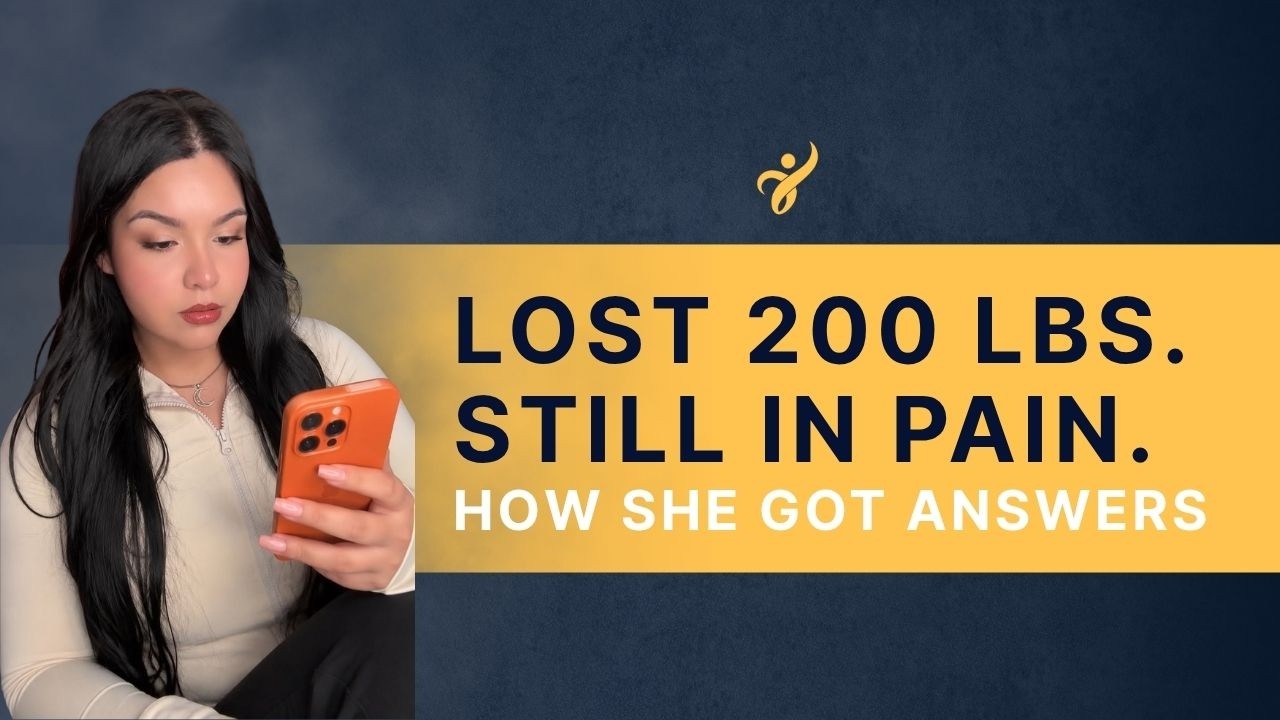
Doctors Blamed Her Weight. It Was Lupus: Catisha’s Story
▶ Listen on SpotifyAbout This Episode
Weight stigma in healthcare is real, and it can delay a diagnosis for years. Catisha lost more than 200 pounds, and she was still in pain every day. When she finally got a referral to a rheumatologist, she was told her pain was about her weight. On this episode of Invisible Strength, Catisha shares how she kept advocating until she got answers, what losing her hair to lupus meant to her as a beauty creator, and how she’s learning to give herself grace.
Key Takeaways
- Catisha’s pain was dismissed as a weight issue, even after she had lost more than 200 pounds.
- She kept pushing for labs and testing, and that persistence led to her lupus diagnosis.
- Losing more than half her hair was devastating, because her hair was a big part of how she saw herself.
- She started over without speaking English, and later moved from culinary teacher to content creator.
- For her, invisible strength includes resting without apologizing, and she’s still working on that.
“Lose 50 more pounds”
When Catisha finally saw a rheumatologist, she hoped for answers. Instead, she heard this: “You seem fine to me. I just think that your pain is related to obesity. I recommend you lose 50 more pounds.”
“I was shocked,” she told Karin. “How do you tell that to someone that has lost 200 pounds?” She was proud of what she had accomplished, and she loved being able to look in the mirror and like herself. “But my pain was real. And I just kept advocating for myself and told him, I want labs done.”
Get the Free RESET Guide
A flexible, judgment-free framework for rebuilding life with autoimmune disease — on bad days and good ones.
If you’ve ever had your symptoms explained away by your size, your age or your stress level, you’re not imagining it, and you’re allowed to ask for more.
Losing her hair as a beauty creator
Hair loss is a common lupus symptom, and for Catisha it hit hard. “Losing more than half of my hair has been extremely emotional, because hair is such a big part of how I see myself,” she said. Her hair used to be long and full. Now, seeing new growth has become something more. “To me it’s not just hair, it’s hope.”
She also shared what a doctor recently told her: give yourself grace, because with everything your body is going through, it could be much worse. Catisha shares the hair care routine she uses in the episode.
Grief, consistency and pain days
Catisha has been in pain every day since February, and she talks honestly about the grief of not remembering what her body used to feel like. She’s someone who is used to “go, go, go,” so the days she has to stay in bed feel terrible. She’s learning that rest is part of getting up the next day.
Starting over, again and again
This isn’t Catisha’s first reinvention. She started over without speaking English, and she moved from teaching culinary arts to creating content. That resilience shows up in how she talks about her illness, too: slowing down, watching the sunset, and doing the things she loves “just at a different pace.”
What invisible strength means to Catisha
“Invisible strength can be getting up and trying again when nobody knows how hard yesterday was,” she said. “It’s smiling while you’re hurting. It’s asking for help when you’re used to being so independent. It’s advocating for myself. It’s resting without apologizing.”
Follow Catisha at @catishadaneylix.
Notable Quotes
Episode Chapters
- 00:00 — Welcome
- 01:03 — Meet Catisha
- 01:34 — Starting over without speaking English
- 03:24 — Moving pain and the first warning signs
- 05:32 — Self-advocacy and what acceptance really means
- 07:22 — Losing her hair as a beauty creator
- 11:17 — What consistency looks like on pain days
- 13:15 — The 200-pound weight loss journey
- 15:31 — “Lose 50 more pounds”: being dismissed by a doctor
- 17:48 — Grieving, crying, and staying hopeful
- 19:40 — Working toward remission
- 22:58 — Learning to give yourself grace
- 24:40 — From culinary teacher to content creator
- 27:22 — Push through or rest?
- 29:14 — Silver linings
- 30:05 — What invisible strength means to her
- 32:03 — What’s next for Catisha
Your turn: Have you ever had to fight for a diagnosis? Tell us in the YouTube comments. And grab the free RESET Guide, the same first step we walk clients through before coaching: https://invigorateyourjourney.com/reset-workbook/
Never Miss a Story
Subscribe to Invisible Strength on YouTube and join our email list for new episodes, free resources and support.
Join Our Email List →Frequently Asked Questions
Can lupus be dismissed as a weight issue?
In Catisha’s case, yes. Her pain was blamed on her weight even after she had lost more than 200 pounds. She kept pushing for labs and testing, and that persistence led to her lupus diagnosis.
Does lupus cause hair loss?
Hair loss is a common lupus symptom. Catisha lost more than half her hair, which was devastating because her hair was a big part of how she saw herself.
What is lupus?
Systemic lupus erythematosus (lupus) is an autoimmune disease in which the immune system attacks healthy tissue. It can affect the joints, skin, kidneys and other organs, and symptoms often come and go in flares.
Catisha’s experiences are personal and this FAQ is general information, not medical advice. Talk with your healthcare team about your own care.
Read the full transcript
This transcript was generated from the episode’s captions and lightly edited for readability (filler words removed, names and condition terms corrected). Paragraph breaks mark a change of speaker. It may contain minor errors.
[0:00] Hey, welcome back to the Invisible Strength Podcast. Today’s guest story goes way beyond her diagnosises as she has focused on transforming her life, which not a lot of people can say that they’ve done. She has not only navigated her health challenges, she’s overcome obesity and is a lifestyle and beauty content creator. Today we’re going to talk about what it actually takes to transform your life and what that looks like on a day-to-day basis. Kisha, I’m so excited to talk to you. Thanks for being here today. Thank you for inviting me.
Oh my gosh, that made me a little bit emotional cuz like transforming my life has been the biggest part of my life journey. You never hear other person saying that and it made me emotional. Thank you. Thank you.
[0:53] That’s understandable. It’s one thing to think about it in your own head, but hearing it come from someone else can carry a whole another weight with it.
[1:02] 100%. Why don’t you share a little bit about yourself? My name is Catisha. I’m Puerto Rican. I have three beautiful rabbits. My husband, his name is Douglas. He’s my major supportive system to be honest. I’m a teacher. I’m an educator. I’m also a UGC content creator. I make content about beauty, food, lifestyle, and chronic illness awareness. It’s a lot going on. Yes, it is a lot, but I’m a lot. What can I say? I love that. You mentioned you’re from Puerto Rico and you didn’t speak English when you first came here.
What did starting over then teach you and how did it prepare you for some of the challenges that came later? Moving from Puerto Rico to United States without speaking English taught me very early that being uncomfortable doesn’t mean that you’re not capable of doing things. There were so many moments where I didn’t understand what people were saying. I didn’t know how things worked and I had to figure things out as I went. I had to be willing to make mistakes and learn from the mistakes and keep going and be uncomfortable.
And honestly, I think that prepared me more for being chronically ill than I ever realized because when you’re diagnosed with something chronic, you it’s like you’re starting all over again. Suddenly, you’re learning a lot about your body, how it’s working, medications, symptoms, doctors, boundaries, and how to advocate for yourself. One thing I’ve carried with me through everything is I know how to start over. I’ve done it before and I’m just going to keep doing it no matter how many times I have to.
I love that because there’s very much a starting over phase after diagnosis, but even years into these conditions, things pop up where you have to restart and it’s a repeatable process. I appreciate you sharing a yes, you need to start over, but you’re going to feel uncomfortable. We don’t know what we’re doing in the beginning, and that takes time.
[3:25] That’s right. That’s right.
[3:26] Can you take us back to when you started noticing symptoms, and what was the turning point of when you were like, m, this isn’t just like a cold or something. Something is seriously wrong. Yeah. At first, I honestly thought that I was going crazy and it was like one day my hands will really hurt, the next day it will be my arm, my joints, my neck and the pain seemed to move around my body. I couldn’t understand why. I kept thinking maybe it was that I was sleeping wrong or maybe I worked too much cuz I did work a lot.
But then I just started changing my pillows because I thought that maybe the pillows were causing my neck and body pain. I changed my mattress. I went to an orthopedist and they did an MRI and they found that my lymph nodes were enlarged. That was one of the moments where I really started thinking, okay, something is really wrong. And I could literally feel my lymphatic nods.
[4:33] But getting an answer was not immediate. I had to keep advocating for myself and pushing to get tested because I know my body. And I just knew something wasn’t right. And that’s when I realized that what I was feeling was not just like a bad week. It was a pattern. The pain kept going back. It was affecting different part of my bodies. And I just couldn’t explain why. Why was I feeling like that? It was very active. It was after losing more than 200 lbs. I was severely obese. And I was like, if I’m in my prime era, why am I feeling like this? It’s just not normal.
Eventually, I was diagnosed with lupus. And looking back, one of the hardest parts was realizing that I was not imagining what I was feeling. My body was really trying to tell me something and I had to learn to listen and to keep advocating for myself. Yeah. And that self advocacy piece is important especially since lupus and other autoimmune conditions can be really difficult to diagnose. How did advocating your for yourself evolve through your journey and any advice for people early on in their journey and what that self- advocating looks like?
[5:56] In the beginning, I was just trying to process everything. The diagnosis gives you a name for what it’s happening, but it doesn’t automatically teach you how to live with it. There were a lot of questions, a lot of fear, and a lot of grief. Over time, my relationship with my diagnosis has changed. I don’t want my illness to become my entire identity. But I also don’t want to pretend that it’s not part of my story, that it’s not part of my everyday life. I’ve learned that acceptance doesn’t mean that I’m giving up.
For me, acceptance means that I’m acknowledging where I am today and what I can still do and while still believing that my life can continue to grow and change. It’s just part of me now. I’m taking it all in. I’m still trying to discover where I’m going and what’s going to happen, but I’m ready for it. You have such an incredible perspective about acceptance is acknowledging it. There’s definitely a grieving process early on and as challenges come up and you find new ways that you have to start over. We’re continuously grieving our old selves in some way, shape, or form.
But to your point, we don’t have to brush that aside. It’s still a part of us, but we need to acknowledge it and move forward.
[7:25] That’s right.
[7:26] One of your symptoms, you experienced hair loss, a common symptom with lupus. You’re a beauty creator online. How did you cope with hair loss and how you take care of your hair now? Yes. Losing more than half of my hair has been extremely emotional because hair is such a big part of how I see myself. When someone will ask me, “What do you like the most about yourself, about your physic?” I will say my hair. I loved my hair. My hair was very long. It was full. So when I started losing it, it was devastating to me. At first I was heartbroken.
But eventually I realized that I needed to stop looking at my hair only through the lens of what I had lost and start thinking about how could I care for the hair that I have right now. My routine now is very intentional.
[8:26] I’m gentle with my hair. I focus on my scalp. I try to minimize unnecessary damage. And most importantly, I’m consistent. And it’s not easy to be consistent when you are flaring up, when you’re in pain. But hair care actually became a form of therapy for me and a way of keep caring about myself. Even on the days where I don’t have the energy to do it, it always reminds me that I am still taking care of me of what I like about myself. And seeing the new hair growth has been very emotional because to me it’s not just hair, it’s hope. And I always talk about that hope.
The other day I went to a doctor and she told me, “You have to give yourself grace because with everything that you’re going through, to be honest, you could be completely bald right now.” I’m trying to be grateful for what I have and keep taking care of it and teaching other people my ways. I use my powerful tonic.
[9:32] It’s from a Brazilian hair care line. I try to oil my hair. I try to wash my hair every day because you can’t grow hair if your scalp is not clean and that is not easy. There are some days where you can barely get up. How are you going to wash your hair? But I have found the strength to do it because consistency is key. And I have to choose something to during the day is going to be washing my hair and taking care of it. That’s just my thing. It’s me taking care of myself.
And even though it can be hard to be consistent, it’s nice to have those things that reminds yourself physically that you are taking care of yourself and that’s such a tangible thing that you can do on a daily basis. So, I love that. Thank you. Thank you.
[10:25] Especially as women, our hair is just so important to us. I had a similar feeling of despair when my hair was falling out in clumps. just like what am I going to do? It’s scary. It’s scary to be honest. I went to the naturopath and she examinated my scalp and she did a night reading and she told me everything I have, my lupus, my fibromyalgia, PCOS, and then she gave me a treatment and she was like, “Keep doing what you’re doing because you’re supposed to be bald at this point, but your hair is actually growing.” So, I’m happy.
That gave me so much hope cuz it’s like, okay, I’m do I’m doing the right thing. It’s been hard. There has been days where I went into the shower and I started washing my hair and I have cried because I don’t have the energy to do it, but you know, it’s working. You mentioned your three diagnosises and bring up a pivotal point in that it is extremely hard to be consistent with these conditions.
[11:33] Extremely
[11:34] So much uncertainty. What does consistently look like for you on a day-to-day basis, especially when you are dealing with symptoms or are in pain? consistency looks like, okay, maybe I woke up and I can’t go to work. I can’t cook, but I’m taking a shower. I think that’s very important. I’m washing my hair and I might not do the whole routine, the whole oiling my hair and all of that, but I’m at least one thing I have to do washing my hair. That’s consistency. I learned about consistency while I was trying to lose weight.
I will go to the gym every day, even on the days where I did not wanted to go. Consistency to me with my hair is the same thing as when I used to go to the gym. You never want to go to the gym, but you never feel worse after exercising. So that’s why consistency is very important to me. I never feel worse after taking a shower. Maybe I feel the same, super tired and drained, but I never feel worse. That’s why I try to keep in mind. Yeah. And you bring up a really key point about consistency is that our 100% today may only be 10%.
So for you in your hair care routine, hey, your 100% today may just be washing your hair and not doing all of it. reframe that all or nothing approach and relook at it as okay what is my 100% today.
[13:15] Exactly. Exactly. You had quite the weight loss journey and props to you because that is not easy to do which I’m sure you can attest to. Can you walk us through that and how you actually did it? Yes, actually for years I’ve been having different symptoms. I feel like I have had lupus for years now, but I’ve never been through a flare until this year when I at the beginning of the year when I was diagnosed. I’m usually pretty chill. but this year was a lot for me. From the beginning of the year, I started going through a lot of stress, but back in the pandemic, I was at home.
I gained a lot of weight and that added to the pain, the body aches that I was feeling before. So, I went to the nutritionist and I decided that I wanted to change. I remember that I looked myself in a picture and it didn’t looked like me. So, I was like, “Okay, I need to do something about this.” And also like every time that I will go to my doctor’s appointments and tell them that I had a lot of joint pain, they told me that I needed to lose weight.
So I was like, “Okay, my I need to lose weight so my pain can go away.” This is a key important part about my lupus journey because I’ve been having body and aches and pain for a while and the doctors dismissed me because I was obese. I started losing weight. I was consistent with my diet and exercise. I was able to lose 89 pounds, but I was still obese. It was a lot. So, I decided to go through gastric sleeve surgery and that’s how I was finally able to lose more than 200 lbs.
But after losing all that weight, I was still in pain and it just started getting worse and worse and worse until this year. Well, I was I experienced for the first time a fullblown flare. Well, first of all, good for you for going through that weight loss journey. I can’t imagine how you must have been feeling hearing the doctor dismiss you because of your weight and then telling you need to lose weight. I bet I would have had a meltdown right in the doctor’s office.
[15:51] What was your experience like? Right at the beginning of the year when I finally was able to get a referral to a rheumatologist, he looked at me and he told me, “You seem fine to me. I just think that your pain is related to obesity. I recommend you to lose 50 more pounds. I was shocked. I was I did not know how to react because how do you tell that to someone that has lost 200 lb? Isn’t that supposed to make me feel any better? But I didn’t.
Yes, it felt good to put on the clothes that I wanted to put on and like to be able to look at myself in the mirror and liked myself, but my pain was real. And I just kept advocating for myself and told him, I want labs done. I want to get an ANA test. I try to get ready before my appointments and I’ve been journaling about my symptoms. So, I was I didn’t diagnose myself or anything like that, but I was like, there has to be something like this or this. I was in between fibromyalgia or lupus or arthritis. Turns out I have fibromyalgia and lupus. So, I was not wrong.
As soon as I got the ANA test back, it came back very positive. And I felt some kind of relief, but at the same time, I felt a little bit devastated because a lot of doctors see you and they judge you and it makes me feel like they don’t care, you know?
[17:34] Yeah. Well, and it’s never a good feeling to be feeling judged, especially when you know in your gut that something is certainly wrong and you’re being dismissed. I think if I would have heard that when I was first diagnosed, I would have been crushed. How did you get over that initial shocked feeling and spin it into a positive? Well, it’s been a lot of crying. I’m not going to lie. I have cried a lot. I have griefd. I’m very positive, but there are days where I still cry and I feel devastated. I always think that tomorrow will be a better day. But it has definitely not been easy.
It is still devastating to me. I’m still a little bit in denial that this is going to be my life forever. I’m really working towards getting into remission, but I try to stay positive as much as I can. I’ve always been a very optimistic person.
[18:40] And I think that helps me a lot. But I wouldn’t blame someone that is not as optimistic as I am cuz it’s not easy. This is not for the week. For sure. Yeah. Thank you for being open about there’s still to this day really sad, tough times. There are days when all you can do is cry because you’re so fed up with the situation, especially when you’re in pain because that is mentally exhausting. I remember there were several years where there was not a single day where I was not in excruciating joint pain and some days you have to cry because that’s the only way to grieve and process it.
There’s definitely a space for that but at some point it’s work but you do have to work at being positive and looking towards the future. I think having goals and something to work towards can take your mind off of some of the really tough challenges that we have to go through.
[19:42] Yes. You’re working towards remission now. What does that look like for you? Are you on medications? How are you taking care of yourself on a day-to-day basis? I am on medication. I honestly I haven’t seen or feel any improvement with my medication. I went to a naturopath in Puerto Rico. That’s where they read my eyes and all of that. And she sent me home with a detox, a specific diet for a few months to see how my body is feeling. I actually just started this week, so I haven’t seen any improvement, but I’m positive and I’m going to be sharing more about this on my social media.
I’m open to try anything at this point. You told me that there was a point in your early 20s where you were in pain every day. That’s how that’s actually how I feel right now. I’ve been in pain every single day since February. I was just thinking last night that I don’t remember how my body used to felt before. Like I don’t remember what it is not to be in pain.
[21:00] And I’m just grateful that I still find the way to get up every morning and try to do something. And the days where I have to give myself grace and just stay in bed, I just do. But it’s not easy. It’s not easy to me cuz I’m used to be go go go. We got to do this. We got to create. I’m very creative. And the days where I can’t create, they feel tough. They feel terrible for me. But I’m learning how to give myself the time that it needs to recover for a little bit so I can get up the next day.
I feel you and I hear you because when there are stretches where you’re not painfree, that is really hard and extremely mentally draining.
[21:52] Yes. And every day is a different symptom and the diffused pain and you know sometimes I don’t know if I’m flaring up from lupus. I don’t know if I’m flaring up from PCOS or fibromyalgia. I also have fibroids in my uterus that they made my menes really bad. So it’s just pain every day pain everywhere. But I think what keeps me strong is that I try to be grateful every day. Grateful. Hey, at least I was able to open my eyes today and eat something that I like and wake up next to my husband. That’s what keeps me going. Love that.
And even though it may be a dark season of your journey right now, it does help cultivate that gratitude because you know in your gut and part of how hard it can be. So those little moments become all the more meaningful.
[22:53] Yes, 100%. The moment I learned how to be grateful and what gratitude really means, my life changed. How have you cultivated self-kindness throughout this? Because as you said, absolutely try and give yourself grace. It’s one of my mantras because it’s just not possible to check all the boxes all the time. So, how have you cultivated that self-kindness, especially on those days where it’s like I can’t get out of bed today? I think suffering has made me softer, not harder.
When you know what it’s like to have a really difficult day that nobody else can see, you become more aware that you don’t actually know what someone else is caring. So, I try to give people grace. I But honestly, the harder part has been learning how to give myself that same grace. I’m very good at telling other people, rest. You don’t have to explain yourself. you are still available even when you’re struggling. Then I have to remind myself of those exact same things.
I’ve learned that kindness is not weakness and that sometimes kindness is one of the stronger things that you can give yourself. I work in a school. How am I going to teach my students that they have to be kind and that they have to give themselves grace if I’m not applying that to myself?
[24:26] Yeah. And what a beautiful gift that you’re able to give your students.
[24:31] I know. And they I love them and I try to give them the love that I know they deserve and give myself the love that I know I deserve, too. That’s beautifully said. Thank you. I’m curious. You used to be a culinary arts teacher, but you left that because of your health. We’ve talked about having to start over. What has your career path looked like going through your health journey and how has it changed your identity? Well, leaving culinary was really hard for me because it was not just a job. It was a huge part of who I was as a teacher.
I loved what I did and I love being able to teach, create, and connect with my students. So when my health got to the point where I had to leave culinary, I have I had to grieve that version of my life. And I remember asking myself, okay, so if I can’t do this anymore, then what am I supposed to do? Who am I now? But God has a way of opening doors that you don’t even know they’re there yet. I found content creation and it became another way for me to express myself, to keep creating and most importantly to keep helping people.
I realized that even though I wasn’t teaching in a culinary classroom anymore, I could still educate. I could still inspire and I could still connect with people through my content, especially by sharing my experience with my chronic illness.
And now what has been very beautiful is that I’m actually creating content and managing my school’s Instagram account because the director of my school was like, “Oh, so you’re creating content and they needed help with that with the school.” So now I can do that work in a hybrid way, which gives me the flexibility to take care of my health while I’m still doing something creative and meaningful while I’m still working in the same place that I love working, helping students. They still call me, they still reach to me that I’m still an advisor.
You know, when I go in person, my co-workers will tell me, “You’re still an advisory.” and I loved it. I feel incredibly fortunate that I found a way to keep creating, helping people, and being myself while I’m also learning how to live with my health challenges. I mean, that’s the goal. You can still go after your goals and what fills you up. It just may look a little bit different than how you originally envisioned.
[27:27] Exactly. With so much going on, I’m wondering how you decide. Okay, I just need to push through this. Going back to the consistency piece versus, nope, I really need a day to rest today. I can not get out of bed. How do you make that distinction? I used to connect a lot of my identity to what I could accomplish, you know, saying how much I can do, how productive I can be, how many things I could get done during the day. But my chronic illness forced me to realize that my worth cannot be measured by my productivity.
There are days when I can create, I can work, I can cook, clean, and do everything I want to do. And there are days when getting out of the bed is the accomplishment. Washing my hair is the accomplishment. And I’m still ambitious. I’m still creative. I’m still a teacher because I still work at the school with the students. But now I’m learning how to build a life that does not require me to destroy my body just so I can prove that I am successful. Yeah, I think that’s one of the unexpected gifts that come along with these illnesses cuz I was the same way.
My whole identity was wrapped up in this meaningless corporate job that I cared way too much about. And once that taken away from you, you’re really kind of forced to do some internal reflection and it takes a moment to realize I am so much more than this job that I thought I wanted. A wife, a mother, a sister, a friend, like all those beautiful things.
[29:11] And I don’t know that I would have learned that as soon had I not gotten lupus. I’m curious if there’s any silver linings that you’ve taken away from this experience. I used to care so much of what I could do and now I care about what it’s happening in the moment. I think that I have learned how to live in the moment and not worry so much about tomorrow. It’s been hard. It’s been very difficult. I’m always thinking about what’s next.
But this has forced me to slow down, appreciate life, watch the sunset, and just reflect about how beautiful it is and how wonderful of a person and blessed I am to still do things that I love doing. Just in a different pace, but I’m still doing them.
[30:04] Yeah. It’s just a different rhythm these days.
[30:07] Exactly. What does invisible strength mean to you? Invisible strength can be getting up and trying again when nobody knows how hard yesterday was. It’s smiling while you’re hurting. It’s asking for help when you’re used to be so independent. Oh my gosh, that has been one of the hardest things to me. It’s advocating for myself. It’s resting without apologizing and feeling guilty. And I’m still working on that every single day. Now I am in a point when I’m resting and I’m feeling guilty.
I can think about it and reflect about it and be like, “No, no, no more feeling guilty.” I try to be kind to myself. It’s rebuilding your life when it’s telling you that how you wanted it to be, it’s not going to be possible, at least right now, but you’re still pushing through and finding ways to accomplish the things that you want to accomplish in life. It’s looking at your body after everything it’s been through and choosing to love it anyways. It’s also understanding that you don’t have to look strong every day. Sometimes strength can look like you’re surviving and that’s okay.
Sometime it looks like resting and sometimes it looks like putting boundaries and saying I can’t today. That has also been very difficult to me. But I am I’m getting there and I am learning how to say no or not today. And sometimes it can look like waking up tomorrow and just trying again. That’s invisible strength to me.
[31:58] Wonderfully said. If I could just put that in a jar and share it with everyone, I would wish. Catisha, what’s next for you? What are you excited about? I’m excited about creating more UGC content, but collaborating more with brands that support our chronically ill community. I am excited about going into remission. I’m praying, manifesting it every single day. I am excited about my hair growing. I’m excited about helping other people feel like they’re not alone, that I understand them and keep building my community and chat more with other people.
It gets me very excited when someone DMs me and say, “Hey, I’m going through the same thing as you and this is how I’ve been feeling. How are you feeling?” It brings me so much joy to find my people. I’m just excited about anything lives bring me. I am welcoming in with open arms for the positive and the negative. Nobody wants to go through negative things, but I do have to recognize that all everything that I’ve been through has made me grow so much. I don’t think that I will be the person that I am right now if it wasn’t because of all the things that I’ve been through.
[33:25] Yeah. Love your excitement. Even though you’re in pain every day, you still have hope and that drive to go after things. I have no doubt you will achieve remission. It’s just a matter of time. Thank you. I will. I will. It’s done. Yeah. To our community, make sure you check out the description. We have Catisha’s favorite hair products that you can check out. And make sure you visit invigorateyoujourney.com. We have community picks, coaching, and other resources to help you wherever you’re at on your health journey. We will see you next Wednesday on the Invisible Strength Podcast. Take care.
Peace. Thank you.
Medical disclaimer: This post is for education and shared experiences only and is not medical advice. Always consult your healthcare team before making changes.

