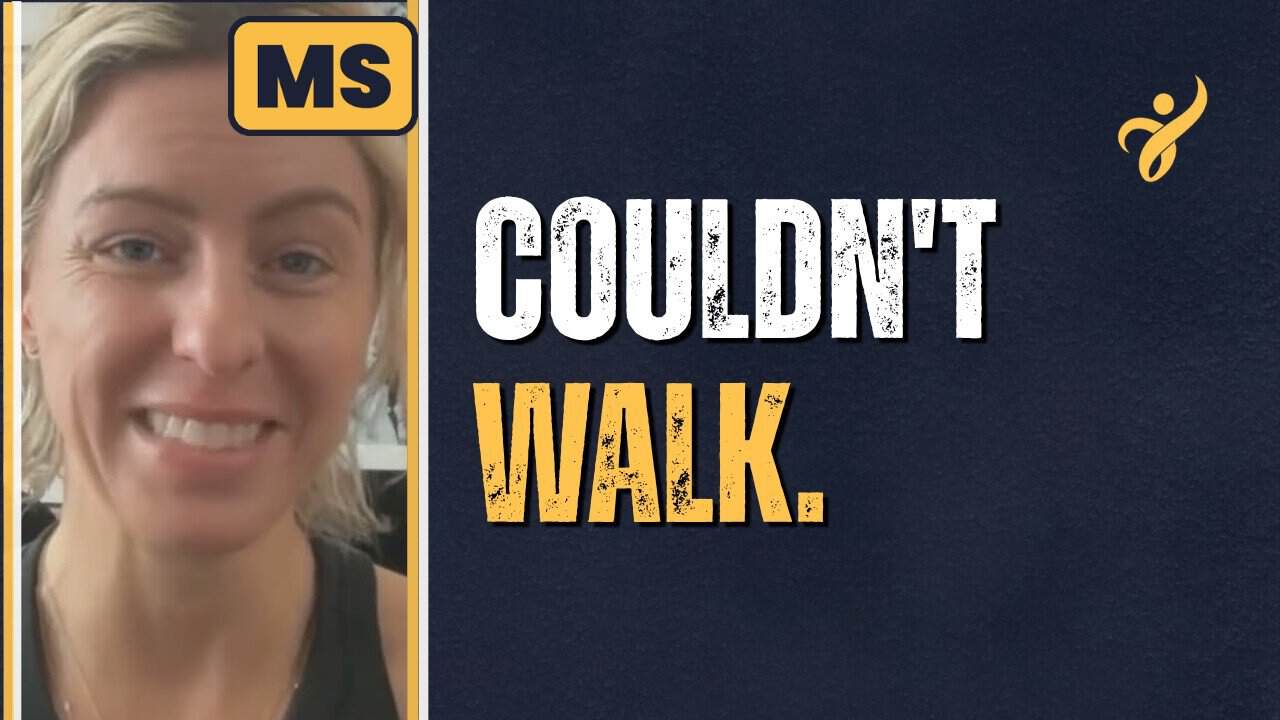
MS Took Her Ability to Walk in 6 Months: Bobbi’s Multiple Sclerosis Story
▶ Listen on SpotifyAbout This Episode
What do you do when every test comes back “normal” and your body is clearly telling you it isn’t? At 38, Bobbi woke up unable to use her leg. Within six months of her first multiple sclerosis symptoms, she couldn’t walk or finish a sentence. On this episode of Invisible Strength, Karin talks with Bobbi, founder of the Healing Well Method and an integrative health practitioner, about the long road to an MS diagnosis, learning to advocate for herself, and the hope she holds onto now.
Key Takeaways
- Bobbi’s MS symptoms escalated fast: she went from a healthy, very fit life to being unable to walk or talk in about six months.
- She saw a neurologist over and over and had EEGs, EKGs and blood work, but struggled to get the MRI that finally confirmed MS.
- Her self-advocacy started years earlier, at 20, when a cervical cancer diagnosis and a surprise pregnancy taught her to question what she was told.
- She’s candid that some of the detox steps she tried made her sicker before things improved.
- Her advice for anyone in the thick of it: surround yourself with people who believe you are healing.
Learning to question the first answer
Bobbi’s story with doctors started long before MS. At 20 she was diagnosed with cervical cancer and saw five doctors. Pre-op bloodwork showed she was 15 weeks pregnant, which she had been told would never happen. That experience planted something in her. Friends would say, “I really like my doctor, you should see my doctor,” and she began to realize she was allowed to look for another opinion.
“One day, I just woke up unable to walk”
Years of migraines came first. Then, one morning, everything changed. “One day I just woke up unable to walk,” Bobbi said. “I had excruciating pain from my hip to my pinky toe.” She and her husband wondered whether it was a side effect of her migraine medication.
Get the Free RESET Guide
A flexible, judgment-free framework for rebuilding life with autoimmune disease — on bad days and good ones.
What followed was months of tests that came back normal. “They did EEGs, EKGs, every test under the sun, all the blood work,” she said, “except for some reason I couldn’t get them to do an MRI.” She began blacking out mid-step and falling, and gave herself concussions because she couldn’t brace herself. An ER visit made things worse, not better. When she finally got the MRI, it confirmed multiple sclerosis. “Within six months, I went from living a perfectly healthy life to not being able to walk or talk.”
If you’re reading this from your own waiting room, Bobbi’s story is a reminder that persistence and asking specifically for the tests you need are part of advocacy.
When her daughter asked to pray over her
One of the most tender moments in this conversation is when Bobbi describes her daughter asking to pray over her. Watching her family see her struggle was heartbreaking. “I’ll take all the suffering and all the pain, but I do not want to see them suffer,” she said. That feeling is part of why she does the work she does now: “I want them to know that you can heal, and that even in the most devastating times, there is a light at the end of that tunnel.”
Searching for root causes, with honesty about setbacks
Bobbi talks about functional medicine, emotions and trauma, common food irritants, and the 21-day reset she uses. She’s also honest that not everything worked. Some detox steps made her sicker before she improved. These days, she tells people the first place she looks is digestion, and she shares the three daily habits she focuses on.
As always on Invisible Strength, this is one person’s lived experience. What helped Bobbi may not be right for you, so please bring any changes to your care team first.
Words for anyone in the thick of it
When Karin asked what she’d tell someone who doesn’t know what’s going to happen next, Bobbi didn’t hesitate: “Surround yourself with people who tell you you are healing. Tell yourself you are healing.”
Connect with Bobbi on Instagram at @holy.healing.mama or at thehealingwellmethod.com.
Notable Quotes
Episode Chapters
- 00:00 — Welcome & meet Bobbi
- 00:36 — From MS diagnosis to integrative health
- 03:08 — Functional medicine, emotions & trauma
- 05:10 — Common food irritants & the 21-day reset
- 07:08 — Stress, food fear & a mealtime ritual
- 08:33 — Cervical cancer at 20
- 10:25 — Five doctors, one surprise pregnancy
- 13:16 — Learning to self-advocate
- 14:18 — Years of migraines: early warning signs?
- 17:05 — Waking up unable to walk
- 19:12 — The ER visit that made things worse
- 21:31 — Finally getting the MRI
- 24:30 — Six months from healthy to unable to talk
- 25:25 — Advice for anyone in the thick of it
- 27:25 — When her daughter asked to pray over her
- 29:20 — Searching for root causes
- 30:55 — When detox made her sicker
- 37:27 — Where she says to start: digestion
- 41:03 — Three daily habits she focuses on
- 44:00 — Faith, hope & not having to suffer
- 45:36 — Where to find Bobbi
Free resource: Grab the free RESET Guide mentioned in this episode. It’s the same first step we walk clients through before coaching: https://invigorateyourjourney.com/reset-workbook/
Never Miss a Story
Subscribe to Invisible Strength on YouTube and join our email list for new episodes, free resources and support.
Join Our Email List →Frequently Asked Questions
How fast can multiple sclerosis symptoms progress?
For Bobbi, it was very fast: she went from a healthy, very fit life to being unable to walk or talk in about six months. MS varies widely, and many people progress much more slowly.
How was Bobbi finally diagnosed with MS?
She saw a neurologist repeatedly and had EEGs, EKGs and blood work, but struggled to get the MRI that finally confirmed MS. MRI is a key test doctors use to look for MS lesions.
What is Bobbi’s advice for someone newly diagnosed?
Surround yourself with people who believe you are healing, and keep advocating for yourself. She also shares that some detox steps she tried made her sicker before things improved.
Bobbi’s experiences are personal and this FAQ is general information, not medical advice. Talk with your healthcare team about your own care.
Read the full transcript
This transcript was generated from the episode’s captions and lightly edited for readability (filler words removed, names and condition terms corrected). Paragraph breaks mark a change of speaker. It may contain minor errors.
[0:00] Hey, thanks for joining us on the Invisible Strength Podcast. We’re glad you’re here today. We have an incredible guest who has actually healed herself from MS, which is remarkable, especially given that it’s a progressive autoimmune condition. She’s also navigated cervical cancer and been told that she could never have kids, but she has three beautiful daughters now. We have a lot to unpack, especially around healing and what that looks like and how Bobbi helps others achieve that same success. Bobbi, I’m really excited to get to know you. Thanks for joining me.
[0:36] Thanks for having me.
[0:37] Bobbi, you’re also the founder of the Healing Well Method and an integrative health practitioner. Can you tell us a bit more about yourself?
[0:46] Sure. So, when I was diagnosed with multiple sclerosis, I found that the only information given to me is what could go wrong. And I wanted to know more about why it was happening. I felt like I was a very healthy person, and I felt like I was living my life the best that I could. I always tried every day to like prioritize health and movement, so it came as a complete shock to me that I just woke up one day unable to walk and use my leg. And I started asking more questions, and that led me down the natural health route, and I did all of this on my own.
I’m bringing this information to practitioners who could execute it for me, so I just did all my own research, found all of my own answers, and then took it to somebody who could help me implement it within my body. And at that time, I was like, “You know what? I feel like I need to go back to school because there’s Why am I telling the doctors? Why am I telling the practitioners how to heal me? Like, I thought that was their job.” So, I was like, I have to I was a designer at the time, and I had to close my business because of my health issues.
[1:53] And I was like, “In this meantime, when I’m just sitting here researching on my own, I should go back to school, put myself back through school, and figure this out. So, I felt very aligned to the way of thinking of the Integrative Health Practitioner Institute and the Steven Cabral way of thinking. And so, that’s who I decided to go with as far as education.
And then, I sought a lot of things after that, like advanced blood chemistry courses and more into traditional Chinese medicine in the way that emotions resonate in the body and how that affects autoimmune disease specifically, or any disease, but specifically autoimmune disease in this case. And I just fell in love and regained a passion for health there, where I don’t know that I had really understood the body in the way that it functions more than I did in that moment. And so, I was like, okay, this just feels aligned. So, I pursued it more.
And Integrative Health just means that you practice functional medicine along with some other modalities. So, I chose traditional Chinese medicine as mine. So, I practice functional medicine and traditional Chinese medicine, and I marry the two in a very unique way, and that is how I came up with the Healing Well Method.
[3:07] Yeah, I appreciate you calling out that of you needing to do your own research. I had a very similar experience. I haven’t gone back to school, but intrigued by that whole practice. I worked with a functional medicine practitioner. What do you take from functional medicine and what you do differ a bit from that?
[3:29] So, functional medicine is really how the body functions and how all of the organ systems communicate together to have the entire body working and operating. And this is essentially, when you learn that, the functionality of the body, you realize, and I was a Christian before this, but this deepened my faith a lot, you realize how perfect the body was created. That all of these systems work together in a way for the total good of the whole entire body. Not the teeth are separate from the kidneys, but everything is together and working together and has a job and a purpose within the body.
How what I do differs from just functional medicine is I look at, yes, how all of the organs function in the body and how they work together for the total good of the body, but how our suppressed emotions, our stored trauma, our unresolved trauma affect the functionality of those organs that are trying to work together to keep the body alive and surviving.
[4:30] That’s really incredible because it’s a whole ‘nother level of health care and holistically, not just, okay, we’re going to deal with this one symptom, here’s whatever medication for it. You’re really looking at the whole body.
[4:47] The whole body. And I find that there are many ways and many levers to pull when you want to get something to function. It doesn’t always have to be a medication. In fact, I find that food is the best medicine. So, I do start there. I start there along with nervous system regulation with all of my clients who come to the Healing Well Method.
[5:10] Can you share like some of the biggest triggers or foods that cause problems for people?
[5:16] So, I hate to look at it like the food is causing the problem. I do understand why you said that though cuz that is the way that a lot of people think about it. You know, I need to cut this out because it’s causing a problem. Really, I find that the body develops kind of a reaction, so to speak. Everything becomes like, oh, everything’s on fire and food that is a common irritant of the fire that’s happening within the body, the inflammation, is a common irritant. So, those common ones would be soy, gluten, corn, alcohol, processed sugar, processed foods, processed meats.
Those are the biggest culprits and I’m probably forgetting something. There’s a lot to remember, but those are the ones that we cut out in the beginning right away for everyone for 21 days. Now, the only reason we do it for 21 days is to give the body time to calm down, calm the inflammation, calm the body because not everything’s going to be a trigger forever. When you look at what does the body look like when it is healed, it’s having no more triggers and no more symptoms.
So, I think it’s important to recognize that in the beginning you might have to cut out some foods like what we just talked about, but it’s not forever.
[6:31] I appreciate that because myself included get really scared when you hear about the elimination diet cuz you’re like, “I can’t eat anything.” But, 21 days is a very manageable amount of time.
[6:44] And there are a lot of people who feel like they can’t eat anything. I have recently had a client come to me and she could only eat three things. And those three things would change cuz her body was so inflamed and so just aggravated with everything that as she would try to add something back in, it would be a problem again. And that is a sign that you have inflammation just all spread all throughout the body. So, when we can calm that down, things become less of a trigger. And I find that stress is a huge trigger and that’s not talked about enough.
And sometimes the stress and the mentality around the food we’re eating matters more than what we’re actually eating. So, we have a nervous system mealtime ritual that my clients practice before every even taking their first bite of their first meal of the day. And that’s really to get in the mindset of retraining the limbic system, saying that I don’t have to fear this food.
[7:40] This is here to nourish me and that’s where we start. And we implement that meal time ritual all throughout every protocol that we do. That’s the beginning and the end right there. It’s like getting the mindset right around this is here to nourish me. This is how I retrain someone who is like a vegan or a vegetarian. Not to say that those don’t have a place in the world at some point in time, but again, it’s an elimination diet, veganism and vegetarianism.
And we get to the point where we’ve cut so much out of our diet that we’re lacking our nutrients, and malnutrition is a leading cause of disease in the United States. And sometimes it doesn’t mean that we are following an elimination diet. Sometimes it means that we have to follow the elimination diet, or sometimes it means we think we’re eating the right things, but our body’s not able to utilize or absorb them. So, food is a huge part to healing, and I feel like it’s also one of the most misunderstood parts of the healing journey.
[8:36] Yeah, very much so. You’re clearly a wealth of knowledge, but I want to go back to the beginning when you were first diagnosed with cervical cancer at 20. Can you share a bit about that experience?
[8:49] Yes. So, I was not a Christian at that time. I did not believe in God at all, and I feel like this is very important to say because it has a great deal to do with my entire journey of who I am now and what I believe and what I bring to my practice, the Healing Well Method. and I feel like a lot of people could get a lot from this story, but I was kind of living my life for myself. And I was having a great time. And I had a lot of trauma and had a lot of past experiences in my childhood that led me to believe that God didn’t exist and was not real.
So, I was just I don’t want to say promiscuous, but I was also just out there enjoying my life, and I did get something called HPV that led to cervical cancer. And I had some long-term boyfriends, so again, it wasn’t really promiscuous, but it was more just not knowing what I was doing and having no direction in my life. And I did get HPV that led to cervical cancer, and I was 20 years old and had just started dating my boyfriend at the time who is now my husband.
And for about 6 months, he went to those appointments with me, and I would have constant colposcopy exams where they were like pinching pieces of your cervix off. It’s extremely painful.
[10:07] I was bleeding three times a month instead of your regular one time a month because I was constantly having these done and they initiate bleeding when they do it. And they would spray you with this vinegar to find the what’s going to turn white and they would pull this off. And I don’t even know like the science behind that because it just seems so ridiculous knowing what I know now. I would have never followed that plan. But after seeing five different doctors, you know, one tells you have to take your cervix out and you’re 20 years old, so you’re like, “Absolutely not.
Like, eventually I want to be a mom one day.” So then you go to another doctor, and that doctor comes to the same conclusion. You go to another doctor. So five doctors later, my fiance now at the time was like, “I think that we should just go ahead and have the cervix removed.” So we agreed that’s what we’re going to do and that we’re never going to have children. And I take a trip with a girlfriend to Mardi Gras in New Orleans, just her and I. It was a work trip for her, but she brought me along.
[11:03] And the whole time I Every time I would try to have a drink or I would eat try to eat a certain food, I’d be nauseous and I’m like, “What is going on with me? This is so strange. I’ve never felt this way before.” So we go home, and then next day after we get home, I go in for my pre-op blood work to have this surgery, and they call me back and they’re like, “Not only can you not have the surgery, but you’re pregnant. And it’s a girl. Like, that’s how far along you are.” I was a 15 weeks pregnant. I had no idea.
This whole entire time had no idea because I was told by how many doctors that I would never have kids and that my body was so diseased that I needed to remove my cervix and that’s what holds the baby in. So, once you take that out, you can’t have a child. So, my fiance at the time and I felt like, “Oh my gosh, what kind of miracle is this?” And again, going back to the person who didn’t even believe in God, I’m very confused at this time. But, there is something that happens in the pregnancy process where the baby’s healthy cells migrate through the mother’s body and she literally healed me.
So, of course, the doctors try and tell you to have an abortion and we were like, “No, this might be our only opportunity. I’m going to take my chances here.” And none of them told me that she could heal me.
[12:22] None of them said this could be incredible for you. They said, “You need to have an abortion.” And I was like, “No, I’m definitely not going to do that.” So, we went ahead and we had her and I remember when I went back to my doctor 6 months after having her, he was like, “Well, the cancer is not back, but we think you definitely want to be very careful and not have any more children and you’re going to want to come back every 3 months so that we can recheck you just in case.” And really instilling that fear in me. But, at every appointment, I was cancer-free.
And at 1 year, my daughter’s 1 year birthday, we decided we wanted to have another baby. And the doctors were like, “I don’t think that’s a good idea.” And 2 weeks after trying, we were pregnant again.
[13:05] So, that planted the seed right there in my life and I do believe that everything happens for a reason. Remember just thinking back on that, like, “Maybe God is real and maybe doctors are wrong.”
[13:18] Big questions up in the air. And how frustrating to get constantly dismissed and maybe even flat-out wrong medical advice. How did you cultivate or maybe you had it all along, but that self-advocacy when you’re like, “No, I want to keep my cervix. I want to have children.” when you were constantly being told, “No, you should not do this.”
[13:40] Yeah, I think just the natural process of talking to friends and friends being like, “Oh, well, I really like my doctor. You should see my doctor.” I don’t even know if anybody ever said the exact words like question the authority or go against the grain. It was more just like, “Maybe your doctor just doesn’t know. Maybe you should see my doctor.” I feel like I had done my research and picked a good doctor all five times. I feel like all of them were really good at what they did, but you only know what you know. No fault of the doctor, they just didn’t know.
And there was something inside of me that just kept telling me to search for more answers. I don’t even know how to describe it. I’ve actually never thought about that.
[14:20] Yeah. Yeah. I don’t know how long after you started experiencing MS symptoms, but how did that come about and what did that look like for you?
[14:29] Actually, it was a long time. The cancer journey and getting pregnant was I felt like for years that was my big story. That was my big health moment in my life and at a very young 20-year-old girl, like I had my daughter when I was She was born November 2nd and my birthday’s November 22nd. So, I just was turning 23 when I had her. And fast forward and I was diagnosed with multiple sclerosis in 2021 and I was, let’s see, 38 at the time. So, that’s a long time to live in perfect health, so to speak.
Now, perfect health meaning like no real terrible health instances, but I did have to have my gallbladder removed, which looking back now I wish I had not done that. I wish I had known more. I wish I had known what I know now. I think a lot of people could say that. it causes me a lot of problems to not have it now, which is why I say that, and I know that you can heal a diseased gallbladder and you can heal any part of the body. So, that’s why I say I wish I knew what I know now then.
[15:31] And I also had been struggling for years with migraines. Ever since I went away to college, I had a neurologist and I was struggling with migraines. I was on these prescription medications and they get scarier and scarier every time you have to, I guess, level up to the next one. They come with more and more side effects. So, all through college, struggled with migraines, graduate college, have my daughter, still struggling with migraines, eventually have to have my gallbladder out, still struggling with migraines. I would say migraines is like that consistent symptom across the board.
And looking back now, I feel like that was a very telltale sign. Like, when we are having symptoms in our body, that means the body is communicating that something is wrong. And instead of me listening and looking for why I’m having that migraine, I’m like, I’m busy, I need something to get rid of the pain. I can’t sit in bed all day. I have two small kids. Just give me whatever it’s going to take to get me through the day, and I’m not asking any questions.
[16:24] I’m just doing whatever it is they’re telling me out of desperation to for relief at that moment. It was a long time of just that. Thinking like a perfect health, no other issues other than those migraines, but nobody had talked to me about how much sodium you need in your diet. Are you working out too hard for yourself? Are you drinking plain water? You know, are you just flushing your kidneys and getting rid of all your minerals? Is that why you’re having headaches? Like, is it your stress level? What are you doing to try and mitigate stress?
And my neurologist never mentioned any of these things to me. In fact, he told me to take my prescription medication that contained caffeine with a Coca-Cola because it would help it work faster. Other than that, there weren’t any other signs of anything going on. And then one day, I just woke up unable to walk. It was actually pretty wild. My husband traveled around for his job quite a bit in the early years of our marriage.
[17:21] Luckily for me, he had just returned home from a work trip the day that I woke up and couldn’t walk, but we were thinking like could this be from some of the migraine medicine? Like is this a side effect? And I kept going back to the neurologist and the migraines just kept getting worse and worse. When I couldn’t use my leg, I woke up unable to walk. I had an excruciating pain from my hip to my pinky toe. And in some of this time that I was dealing with migraines, I also had some lower back pain.
And I was extremely fit, but of course they always tell you, “Oh, if you have lower back pain, it’s because you’re not working on your core enough.” So at this time when I woke up unable to walk, I had seen a back specialist to the Chicago Bears. I had personal trainers and physical therapists that specialized in back issues. I felt like I was in the best shape of my life. I had visible abs. Like you can’t have visible abs without a strong core. I worked on my inner core more than I worked on my outer core. Like I just felt like this is what is going on.
[18:21] It was so confusing. So we kept going back to the neurologist and trying to find answers. They did EEGs, EKGs, every test under the sun, all the blood work. Except for some reason I couldn’t get them to do an MRI. It was so strange. It wasn’t until I started falling and then just blacking out. So I would be walking and just black out and pass out right in the middle of walking. I hit my face on a door frame. I gave myself a concussion. I went back to the neurologist. They couldn’t figure it out. All my tests were normal. Sent me home.
I woke up in the middle of the night, blacked out and fell again. My husband picked me up and put me back in bed because we didn’t know what else to do. The next morning I was standing there brushing my teeth and he was coming from the toilet room behind me and just happened to look at me while I was brushing my teeth and I blacked out holding my toothbrush. He caught me and he said, “That’s it. I’m done with this. We’re going to go to the emergency room. We’ve been seeing this neurologist for months without answers.
[19:22] We’re just going to go to the ER.” And this is a pivotal moment in my story because I feel like had I not gone to the ER, I don’t feel like my health would have gotten as bad as it did for a while because I was completely unable to use my leg after this visit, but in that moment, like what else do you do? You’re scared, your husband’s scared. We knew nothing at the time. I was a designer running a kitchen remodeling business. So, I was no health expert. I just knew my past experiences with the medical industry and knew sometimes doctors are wrong.
So, I agreed, let’s go to the ER and we’ll see someone else, a fresh set of eyes and maybe this person can tell us what’s going on with my leg. And they thought, with my history, that it was something to do with my back. So, they gave me a shot of Toradol in my hip and it felt like they poured gasoline into the nerve, the exact location of the pain. Like he definitely hit it right on the head because it felt like he poured gasoline from my hip to my pinky toe. And when the burning stopped, my entire leg from my hip to my pinky toe was now numb.
So, the falling and the injuries continued to happen because I did run a kitchen remodeling company, we had three trucks, big trucks, and I was constantly falling out of them because I couldn’t feel the bottom I couldn’t feel my leg. I’m like a baby deer trying to learn how to walk again, trying to run this business and that’s not even where the health issues stopped, but that was like the biggest pivotal moment, I think, in that whole story is like you think you’re getting help and it just makes things so much worse.
[21:01] Yeah, I can’t imagine how scary that must have been, especially when you’re blacking out and your leg being numb, those are really scary symptoms.
[21:11] Yeah, and no one having any answers is just the wildest part. You go to this neurologist who has studied the brain for at least eight years before they can actually have their own practice, and she was in a hospital, and she was the best in the area, came very really very highly recommended, but still no answers.
[21:34] Did you eventually get an MRI, or how did you get diagnosed?
[21:38] Yes, I when we left the ER, and I continued to fall and continued to give myself concussions, because when you’re blacking out, you can’t brace yourself. And my husband had a full-time job, and I was running a business that we had put a bunch of money into, so it’s not like I felt that I could just walk away. I started to not be able to stand up without throwing up. I think that I had given myself so many concussions that there was viable brain injury.
So, we pressed the neurologist to get the MRI, and I still am a little jaded about the fact that it had gone on this whole entire time before we ever even got to get the MRI. Insurance loophole. We had to run all these tests before ever even getting to an MRI. So, by the time we did get one, I was very just like, “I want this information, but also I don’t know if I’m going to believe what you tell me.” You know, at this point.
[22:37] So, it was during COVID times, and my husband could not go in with me. He had to drop me off at the door, and there was this really nice gentleman who wheeled me in a wheelchair back to have the MRI, except at this point, I could not hold the pen, I couldn’t fill out the paperwork. I started to cry, because I’m here alone, I’m scared, I can’t walk, I’m in a wheelchair, and now I can’t write, I can’t use a pen, and I’m supposed to fill this out. And I think he noticed that I was having a problem.
So, he came over and sat down next to me and he said, “Can I help you?” And I So, he filled it out for me. I just told him the information. And then, I went back to have the MRI done. That’s very loud.
[23:18] So, I was just visibly shaken during that whole time. And then, waiting for those results, I felt was agony. it took so long. I think weeks before we ever even got them back. And because it was during COVID, I didn’t even go in to her office to get the results. She just called me on the phone and said, “Hey, it’s multiple sclerosis. There’s I can’t remember four or five lesions on the brain.” She told me like in certain areas and one on my cervical spinal cord. And she’s like, “This is irreversible.
So, we’re going to need you to come in and we’re going to talk about treatment.” Well, I hung the phone up and was like, “This is not correct.” I don’t even know what multiple sclerosis is. And my aunt had multiple sclerosis. It was my aunt who married my dad’s brother. So, not a blood relative, but that was my only knowledge of what multiple sclerosis was. And I was like, “I mean, yeah, I forget my words sometimes. And yeah, I’m having this problem with my hand and my leg, but like I don’t think it’s multiple sclerosis. Like this is wrong.” So, I didn’t even tell my husband.
He wasn’t there when I got that phone call.
[24:25] I was in such disbelief. I didn’t believe that it was real. And so, I wasn’t going to repeat it. And I wasn’t going to say it. And I wasn’t going to speak it over my life. And I tried to ignore it for a while until things started to get really bad. I started forgetting appointments. I started forgetting people’s names. I started forgetting words that I used in business every day. To the point where my assistant was like, “Are you sure you’re okay?” I couldn’t complete a sentence. That’s when I was like, “Okay, they did tell me it was multiple sclerosis.
Maybe I should look into this more because when they say progressive, they are not kidding. We went 3 months from the time I got the MRI results to the time that I could even hold a sentence together anymore.
[25:09] And that was very fast, very fast. And I want to say it was 3 months from the time I woke up unable to use my leg until we got the MRI. So, within 6 months, I went from living a perfectly healthy life to not being able to walk or talk. That’s very fast.
[25:28] That’s absolutely crazy and I can’t imagine trying to deal with the scary mess and all of the uncertainty during that period. So, for someone who is in that period, the thick of it, they don’t know what’s going to happen, what words of encouragement or advice would you share with them?
[25:48] Oh my gosh. Looking back now, words of advice I would share with them would be different than words of advice I would share with them when I was in that moment. Surround yourself with people who tell you are healing. Tell yourself you are healing. Surround yourself with people who treat you and tell you that you are healing. Get rid of the naysayers and the negative people from your life. And I realized that is not easy to do because some of those people are very close to us. It’s our parents, our aunt, our sister, our brother, our husband, our wife.
And they may be in disbelief that you could ever get better or that you can ever heal. And they may be pressuring you to you know, take the drugs and the medication and do the Western medicine things. And I’m not saying that’s wrong for everyone, but I’m saying you in your life in your heart and in your life, you know what is best for you and what you want to do.
[26:38] And you need to find people who encourage you to stay that path. Encourage you to look for deeper answers. And really, I would say, don’t just accept the status quo. Research, do the research. and I know that’s hard when you can’t remember anything, but I promise you that you will start to remember. That’s one of the things that I talk about within my program, the Healing Well method, is rewiring our neural pathways and learning new things is how is one way that we do that.
And so I actually was able to teach myself how to remember again, and that is incredible, but just don’t accept the answers everybody’s giving you and search for more. Surround yourself with people who encourage you to continue the path that you want to be on.
[27:26] I love that. You went through the ringer during those months. Was there a pivotal moment, or was it more of a gradual process helping yourself heal?
[27:37] Definitely a gradual process. I don’t know that there was really one pivotal moment, but I do remember when I was in bed I ran my business from bed for a while, probably too long, but my daughter came in and she was 15 at the time, my youngest daughter, and she said, “Mom, can I just pray over you?” And I just remember feeling like this is affecting my kids.
Not like, “Oh my gosh, I’m so proud like she trusts God so much that she wants to come pray over her mom.” Like, yes, I did feel that, but in that moment I just felt like this is affecting them now because she’s noticing it and she’s like, “I just want my mom to get better. Can I pray over you?” That’s probably when I was like, “Okay, I can’t just sit here like this anymore. I have to get up and I have to figure this out.”
[28:24] I have two boys, and it’s really hard experience once they start communicating about whatever is going on with you health-wise. I had a similar moment where it’s like, “Oh my gosh, they’re really seeing me struggle right now.”
[28:38] Yeah, it’s heartbreaking to like watch it through their eyes and to watch their heartbreak in real time. It’s like, “Give anything else.” Like, I’ll take all the suffering and all the pain, but like I do not want to see them suffer. And I never wanted you know what was going on with me to affect them. And a part of the reason why I do what I do now is it that exact reason. It’s because I want them to know that you can heal and that even in the most devastating times, there is a light at the end of that tunnel. There is a way out.
[29:10] Yeah, there’s hope. You start to realize I actually do have a lot more control over this than I originally was led to believe or thought.
[29:20] For sure you do. Yeah.
[29:21] So what did your healing process look like?
[29:24] I started researching what the root cause of multiple sclerosis was and I’m going to preface this what I thought the root cause was as I’m talking about this journey. I don’t think is the root cause now. I think there are many root causes and even in my practice where I help other women heal from multiple sclerosis and other autoimmune diseases, there is not ever just one root cause even in one individual. There is typically multiple. So in the beginning, I felt that Lyme disease was the root cause of multiple sclerosis through my own research and I’d never been bitten by a tick.
So then I started researching how does one get Lyme disease and it can be passed sexually and it can be passed in utero. So I could have very well got it from one of the sexual partners I had before I got married and had children. I could have also picked it up from my mother who also had a crazy incredible past.
[30:17] So I felt like, okay, well, I need to detox Lyme disease. How do I get this out of my body? Can it even leave my body? That’s when I started researching parasites and the way that parasites feed on these pathogens that are in our body like Epstein Barr virus and Lyme disease and all of these things. And I’m like, if that’s the case, then I guess I got to start with a parasite cleanse. And I have a parasite mini course for this reason exactly and it’s only $29 because I want it to be affordable for this reason.
There’s is a buzzword in the holistic community and in the natural community of healing and even in the way of like cancer research and healing from cancer, everybody’s like very keyed in on a parasite cleanse. So that was the worst thing that I possibly did because I made myself so much more sick starting with the parasite cleanse. I did a heavy hitter, which is the CellCore. That’s I use in my practice right now. I use the CellCore parasite cleanse for anybody who is dealing with a very chronic disease like I was.
I’d still do feel like that is the best one for chronic disease in general just because it’s clinical strength herbs. They’re very strong and it is going to do the job. However, if your drainage pathways are not open, if your liver is not properly functioning because your liver processes all of those toxins including Lyme disease can get stuck in the liver and if you’re stressed, the bile is not flowing. Bile is what carries out the waste from the body including the toxins that you come in contact with daily.
So if you’re stressed, which of course I was running a business and sick and trying to figure it out, I was definitely stressed and your liver carries it down to all the other systems. Your gallbladder, which I didn’t even have, your bladder, your kidneys, everything downstream is affected. So that’s why people with multiple sclerosis also have these bladder issues and I didn’t really understand all of this then that when you jump and sneeze and cough and you pee on yourself, that’s not necessarily normal even after you’ve had children.
I have changed nothing except detoxing my body and I no longer do those things anymore. So at the time I’m like, okay, I’m going to start with this parasite cleanse. So I got really, really sick, really sick. But I remember recording a video and saying, “I’m going to try this parasite cleanse and if it works, I’m going to tell everybody about it.”
[32:31] [laughter]
[32:31] And I still have that video to this day and I’m like, “Oh my gosh, one, I sounded so dumb cuz I had no idea what I was talking about. It was my very first one and here I am just like mixing the concoctions. I went way too hard. And when I say I made myself more sick, the headaches got worse, the fatigue got worse, the body aches got worse, the memory I started slurring my words, just everything got really, really bad. When you start killing these things off but your body can’t get them out, you’re just recirculating them.
And the parasites in your body dead feel even worse than the parasites in your body alive. Because at least they’re trying to be a cleanup crew. When they die, you’re-exposed to everything that they consumed. So, now you can two, three times your toxic load experience just from killing the parasites and them going nowhere. This is also where you get people who say, “Yeah, I did the parasite cleanse and it didn’t work for me.” And it didn’t work for you because they had nowhere to go.
[33:29] So, that was the first part of my journey and healing. Eventually, I functionality-wise learned about the liver and how all of the processes in the body are downstream from that and how we need to start with the liver. So, that’s where my expertise come in is because I one day was working with a practitioner and I did something very simple. I did a castor oil pack because we were talking about liver health and in the natural community this is another thing that’s very talked about very openly. Everybody’s using a castor oil pack and I did it the right way. It was all organic cotton flannel.
So, I wasn’t re-exposing my body to toxins. I did not use a plastic wrap. I just used the Queen of Thrones wrap which is also part of the holistic community. Everybody talks about that brand and everything. So, I did everything right. I want to be very clear. I went to work the next day feeling like I had the flu. The only reason I was there is because my lead installer walked off the job because he was not happy that I was taking a day off. So, I was forced to go into work.
[34:30] And as I was there, I felt like I had to go to the bathroom. I had my own private bathroom. I went in there, filled the toilet full of blood from the bowels. So, at first I was like, “Oh my gosh, this is so scary.” I brushed it off. I’m like, “That’s weird.” Was standing at my desk working. Felt like I had to go to the bathroom again. Went back, more blood, darker blood. Started crying, called my sister, asked her to pray for me over the phone. Decided to go to the hospital. My liver enzymes were normal. I’m like, “What the heck is going on?
I feel like it’s my liver.” Like I just did this castor oil pack. Call my practitioner. She practice something called muscle testing. It’s applied kinesiology. And she met me on her day off at her practice. She tested my liver and she was like, “Holy cow, how is your liver so bad?” We had been detoxing my body from the Lyme disease and the parasites and opening drainage pathways and like, “What is going on with my liver?” So, this is where I took everything over for myself.
[35:27] And I was like, “The status quo things are not working for me. The things that everybody is saying I need to do is making me worse. What is actually going on with my body?” You don’t know what you don’t know. So, it’s at no fault of any of these practitioners and doctors who were in my life before. They just didn’t know. And that’s why I speak out the way that I do about all of these things now and get so much hate online because it is against the status quo. But again, if I don’t speak out about it, this happened to me. Who’s going to know? Nobody knew when I went through it.
So, I feel like I have to say it. A castor oil pack is not right for everybody. A parasite cleanse is not right for everybody. You have to go in a certain order and a certain sequence to heal the body. And you have to start with the liver and opening drainage pathways or you will continue to get sick, very, very sick.
Like I was in liver failure with normal ALT and AST levels, normal enzyme activity, and still in liver failure because my liver was so congested from being stressed and the bile having nowhere to go that even when it was barely trickling out and I thought that was open, it wasn’t open enough and it made me so sick.
[36:39] Wow, what an incredible journey. So unfortunate that you had to go through all that, but at least for our community, the silver lining it is getting this information out there because there’s so much information out there, but it can really be hard to decipher, okay, what is best for me at this point in my life right now cuz it can even change month to month.
[37:04] So true. And like I said, my opinion of these things have changed since I started that journey for that exact reason. It changes. Like as you learn the body and you learn the functionality and how things really work together for God’s greater purpose. Honestly, everything is designed perfect in his image and when we go out of that realm of thinking we can do it better, that’s when things start to go wrong.
[37:29] Yeah. So for people who want to start their healing journey, but are maybe overwhelmed by all the information out there, maybe they’ve tried the castor oil pack or the parasite cleanse, whatever and it didn’t work. What do you recommend the first step is for people?
[37:46] Make sure you’re pooping every single day. And people don’t like to talk about that because it’s like we’re back in elementary school and they’re like, “Oh my gosh, you said poop.” But yes, I was joking with a friend over the weekend and I probably have more pictures of other people’s poop on my phone than I have of my kids because it’s that important. It is so important that we if you’re only pooping once a day, that’s still constipation. You want to be going after every meal and that’s something that is not talked about enough.
And if you’re somebody like me and you fell into the trap of removing your gallbladder and you are constipated and it is harder for you to go, there are definitely natural ways you can do that. I love the CellCore bowel mover in my own personal life and in my practice.
[38:27] We do something called the salt water flush. I like to do this two to three times a week pending my schedule. I do recommend that you research this on your own because if you have any vagus nerve issues, this can kind of trigger a response that’s going to be a little bit uncomfortable, but it has a laxative response within the body except it’s a chemical laxative. It hydrates the colon. There are studies done salt water cuts down the length of time that you have an illness. It also speeds up recovery time from the illness.
I like to use salt water in my practice because if you use a good quality mineral salt, that salt works as little scrubbing bubbles gently scrubbing off stuck debris that has accumulated over years. This is one of my favorite things to do. I feel so much better afterwards, especially if you just get bloated afterwards. And it doesn’t make you feel great, then you need to look at your stomach acid. So, when we start talking about a healing journey, yes, pooping is key. That’s like one of the first things you want to know.
The second thing is, are you actually absorbing the nutrients that you are consuming because what I find is that every single person come to who comes to me for healing has low stomach acid.
[39:48] When you have low stomach acid, you can be eating protein and food and even supplements and you’re unable to utilize them and break them down. That is going to make you feel really sick, very nauseous, very sick when you take your supplements, when you can’t go to the bathroom, things like that. So, some people, we do a stomach acid test with baking soda first and I do run some functional labs with everybody that I start with, but initially while we’re waiting for those labs, we kind of use that baking soda a as like preliminary information to know where to get started. So, digestion is key.
Digestion, pooping, that’s number one.
[40:24] That’s a great place to start and so much information. Oh, I never even thought about.
[40:30] Yeah, I’ve actually had people make a complete turnaround in 3 months just by working on those two things right there. When you can start getting the toxins out of your body and you’re not recirculating them anymore and you’re going to the bathroom after every meal and you’re moving, you know, walking, regulating your blood sugar and cuz that’s another very key important piece in multiple sclerosis. People think that regulating your blood sugar is not eating a lot of sugar, watching your carbs and that’s not the case at all. And we’ve become a very sedentary community in the United States.
We sit a lot. We work from home and we’re not moving enough and really the biggest takeaway that I hope somebody takes from this is focus on your digestion. Are you absorbing and utilizing your nutrients, making sure you’re pooping every day, and get up and move for 10 minutes after every meal. Those three things right there are going to change your life. And I have had people do just those three simple things and make a complete recovery. And that doesn’t mean that their multiple sclerosis diagnosis was wrong.
My belief is that disease is just the body not functioning the way that it was designed to function. What’s not functioning is different for everybody.
[41:39] But once you start getting the body functioning, you’re no longer recirculating those toxins, you’re getting everything out, the body is actually doing what it was designed to do and poof, your disease is gone.
[41:51] Yeah.
[41:51] So, it’s definitely not that simple in everyone. Like for me specifically, it took me 3 years to make a complete recovery and I say a complete recovery because like I told you what happened with the Toradol injection in my leg, I don’t necessarily consider me unable to use my right leg fully as multiple sclerosis. I’m dumb because it happened the drop foot happened for me with this injection. And the fact that I can’t make the connection to the different parts of my leg. Something else that I teach is yes, how to overcome that drop foot, that very heavy concrete feeling in your leg.
And it starts with your mind and telling yourself how to pick up your leg and doing focused walking, very intentional walking.
[42:36] Telling yourself to move your hip. I still have to do that to this day because even though I can hike and I can run and I can walk and I can do all of those things, I am still trying to regrow those nerves and that myelin around those nerves. Sometimes I still get the nerve pain from still needing to regenerate the myelin. So I don’t want to give a false hope that oh my gosh, I’m going to be healed in 3 months. There are some things that are going to take a little more time and I find that the further the symptom is away from the heart, the longer it takes to completely make a full recovery.
So as I sit here today, I’m about five or six years since my diagnosis and that is the only symptom that I have left is the issue with my leg. And again, I don’t personally believe that is a multiple sclerosis symptom because I don’t know if it would have been different had I not had the Toradol injection and had my whole leg not gone numb.
[43:31] Thank you for being so open with us about your story and sharing such helpful information. It’ll provide a lot of people hope when too often there’s not hope when you walk away from a doctor’s office being like, okay, this is a life sentence. I’m on medication. There’s nothing I can do. So I appreciate you advocating for this work and helping people truly heal. Incredible work. Thank you.
[44:00] Yeah, thank you. I really want people to know that as a Christian now that we really were created perfect in his image and Romans 12:2 says, “Allow the renewing of your mind.” We have to not be conformed to the ways of this world, but allow our mind to renew with different information daily. And if we can all listen to each other and our experiences more without judgment, I truly feel like the world would be a better place and we could all heal through these things that we are suffering with because suffering is not necessary. It’s not part of your story. You don’t have to do that.
You don’t have to live this life in a suffering way to be whole to God. And I think that the Christian community feels like they have to wear that suffering like a badge of honor cuz like I’ve made it through something hard. And I know people who do suffer and make it through are very strong.
[44:53] But I definitely also want to say that you don’t have to. You don’t have to suffer. You can heal and get better and you can share your story just how God says, “Go and tell the people the ways that I have helped you and bring more people to God.” And that’s really what I’m trying to do with my story and my journey is bring more people to God and have them see that you were designed and created perfect in his image and the body was made to heal and regenerate. When you look at the functional medicine side of things and you realize, “Oh, wait a minute. All of these things have to work together.
Everybody’s got to be doing their part.” All the organs have to be doing their part for the body to heal, you realize it’s still a whole God thing in the end.
[45:35] Yeah, beautifully said. For people who want to learn more about your work or follow you, where can they find you?
[45:43] Sure. So, I am holy.healing.mama m a on all social platforms. And then my website is the healing well method. And I actually have a step-by-step process, the healing well method course, at an incredible deal. I use this in conjunction with my one-on-one practitioner led coaching for my clients who are wanting to heal from multiple sclerosis. This is the education piece.
This is the piece that you work on by yourself in between our calls and so many people binge watch this and make such a huge improvement before we’re ever even done with our 6 months or 12 months together and it’s simply because they’re able to implement these step-by-step processes in their daily life. It’s not hard. We start from the very beginning just like I said sequence matters. We’re starting with stomach acid and digestion, nervous system work, releasing trauma and emotions, liver health, gut health. It’s the entire healing program and we’re getting ready to release it for $197 total.
Not a month, but in total and you own it. It’s evergreen and you can take as long as you want to get through it or as fast as you want to get through it, but it is a step-by-step healing process. Not just gut health, not just nervous system and somatics, but actually the whole entire body and how it functions from beginning to end and how to get rid of disease.
[47:09] That’s fantastic. Thank you for putting that together.
[47:12] Yeah, it’s I’m actually very proud of it because
[47:15] You should be.
[47:16] When I was searching for healing, it was like yeah, there somebody who specializes in gut health or there’s somebody who specializes in detoxing or there’s somebody who specializes in releasing emotions, but I couldn’t find you know what that’s there no different than having a kidney doctor and a neurologist and a you know spine doctor and something it’s like none of them are communicating together. So why not create something where it’s each body process and how it communicates together in under one roof. So that’s what we did.
[47:46] Super helpful to our community. Make sure you check out the Healing Well Method and if this episode was helpful and you resonated with Bobbi’s story, please share it with a friend so we can help more autoimmune warriors and allies. Thank you and take care. Peace.
[48:03] Thank you so much.
Medical disclaimer: This post is for education and shared experiences only and is not medical advice. Bobbi’s story reflects her personal experience. Please work with your care team before changing treatment, diet or supplements.

