I Wish Someone Had Told Me This the Day I Was Diagnosed with Autoimmune Disease

I Wish Someone Had Told Me This the Day I Was Diagnosed with Autoimmune Disease

Karin W

December 17, 2025

50+ real tools, mantras, and pivots from warriors with lupus, Sjögren’s, RA, Graves’, and more — who grieved hard… and then built lives most “healthy” people would envy.

Hey warrior,

You already know the diagnosis is only the first punch. The second, quieter one is the grief that comes after.

You grieve the old version of you. You grieve the plans that blew up. You grieve the “easy” life everyone else seems to have.

Until that grief is felt, named, and moved through, every attempt at “adapting” feels like putting glitter on a wound.

That’s why the very first section of this toolkit is called Process. It’s not a detour. It’s the foundation.

We can swing back into these stages repeatedly. These stages include denial, anger, bargaining, depression, and acceptance.

BUT, we can’t fully step into the life we want until we stop running from the life we lost.

Every single warrior below has sat exactly where you are right now.

I’ve interviewed dozens of people who were told their lives were basically over. They’re not. They’re thriving — on their terms.

But every single one of them had to do one thing first:

Feel the grief.

You can’t adapt, rebuild, or reclaim until you stop pretending the old you is coming back.

Denial → Anger → Bargaining → Depression → Acceptance. Most of us bounce between those stages for years.

That’s normal. That’s human.

Until we move through the grief, every “solution” feels like a band-aid on a broken heart.

Below are the exact words from warriors who finally did the grief work.

They came out the other side stronger.

How to Process: Autoimmune Warrior Takeaways

(The grief they had to feel before they could heal.)

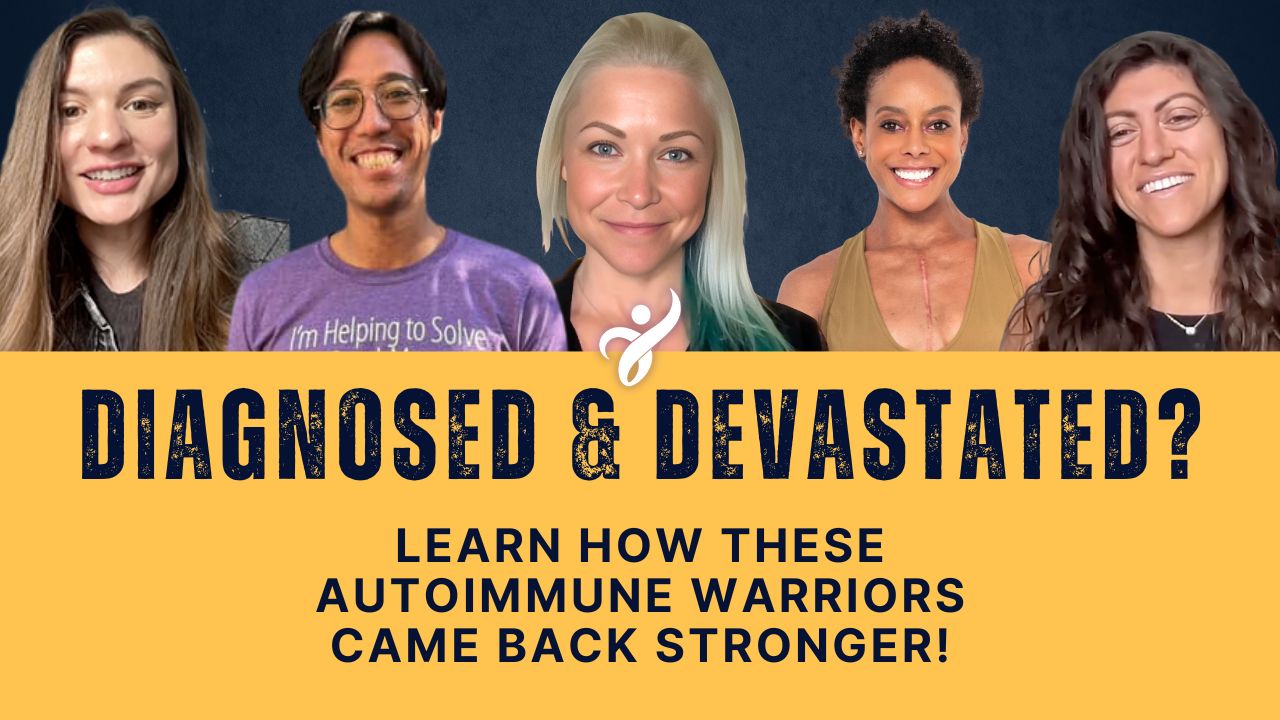
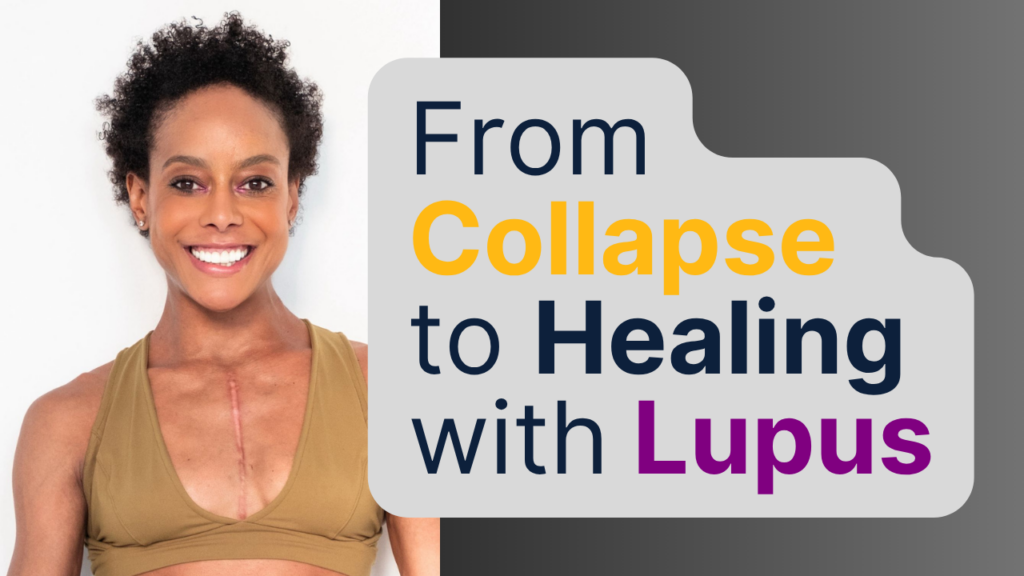
  • Victoria Gibbs, Lupus Warrior – collapsed on stage from lupus nephritis.

    “I had to bury the Wall Street girl who never slept. Until I grieved her, I couldn’t become the yoga teacher healing hundreds.”
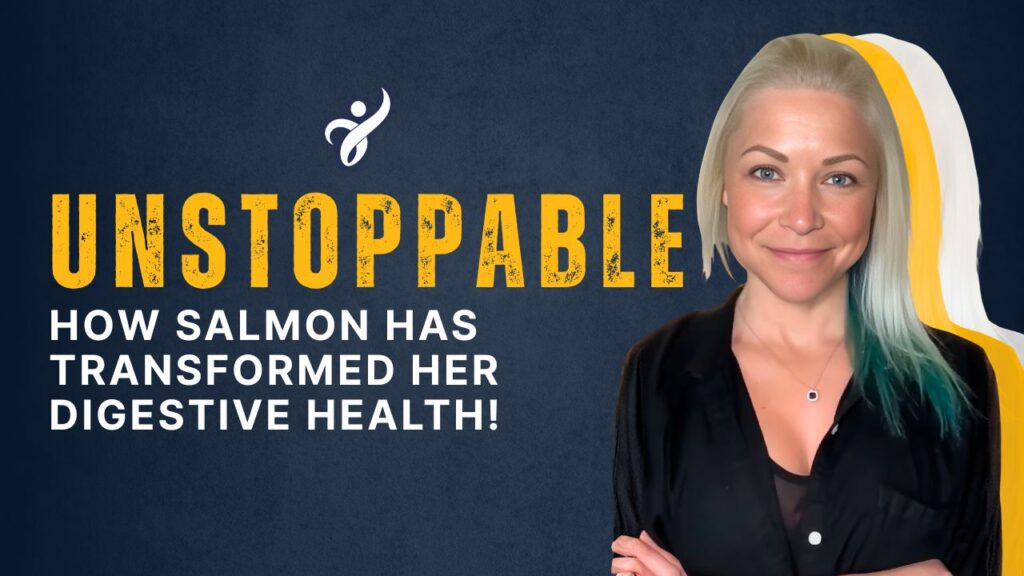
  • Gigi Ashworth, Ulcerative Colitis (UC) and food allergy Warrior – large intestine removed at 21. I was furious that vegetables almost killed me.

    I had to mourn ‘eating like everyone else’ before I could love my 12 lbs of salmon a week.” (Listen to Gigi’s podcast episode here!)
  • Elena – Graves’ + thyroid eye disease stole her face and energy.

    “I literally held a funeral for my old club promoter-self. Only then could I fall in love with slow mornings.”
  • Brian Ung, Lupus and scleroderma Warrior: His finger ulcers were so bad he couldn’t dress himself.

    “I had to grieve the pro-basketball dream before I could become Unstoppable.”
  • Amy Dixon – lost most of her eyesight at age 32, “Blindness had finality. Autoimmune disease keeps stealing. I grieve in waves — and I still swim.”
  • Ernest Reyna – 8th grade, body swollen overnight, RA + fibro “I had to bury my football and basketball dreams. I had to do this before I could step onto a college track and field team.”

If you’re stuck in anger, bargaining, or depression right now — you’re not behind. You’re exactly where you need to be to finally move forward.

And the moment you stop fighting the grief is the exact moment the pivot becomes possible.

These warriors didn’t wake up one day and magically “choose joy.”

They cried.

They raged.

They mourned the old version of themselves.

Then, when the tears dried, they took one tiny, terrifying step into a new chapter.

Here’s what that pivot actually looked like for them:

Invisible Strength – Pivot/Adapt

(Proof your story isn’t over — it’s just changing chapters.)

  • Gigi Ashworth’s large intestine was twisted and removed when she was 21 after ulcerative colitis nearly killed her. She mourned “normal” food forever.

    Then, she turned salmon into her superpower. She authored 2 cookbooks, appeared on MasterChef, and created a viral brand. Gigi proves you can thrive on the weirdest diet imaginable.
  • Victoria Gibbs blacked out on stage from lupus nephritis. Her hair was falling out, and she was swollen beyond recognition. She grieved the Wall Street hustler.

    Now she leads sold-out yoga retreats in Riviera Maya, Mexico. She teaches others how to listen to their bodies before blood work does.
  • Elena Graves’ + thyroid eye disease symptoms stole the face she saw in the mirror and the 4 a.m. party life she loved.

    She held a literal funeral for her old identity.

    Now, she lives by the beach, wakes up for sunrise yoga, and coaches thyroid warriors as an integrative pharmacist.
  • Amy Dixon woke up nearly blind at 32 from uveitis caused by rare juvenile rheumatic arthritis.

    She grieved the loss of her eyesight.

    Then she became a Paralympic triathlete and an 8× national champion. She also founded the No Sight No Limits camp, so no blind athlete ever feels alone.
  • Ernest Reyna was an 8th-grader whose body suddenly ballooned overnight from RA and Fibromyalgia. This condition buried his NBA dream.

    Now, he throws javelin and discus at the collegiate level, proving pain doesn’t get the final word.
  • Roxanne Lerner was diagnosed at 27. She was so sick she couldn’t walk across her apartment. She grieved the “healthy” life she thought was guaranteed.

    Now, she teaches neuroscience-backed movement classes to warriors all over the world from her home studio.

These pivots didn’t happen because they “stayed positive.” They happened because they finally let themselves feel the loss.

They discovered that on the other side of grief is a wide-open space to build something new.

Your pivot is waiting too. And you don’t have to find it alone.

The Good News?

Your story isn’t over. It’s just unfolding differently than you imagined.

“There’s never an end to doing things. There’s just a different way of doing those things.” -Amy Dixon, rare autoimmune disease warrior, Paralympic athlete

Every warrior above got stuck — until they found someone who’d been there and could guide them through.

That’s what we do here at Invigorate.

We help you:

  • Feel the grief without drowning
  • Build a life that works with your body (not against it)
  • Rediscover joy and purpose — right now, not “when you’re better.”

No toxic positivity. No “just push through.”

Just real, shame-free support from people who live this too.

Ready to stop circling and start moving forward?

Take the first step — it’s free and takes 2 minutes:

→ Take our free Grief & Autoimmune Quiz to see where you are on your journey and receive a FREE guide to help you process (2 minutes)

You’ve already survived the hardest parts. Now let us help you build the life that comes next.

You’re not alone anymore.

P.S. The assessment and discovery calls are genuinely free. No catch. We’ve both been exactly where you are — and we’re paying it forward.

Take the first step today. You deserve this. 💜

The next chapter of your story is waiting. It’s going to be even more beautiful than the one you’re grieving.


You’ve got invisible strength. Let us help you see it.

Wishing you joy and peace,

Karin & Chris

Listen to more Autoimmune Warrior and Allies stories on the Invisible Strength Podcast | Discover Invigorate Coaching to rebuild your life with autoimmune conditions.


P.S.S.Start your journey today. Connect with us and discover how small, science-backed adjustments can transform your energy.

They can also transform your mood and health this season.

⚠️ DISCLAIMER: This content is for general education and shared experiences only and is not medical advice. Always consult a qualified healthcare professional before making changes to your care or treatment plan.

Hey Warrior, Let’s Talk About Actually Feeling GOOD Again (Yes, Even With Autoimmune Disease)

Hey Warrior, Let’s Talk About Actually Feeling GOOD Again (Yes, Even With Autoimmune Disease)

Karin W

December 16, 2025

Hey Warrior, Let’s Talk About Actually Feeling GOOD Again (Yes, Even With Autoimmune Disease)

You know those days when you wake up and your body feels like it’s been in a bar fight… with itself? The ones where you cancel plans (again), cry in the shower, and Google “is this my life forever?”

I’ve been there. For 15+ years with lupus. And I’m going to say something that might sound impossible right now:

You can feel calm, clear, and even joyful again — without waiting for a miracle cure.

I’m Karin, and after helping hundreds of people with rheumatoid arthritis, Hashimoto’s, Sjögren’s, psoriasis, and every autoimmune flavor under the sun, I’ve seen it happen over and over.

The secret isn’t another elimination diet, expensive supplement, or “just think positive” nonsense.

It’s the P.A.R.R. Framework — the exact roadmap I wish someone had handed me when I was curled up on the bathroom floor, convinced my life was over.

P.A.R.R. = Peace → Awareness → Resilience → Renewal It’s not another to-do list. It’s a cycle you dance with, not a finish line you sprint to.

Ready? Grab your favorite mug (tea, bone broth, whatever doesn’t hate you today) and let’s do this.

1. Peace: Because Your Nervous System Is Screaming “MAYDAY” 24/7

Autoimmune life = chronic fight-or-flight. Your body literally thinks it’s being chased by a lion while you’re just trying to answer emails.

Stress isn’t “in your head.” It’s pumping out inflammatory cytokines that make flares worse. (Science says hi: Cleveland Clinic, NIH, all the big guns.)

Your new best friends (3–5 minutes max):

  • 4-7-8 Breathing → Inhale 4, hold 7, exhale 8 like you’re blowing through a straw. Do 4 rounds when anxiety is clawing at your throat. I’ve stopped full-blown panic attacks in the grocery store parking lot with this.
  • Hand-on-Heart Magic → One hand on heart, one on belly. Whisper: “I’m safe right now.” Sounds cheesy. Works stupidly well.
  • The 10-Minute Body Scan → Lie down, scan from toes to scalp, let tension melt like ice cream on a summer sidewalk. Insight Timer has free ones that feel like a hug.
Relaxed woman with eyes closed, practicing deep breathing to boost energy and focus—part of simple, science-backed strategies to beat the afternoon slump.

Do one of these today. Your inflamed cells will send you a thank-you note.

2. Awareness: From “Why Is My Body Betraying Me?” to “Ohhh, THAT’S the Pattern!”

Nothing fuels shame like mystery pain. Once you start tracking, the fog lifts and suddenly you’re the detective, not the victim.

Steal-my-coffee level simple:

  • The 30-Second Evening Check-In Open your phone notes and type: Energy today: 4/10 Worst symptom: brain fog + joint fire Suspect trigger: stayed up doom-scrolling + gluten pastry (whoops) Mood: angry-sad cocktail Patterns emerge in a week. It’s wild.
  • The Trigger Spiderweb Draw a circle: “My Flares.” Then legs coming out: “barometric pressure drops,” “people-pleasing,” “nightshades,” “perfectionism.” You’ll stare at it and go, “Well, damn.”
  • Grief Wave Surf Report Every night ask: “What flavor of grief crashed over me today?” (rage? bargaining? numbness?) Then: “What did it need?” (a cry, a nap, a scream into a pillow). Naming it shrinks it.

Knowledge = power. And way less self-gaslighting.

3. Resilience: Plans That Don’t Explode the Second You Have a Flare Day

Rigid routines are trash for autoimmune bodies. We need plans that say, “Cool, you’re at 30% today? Here’s the 30% version.”

Try these immediately:

  • The Energy Budget Game You get 100 points a day. Shower = 20. Work call = 35. Cooking = 30. Anything over 80 points? Tomorrow-you will hate today-you. Keep a 30-point buffer like your life depends on it (because your sanity does).
  • The Flare-Friendly Goal Ladder (my clients are OBSESSED) Goal: Move my body Level 1 (zombie day): wiggle toes in bed Level 3 (meh day): 5-minute walk to mailbox Level 5 (unicorn day): gentle yoga You still “win” every single day.
  • The Politest “No” Scripts Known to Humankind “I’m so grateful you thought of me — I need to honor my body’s limits right now and won’t be able to join. Rain check when I’m higher on the ladder?”

Boundaries aren’t mean. They’re oxygen.

4. Renewal: Remembering You’re Still Allowed to Feel Alive (Right Now)

This one makes people cry happy tears in sessions.

Because joy isn’t a reward for “finally getting better.” It’s medicine.

Start here:

  • Three Magic Things Every night: 3 things that sparked joy or gratitude. Mine yesterday: the smell of rain, my dog’s snoot boop, and the perfect ripe avocado. Tiny proof that life still loves you.
  • Who Was I? Who Am I Becoming? Journal prompt (do it once, sob, thank me later): “The old me loved _____. Parts of her are still here when I _____. This fire has forged new superpowers like _____.” (Clients discover they’re now empathy ninjas, boundary badasses, and deeply hilarious.)
  • Low-Energy Joy Menu List your top values (creativity, connection, beauty). Next to each, one flare-friendly way to feed it this week. Text a meme to a friend = connection. Color in a coloring book = creativity. Boom.

You’re not just surviving. You’re mid-metamorphosis. And the butterfly is going to be epic.

So… What Now?

Pick ONE thing from this post and do it today. Just one. (I vote 4-7-8 breathing — it’s stupidly powerful.)

Then, when you’re ready for someone to hold your hand through the messy, beautiful middle part — where mindset actually becomes momentum — come find me.

Book a free 30-minute Clarity Call and we’ll figure out exactly where you are in the P.A.R.R. cycle and what your very next step feels like joy instead of overwhelm.

Tap here to grab a spot (they go fast)!

You don’t have to do this alone anymore.

You’ve already survived 100% of your worst days. Now let’s make the next ones feel like living.

Dance on, you gorgeous warrior, Karin (The lupus girl who learned to dance in the rain)

P.S. Still here? Do the 4-7-8 breaths right now. I’ll wait. …See? Told you. Magic. ✨

P.S.S.Start your journey today. Connect with us and discover how small, science-backed adjustments can transform your energy.

They can also transform your mood and health this season.

⚠️ DISCLAIMER: This content is for general education and shared experiences only and is not medical advice. Always consult a qualified healthcare professional before making changes to your care or treatment plan.

Grief and Autoimmune Disease: How to Cope with Loss, Change, and Holiday Triggers

Grief and Autoimmune Disease: How to Cope with Loss, Change, and Holiday Triggers

Karin W

December 12, 2025

Grief is something we often associate with the loss of a loved one. But, for those living with autoimmune diseases, grief shows up in more ways than we usually name.

It can be quiet, confusing, and invisible. It can sit in the body as much as in the heart. And it often arrives in seasons—some expected, some not.

Chris and I explored what grief really feels like. We examined how it manifests in chronic illness.

We also discussed how we can move through it with compassion and community.

Here’s a deeper dive into those insights—especially for anyone navigating grief right now.


Grief Isn’t Just Sadness—And It Isn’t Just About Loss of People

Grief is woven into the human experience. As Chris shared, it’s a foundational emotion: a response to losing something meaningful—whether or not it’s a person.

When living with an autoimmune disease, grief can show up as:

  • The ache of losing your old self
  • The frustration of a changing body
  • The fear that life will never look the same
  • The isolation of feeling misunderstood
  • The loss of independence, mobility, or routines
  • The shift in roles, relationships, or career identity
  • The foods or traditions you can no longer partake in

Many people don’t even realize what they’re experiencing is grief. It can look like sadness, but it can also look like:

  • Anger
  • Anxiety
  • Irritability
  • Emotional shutdown
  • Trying to control everything
  • Exhaustion
  • Feeling “behind” or “not yourself.”

Grief doesn’t have one face—and it definitely doesn’t have one timeline.


Grief Happens in Waves, Not Stages

We often hear about “the stages of grief,” but real life is not that tidy.

Grief is more like the ocean:

  • Sometimes waves crash hard.
  • Sometimes they gently wash up and recede.
  • Sometimes the water is calm…
  • …until the next swell rises without warning.

As Chris said, grief creates a hole that doesn’t disappear. Instead, we grow life around it. That’s where hope lives—not in erasing grief, but in enlarging our lives so the grief doesn’t define everything.


Honoring Your Old Self While Embracing Who You’re Becoming

One of the hardest parts of chronic illness is wanting to go “back to normal.”

But there is no going back—and that’s not failure. It’s evolution.

Just as artists move through eras (hello, Beyoncé and Taylor Swift), we do too.

Illness can mark the beginning of a new era—one built not on loss, but on transformation:

  • You gain empathy for others.
  • You learn boundaries you never knew you needed.
  • You discover strength you didn’t know you had.
  • You appreciate moments you used to rush past.

You aren’t leaving your old self behind—you’re integrating that version of you into a wiser, deeper you.


Recognizing When Grief Is Becoming a “Home” Instead of a Visit

It’s normal to feel grief regularly, especially during health setbacks. But it becomes a danger when grief turns into a place you live instead of a place you visit.

How can you tell?

By knowing your baseline.

A helpful practice is checking in daily:

  • Where am I emotionally today?
  • Does this feel like me?
  • Am I forcing cheerfulness?
  • Am I sharper, angrier, or more withdrawn than usual?
  • Do I feel trapped in this feeling?
  • What would help me return to myself?

Self-awareness is a form of self-protection—it helps you know when to seek community, therapy, support, or new coping tools.


The Power of Community in Navigating Grief

Humans are wired for connection. Isolation makes grief heavier.

But chronic illness can make the community tough. Sometimes your closest people don’t get it. Sometimes caregivers struggle too—they’re grieving their own loss of “how life used to be.”

They’re carrying pressure, fear, and responsibility they never voice.

This is why building community before a crisis matters. Check in on people when things are good. Keep nurturing the small connections. Build your circle in seasons of strength, so it’s there in moments of weakness.

Because grief was never meant to be carried alone.


How Grief Shows Up During the Holidays (In Ways We Don’t Always Recognize)

The holidays have a way of magnifying everything—joy, yes…but also grief.

For those living with chronic illness, grief during the holidays can look like:

✨ Missing people who have passed away

Even if it’s been years, memories surface more vividly in December. Traditions bring their absence into sharp focus.

You can feel:

  • Loneliness in moments when they should be there
  • Guilt for celebrating without them
  • Sadness that hits in waves at unexpected times

✨ Grieving your “old healthy self.”

The holidays highlight the contrast between who you were and who you are now:

  • You don’t have the energy to host like you used to.
  • You need to leave early or cancel altogether.
  • You watch others do things your body can’t.
  • You miss feeling carefree during this season.

And that grief is real.

✨ Missing foods, traditions, or routines you can no longer enjoy

This one is so specific to the autoimmune community—and not talked about enough.

You can grieve:

  • The comfort foods you used to love
  • Holiday cooking or baking, you can’t join in
  • Family gatherings revolving around meals you can’t eat
  • The ease of eating “whatever” without consequences

Food is emotional. It’s memory. It’s culture. Losing certain foods is a form of grief.

✨ Feeling the pressure to “put on a happy face.”

While everyone around you is cheerfully posting highlight reels, you’re feeling:

  • Exhausted
  • In a flare
  • Overstimulated
  • Sad
  • Or just…not okay

You’re allowed to protect your peace.
You’re allowed to grieve.
You’re allowed to feel differently from the room you’re in.

And you’re allowed to create new traditions that honor your current needs.


If You’re Supporting Someone Who Is Grieving

You don’t need the perfect words.

You don’t need to fix anything.

What people need most is:

  • To be heard
  • To be seen
  • To be given space without pressure
  • To be reminded of their dignity
  • To be supported rather than rushed

Listening is healing. Presence is healing. Patience is healing.


If You’re Grieving Right Now

Whether this season feels heavy, confusing, lonely, or simply different—you’re not alone.

Grief doesn’t mean you’re broken.
It means you’ve loved deeply, lived fully, and lost meaningfully.

And you deserve support through every wave.

Chris and I are here for you.
Your community is here for you.
Our Invigorate family is here for you.

DM us, comment, reach out—we want to walk with you through it.

Until next time, take care of yourself.
And as Chris always reminds us:

Choose kindness. You never know what someone is carrying.

Integrating These Mindset Shifts with Invigorate Coaching

Science is clear: mindset influences healing, resilience, immunity, energy, and behavior change.

But mindset doesn’t shift through reading alone.
It shifts through:

  • Guided reflection
  • Personalized self-talk strategies
  • Accountability with compassion
  • Habit architecture
  • Identity alignment

That’s exactly what Invigorate Coaching specializes in.

Through our work, you will:

  • Uncover your Why
  • Build a healing mindset
  • Reduce stress-driven inflammation
  • Rewrite inner narratives
  • Adopt sustainable habits
  • Establish routines that support recovery and growth

If you’re ready to turn mindset into momentum:

Book your free clarity call with us:

Let’s map your next level of healing — together.

FAQ

Does mindset affect physical health?
Yes — self-talk influences cortisol, inflammation, and autonomic nervous system activity.

Can self-talk actually help healing?
Supportive inner speech can reduce stress hormones, enhance resilience, and improve recovery.

How can I develop a healing mindset?
Start with your Why, practice compassionate self-talk, and adopt a sliding-scale habit approach.

What coaching is best for mindset change?
Mind-body-based coaching, like Invigorate, helps integrate psychological and lifestyle shifts for long-term change.

Dance on, friends,
Karin

P.S. If you live with an autoimmune condition or love someone who does, know this: You’re not alone. Get in touch with us – we’d love to connect!

P.S.S.Start your journey today. Connect with us and discover how small, science-backed adjustments can transform your energy.

They can also transform your mood and health this season.

⚠️ DISCLAIMER: This content is for general education and shared experiences only and is not medical advice. Always consult a qualified healthcare professional before making changes to your care or treatment plan.

How Your Brain Could Be Causing Your Chronic Pain (And What to Do About It)

How Your Brain Could Be Causing Your Chronic Pain (And What to Do About It)

Karin W

December 8, 2025

The Surprising Science Behind Chronic Pain and Neuroplastic Symptoms – Unlocking the Hidden Roots of Chronic Pain

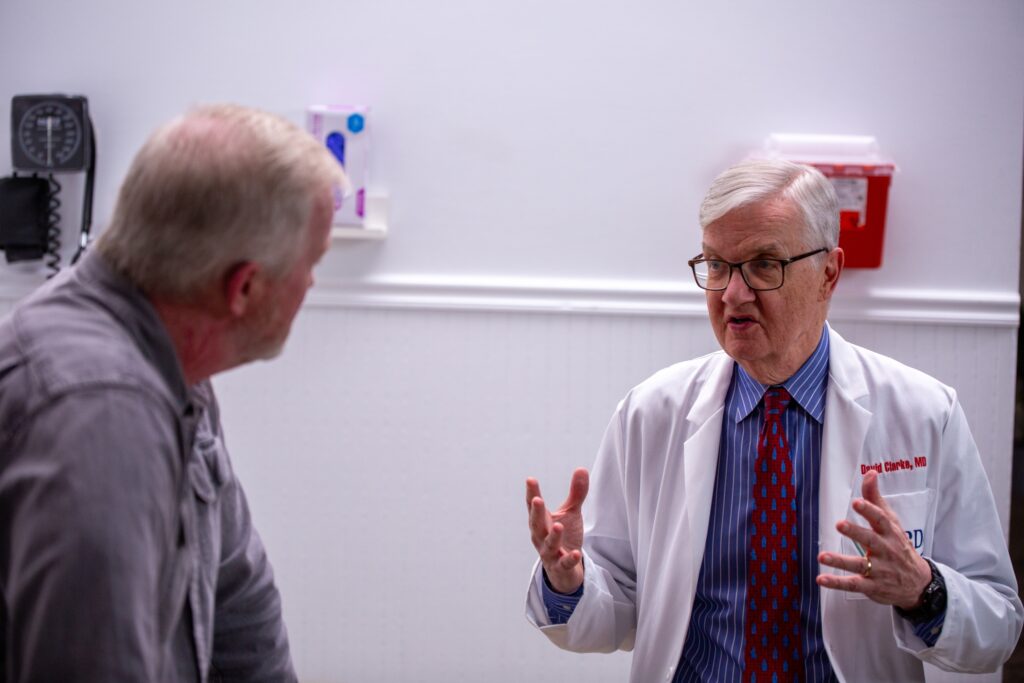
Chronic pain can be confusing, frustrating, and life-altering—especially when medical tests show nothing wrong. In the latest episode of the Invisible Strength Podcast, Dr. David Clarke, MD, dives deep into the world of brain-generated pain, also called neuroplastic symptoms.

Dr. Clarke, a gastroenterologist with a background in psychology, has treated over 7,000 patients who weren’t getting results from conventional medicine. His insights challenge traditional notions of pain, revealing that arthritis and other conditions don’t always correlate with pain, and that the brain itself can generate real symptoms—even without physical injury.

🎧 Listen now: Invisible Strength Podcast – Dr. David Clarke

Key Insights from Dr. Clarke

  • Pain is generated in the brain, not just the joints. Many patients experience real pain even when there’s no physical damage.
  • Arthritis does not always equal pain. Understanding pain perception is crucial for effective treatment.
  • Neuroplastic symptoms are common. Up to 40% of patients visiting primary care doctors experience brain-to-body conditions.
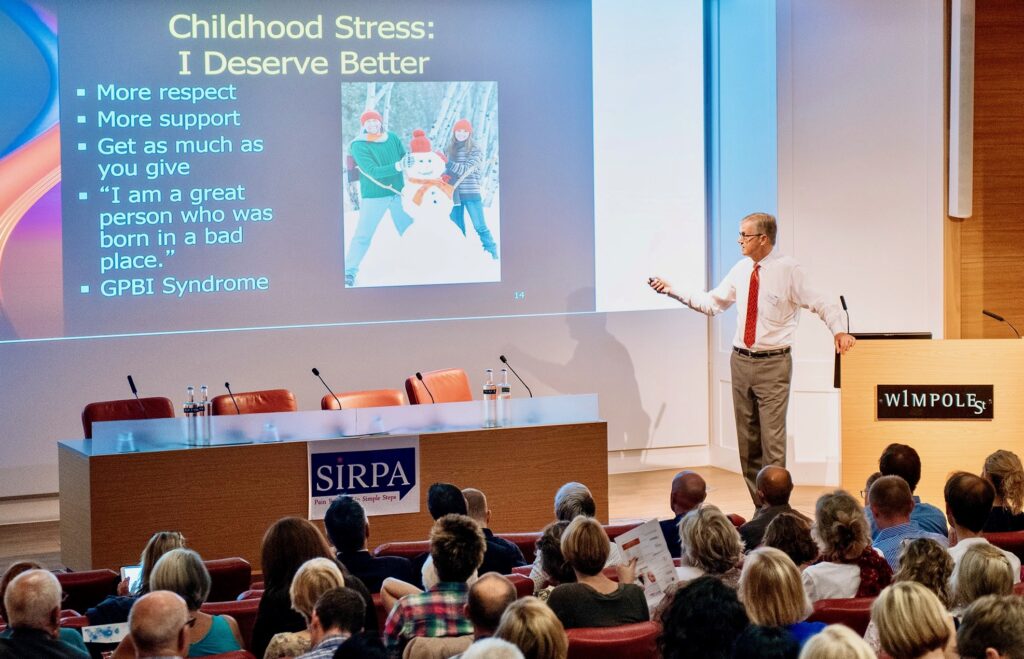
  • Childhood trauma matters. Adversity in early life increases the likelihood of autoimmune and chronic conditions later.
  • The brain can be “retrained.” New neuroplastic therapies, including Emotional Awareness and Expression Therapy, have shown 63% of patients achieve significant pain relief, compared to 17% with traditional CBT.

“The brain can change in a way that produces real pain or illness, and it can also change in a way that alleviates the symptoms. It’s a two-way street,” explains Dr. Clarke.

What Are Neuroplastic Symptoms?

Many assume pain or illness is caused by injury or disease. However, neuroplastic symptoms (NS) are chronic conditions triggered by changes in the brain due to stress, trauma, or emotions. These symptoms appear in conditions such as:

  • Fibromyalgia
  • Migraines
  • Irritable Bowel Syndrome
  • Long COVID
  • Certain autoimmune flare-ups

Because these symptoms often don’t respond to conventional treatments, patients can feel neglected or hopeless. Awareness and understanding are key to effective management.

Practical Approaches to Healing

Dr. Clarke emphasizes safe, science-backed strategies for managing neuroplastic symptoms:

  1. Repatterning the brain through therapy and targeted exercises.
  2. Self-awareness and emotional regulation to manage stress and triggers.
  3. Small daily habits that improve resilience and reduce pain over time.

For autoimmune warriors and chronic illness patients, understanding the mind-body connection can be empowering, giving them back control over symptoms and improving their quality of life.

Why This Matters

Neuroplastic symptoms challenge the traditional medical model and require a holistic approach. Dr. Clarke’s work encourages:

  • Medical professionals need to rethink their skepticism toward patients with “medically unexplained” symptoms.
  • Patients to explore self-empowering, affordable strategies for managing chronic pain.

“Stories about patients overcoming pain through understanding and self-empowerment resonate deeply with those struggling to find answers,” Dr. Clarke notes.

Resources & Next Steps

To learn more about neuroplastic pain and Dr. Clarke’s work:

🎧 Listen to the full episode now: Invisible Strength Podcast – Dr. David Clarke

Integrating These Mindset Shifts with Invigorate Coaching

Science is clear: mindset influences healing, resilience, immunity, energy, and behavior change.

But mindset doesn’t shift through reading alone.
It shifts through:

  • Guided reflection
  • Personalized self-talk strategies
  • Accountability with compassion
  • Habit architecture
  • Identity alignment

That’s exactly what Invigorate Coaching specializes in.

Through our work, you will:

  • Uncover your Why
  • Build a healing mindset
  • Reduce stress-driven inflammation
  • Rewrite inner narratives
  • Adopt sustainable habits
  • Establish routines that support recovery and growth

If you’re ready to turn mindset into momentum:

Book your free clarity call with us:

Let’s map your next level of healing — together.

FAQ

Does mindset affect physical health?
Yes — self-talk influences cortisol, inflammation, and autonomic nervous system activity.

Can self-talk actually help healing?
Supportive inner speech can reduce stress hormones, enhance resilience, and improve recovery.

How can I develop a healing mindset?
Start with your Why, practice compassionate self-talk, and adopt a sliding-scale habit approach.

What coaching is best for mindset change?
Mind-body based coaching, like Invigorate, helps integrate psychological and lifestyle shifts for long-term change.

Dance on, friends,
Karin

P.S. If you live with an autoimmune condition or love someone who does, know this: You’re not alone. Get in touch with us – we’d love to connect!

P.S.S.Start your journey todayconnect with us and discover how small, science-backed adjustments can transform your energy, mood, and health this season.

⚠️ DISCLAIMER: This content is for general education and shared experiences only and is not medical advice. Always consult a qualified healthcare professional before making changes to your care or treatment plan.

The Mindset Shift That Saved Her Life: Felicity’s RA + Chronic Fatigue Journey

The Mindset Shift That Saved Her Life: Felicity’s RA + Chronic Fatigue Journey

Karin W

December 3, 2025

Living with rheumatoid arthritis, chronic fatigue, and central sensitization syndrome (CSS) can completely transform a person’s world.

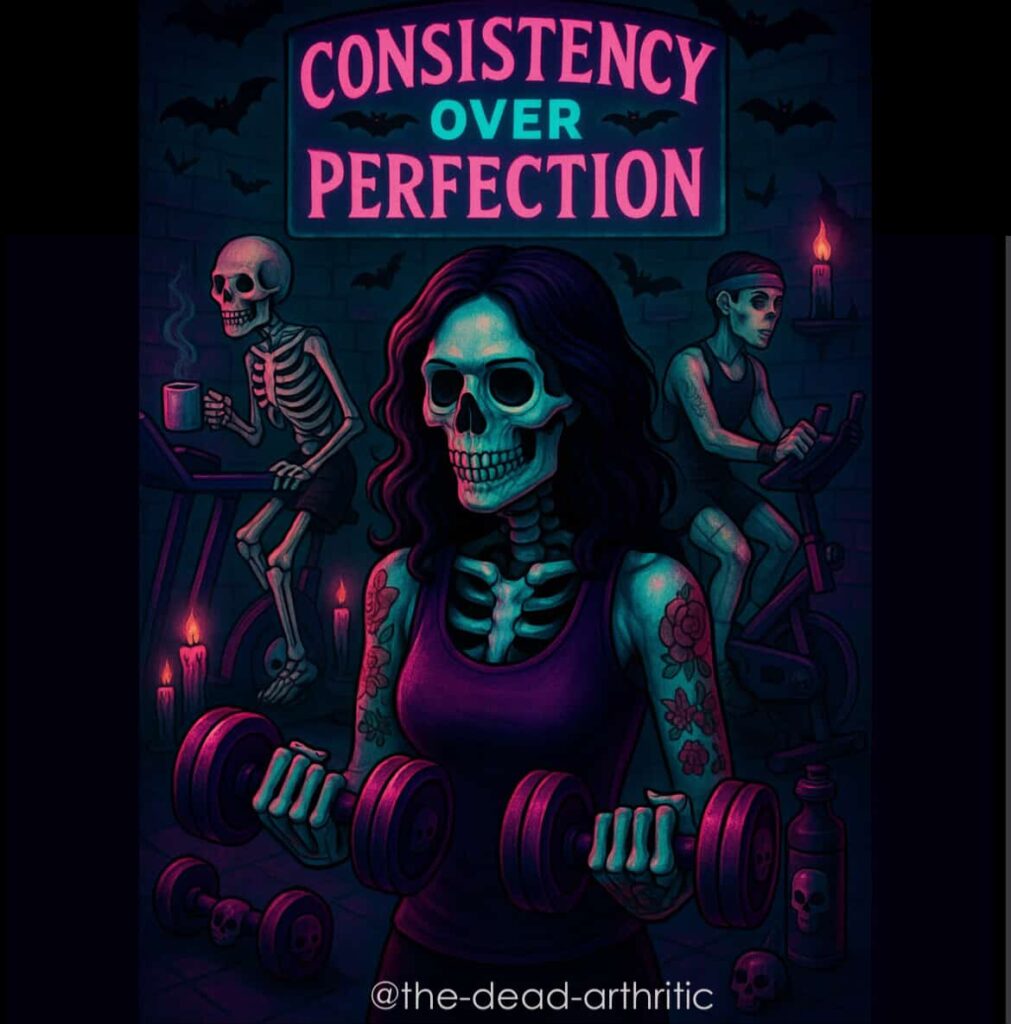
For many, that transformation feels like loss. But for Felicity—known online as @the_dead_arthritic—it became the catalyst for an unexpected mindset shift that ultimately saved her life.

In this episode of the Invisible Strength Podcast, Felicity opens up about the moment everything changed, the coping tools that pulled her out of a dark place, and why she believes our thoughts have far more power than we realize.

This is one of the most honest, surprising, and uplifting conversations we’ve ever had—and if you’ve ever struggled with fatigue, pain, identity shifts, or finding hope again, you’ll want to hear every second.

From Reformed Cynic to Unexpected Optimist

When Felicity was diagnosed with RA at 18, she didn’t have the medical knowledge or personal confidence to advocate for herself.

Years later, after becoming a veterinarian, she understood her body better—but her symptoms grew worse. Chronic fatigue, CSS, and relentless pain made daily life unrecognizable.

She calls herself a “reformed cynic surviving on positivity and dark humor,” but this mindset didn’t come naturally. It was built through necessity.

The shift began with a surprising, reluctant experiment: meditation and mindfulness.

Felicity had always been skeptical—eye-roll level skeptical. But after giving it a chance for a few weeks, something changed.

Her fatigue eased. Her brain felt clearer. Her nervous system calmed. And she realized she had far more control over her internal world than she ever imagined.

When Life Hits the Hardest: Her Lowest Moment

Felicity shares openly that at her lowest point, she cashed out her 401K to consider going to Switzerland to visit Dignitas, a clinic that supports legal human euthanasia. She genuinely believed her life was over.

But before following through, she entered a Mayo Clinic CSS program—one that completely changed her trajectory.

Inside the program, complaining, venting, and talking about pain are not allowed. It’s a highly specialized environment, and it works only for CSS (not chronic pain in general).

But for Felicity, this unfamiliar approach ended years of spiraling symptoms.

“It saved my life,” she says without hesitation.

Instead of Switzerland, she went to England. She relearned socialization, rebuilt routines, and began rediscovering who she was outside of illness.

Her journey is proof that a single moment, a single choice, or a single program can truly turn everything around.

Rebuilding an Identity After Losing a Career

Felicity spent a decade as a veterinarian—a job defined by high stress, pressure, perfectionism, and emotional labor.

Leaving it wasn’t just a career shift; it was an identity rupture.

She tried everything to fill the void: new hobbies, different volunteer roles, lifestyle experiments, and countless trial-and-error routines.

“You have to figure out how to redirect that energy,” she explains.
And what she learned is that purpose doesn’t have to look the same as it did before illness.

Daily Practices That Keep Her Grounded

Her routine is built on tiny, accessible habits—most five minutes or less. Small, consistent wins over unrealistic perfection.

She shares the exact daily practices that changed her life:

• Writing three things she’s grateful for
• A Qigong-style shaking practice to release tension
• “Indoor walking” YouTube videos
• Guided meditation with muscle relaxation at night
• Snapping a rubber band on her wrist when negative thoughts spiral (“snap out of it”)
• Mindfulness whenever she walks her dog
• Looking for “glimmers”—micro-moments that spark joy

“Consistency over perfection,” she repeats. “These things take five minutes. But they matter.”

Navigating Relationships, Communication, and Unsolicited Advice

One of the hardest parts of chronic illness?
The comments.

The cure suggestions.
The “Have you tried ___?” memes.
The unhelpful assumptions.

Felicity has heard it all—especially the ones that imply illnesses like RA or CSS are “all in your head.” Yet she says something both controversial and freeing:

“People don’t like hearing it—but in a way, it is all in your head. Your brain is your GPS. If you hard-wire negative thoughts, that’s the direction you steer. If you shift the wiring, you shift the direction.”

It’s a bold mindset—and one that won’t resonate with everyone. But for her, it’s been lifesaving.

Dark Humor, Community, and Invisible Strength

Dark humor has carried Felicity through some of the worst moments. She shares funny stories, strange coping moments, and the surprising power of laughing at the absurdity of illness.

She also talks about the role of community—why chronic illness can isolate you, and how sharing your story helps you find people who “get it.”

When asked what Invisible Strength means to her, she says it’s the quiet victories no one else sees:

“Some days, the bravest thing you do is get out of bed. Or take a shower. Or choose hope. Invisible strength is all the things you celebrate alone.”

What She Wants Newly Diagnosed People to Know

Felicity’s advice is simple, compassionate, and deeply grounded in experience:

• Don’t wait to advocate for yourself.
• Your story doesn’t end with a diagnosis.
• You’re allowed to become someone new.
• You’re stronger than you think—even when you don’t feel it.
• Hope isn’t toxic. It’s necessary.

If she could destroy one chronic illness stereotype, it would be the idea that invisible illness makes you weak. In reality, it builds resilience most people will never understand.

You’re Allowed to Choose a New Story

Felicity wants listeners to walk away knowing this:

“You can change your life in tiny ways. Five minutes. One thought. One new habit. One choice. Those things add up. And they might save your life the way they saved mine.”

This episode is powerful, raw, vulnerable, and full of unexpected hope.

Listen to the Full Episode

🎧 The Mindset Shift That Saved Her Life: Felicity’s RA + Chronic Fatigue Journey
Watch on YouTube, Spotify, Apple Podcasts, or any major platform.

Integrating These Mindset Shifts with Invigorate Coaching

Science is clear: mindset influences healing, resilience, immunity, energy, and behavior change.

But mindset doesn’t shift through reading alone.
It shifts through:

  • Guided reflection
  • Personalized self-talk strategies
  • Accountability with compassion
  • Habit architecture
  • Identity alignment

That’s exactly what Invigorate Coaching specializes in.

Through our work, you will:

  • Uncover your Why
  • Build a healing mindset
  • Reduce stress-driven inflammation
  • Rewrite inner narratives
  • Adopt sustainable habits
  • Establish routines that support recovery and growth

If you’re ready to turn mindset into momentum:

Book your free clarity call with us:

Let’s map your next level of healing — together.

FAQ

Does mindset affect physical health?
Yes — self-talk influences cortisol, inflammation, and autonomic nervous system activity.

Can self-talk actually help healing?
Supportive inner speech can reduce stress hormones, enhance resilience, and improve recovery.

How can I develop a healing mindset?
Start with your Why, practice compassionate self-talk, and adopt a sliding-scale habit approach.

What coaching is best for mindset change?
Mind-body based coaching, like Invigorate, helps integrate psychological and lifestyle shifts for long-term change.

Dance on, friends,
Karin

P.S. If you live with an autoimmune condition or love someone who does, know this: You’re not alone. Get in touch with us – we’d love to connect!

P.S.S.Start your journey todayconnect with us and discover how small, science-backed adjustments can transform your energy, mood, and health this season.

⚠️ DISCLAIMER: This content is for general education and shared experiences only and is not medical advice. Always consult a qualified healthcare professional before making changes to your care or treatment plan.

The “F*ck It” Mindset: A Science-Backed Shift That Heals Faster Than Toxic Positivity

The “F*ck It” Mindset: A Science-Backed Shift That Heals Faster Than Toxic Positivity

Karin W

November 25, 2025

When you tell yourself, “You can do this,” a tiny voice inside often answers back: “But what if I can’t?” That hesitation, that micro-doubt, creates stress, stalls action, and keeps you stuck.

But the moment you say, “f*ck it,” something different happens.
You release perfection.
You release pressure.
You give yourself permission to show up imperfectly — and still move forward.

This simple mindset shift has more power than you think. And a growing body of science backs it up.

Why “F*ck It” Works Better Than Forced Positivity

The “f*ck it” mindset isn’t about being careless.

It’s about freeing yourself from the mental constraints that trigger fear, shame, and self-criticism.

Traditional positive affirmations often spark resistance:
“You got this!” → “But what if I don’t?”

“Fuck it” interrupts that cycle.
It signals to your brain:
I’m allowed to try without the fear of failure.
This reduces cognitive load and lowers emotional pressure — which increases motivation.

This is the foundation of a healing mindset.

The Science: Your Self-Talk Physically Changes Your Body

Your mindset isn’t just psychological — it’s biological.

Self-talk affects stress hormones

Studies show that negative or self-critical inner dialogue raises salivary cortisol (your stress hormone), while supportive internal speech keeps levels stable. Stress hormones directly influence inflammation, immune resilience, and cellular repair.

Inner dialogue changes your nervous system

Emotional self-talk causes measurable changes in heart rate and autonomic activity, meaning your body does not distinguish between words spoken internally or externally. Your nervous system responds to your tone.

Therapeutic inner speech reduces inflammation

Meta-analyses on psychoneuroimmunology interventions (like cognitive behavioral therapy, meditation, and guided inner dialogue) show significant long-term reductions in pro-inflammatory cytokines.

Your thoughts aren’t “just thoughts.”

They’re signals — and your body listens.

5 Mindset Shifts That Support Healing, Habit-Changing, and Long-Term Growth

These shifts come from neuroscience, behavior psychology, and ancient contemplative practices — including frameworks shared on the Jay Shetty Podcast (“This SECRET Was Kept by Monks”).

1. Selfish Care → Selfless Care

You push through pain, fatigue, or burnout because you think you “should.” But pushing through often prolongs symptoms and diminishes your ability to show up for others.

Sustainable healing requires self-care before after-care.

Rest isn’t indulgent — it’s responsible.
Slowing down is a strategy, not a weakness.

2. Victim → Control

Living with chronic illness or ongoing stress can trigger a victim mindset:

  • “This isn’t fair.”
  • “Why me?”
  • “I have no control.”

But research shows we influence up to 60% of our health outcomes through lifestyle, stress management, mindset, recovery, and environment.

You can’t control everything, but you can control enough to transform your trajectory.

3. All-or-Nothing → Sliding Scale

Healing is nonlinear.
Growth is incremental.
Mastery is messy.

“Perfect or nothing” is the surest path to quitting.

In a sliding-scale mindset: any improvement counts, any step forward matters.

Sometimes you’ll slide back — that’s not failure.

It’s part of the math of progress.

4. Comparison → Compassion

Comparison drains energy.
Compassion creates capacity.

When you catch yourself being self-critical, replace the critique with a simple supportive mantra:

  • “I’m learning.”
  • “I’m becoming.”
  • “One step is enough today.”
  • “My body is trying.”

This isn’t coddling — it’s rewiring.

5. Scarcity → Abundance

Scarcity keeps you stuck:
“I don’t have enough time, energy, discipline, motivation.”

Abundance anchors you in truth:
“I have enough right now to take the next step.”

Small, abundant steps compound into enduring change.

Why Knowing Your Why Makes Every Mindset Shift Easier

Your Why is your internal compass — the North Star that guides decisions, boundaries, and habits.

When you’re clear on your Why:

  • Distractions lose power
  • Comparison becomes irrelevant
  • Pressure turns into purpose
  • Self-talk becomes aligned

Before adopting any new habit or shift, start with your Why.
Let it lead, so your mindset can follow.

How to Practice the Sliding-Scale Method for Daily Progress

Instead of rigid yes/no success criteria, use flexible measures like:

  • 5 minutes instead of 45
  • Half the workout instead of skipping
  • One nourishing meal instead of a full reset
  • One supportive thought instead of spiraling

Consistency is not intensity — it’s continuity.

Integrating These Mindset Shifts with Invigorate Coaching

Science is clear: mindset influences healing, resilience, immunity, energy, and behavior change.

But mindset doesn’t shift through reading alone.
It shifts through:

  • Guided reflection
  • Personalized self-talk strategies
  • Accountability with compassion
  • Habit architecture
  • Identity alignment

That’s exactly what Invigorate Coaching specializes in.

Through our work, you will:

  • Uncover your Why
  • Build a healing mindset
  • Reduce stress-driven inflammation
  • Rewrite inner narratives
  • Adopt sustainable habits
  • Establish routines that support recovery and growth

If you’re ready to turn mindset into momentum:

Book your free clarity call with us:

Let’s map your next level of healing — together.

FAQ

Does mindset affect physical health?
Yes — self-talk influences cortisol, inflammation, and autonomic nervous system activity.

Can self-talk actually help healing?
Supportive inner speech can reduce stress hormones, enhance resilience, and improve recovery.

How can I develop a healing mindset?
Start with your Why, practice compassionate self-talk, and adopt a sliding-scale habit approach.

What coaching is best for mindset change?
Mind-body based coaching, like Invigorate, helps integrate psychological and lifestyle shifts for long-term change.

Dance on, friends,
Karin

P.S. If you live with an autoimmune condition or love someone who does, know this: You’re not alone. Get in touch with us – we’d love to connect!

P.S.S.Start your journey todayconnect with us and discover how small, science-backed adjustments can transform your energy, mood, and health this season.

⚠️ DISCLAIMER: This content is for general education and shared experiences only and is not medical advice. Always consult a qualified healthcare professional before making changes to your care or treatment plan.

🛍️ Affiliate Disclosure: Some product links in this episode may be Amazon affiliate links. As an Amazon Associate, we may earn a small commission from qualifying purchases — at no extra cost to you. These commissions help support the Invisible Strength community and ongoing wellness resources.

🎁33 Caregiver Holiday Wellness Gifts: Pause, Recharge & Feel Seen

🎁33 Caregiver Holiday Wellness Gifts: Pause, Recharge & Feel Seen

Karin W

November 7, 2025

Caring for someone with an autoimmune or chronic condition is a full-time commitment. During the holidays, it’s easy for caregivers to put their own needs last. This year, give gifts that support rest, reduce stress, and make daily life easier. Gifts that show caregivers they are truly seen and valued aren’t just thoughtful—they’re essential.

🌙 Pause & Recharge: Rest & Recovery

Caregivers often sacrifice sleep and relaxation. Gifts that help them unwind and restore energy are priceless.

Top Picks:

  • Essential Oil Aromatherapy Roll-Ons – Instant stress relief on the go. Shop Here
  • Heated Neck & Back Massager – Melt away tension after long caregiving days. Shop Here
  • Electric Heated Neck & Back Massage Pillow – Cozy comfort for evenings at home. Shop Here
  • Weighted Eye Mask & Silk Sleep Eyemask – Deep, restorative sleep; block light and calm nerves. Weighted Mask | Silk Mask
  • Deep Sleep Pillow Spray – Calm mind for better rest. Shop Here
  • Essential Oil Diffuser – Bring spa-like aromatherapy home. Shop Here
  • Aromatherapy Shower Steamers – Quick, soothing mental reset. Shop Here
  • Burt’s Bees Hand Repair Set – Natural care for hardworking hands. Shop Here
  • Self-Care Basket – Pre-curated relaxation essentials. Shop Here
  • Sleep Sound Machine – Block distractions for restful nights. Shop Here

Why It Works: Helps caregivers restore energy, reduce tension, and improve sleep quality, enabling them to care for others without neglecting themselves.

🧘 Mind the Mind: Mental & Emotional Wellness

Caregiving carries an emotional load. Gifts that foster mindfulness, gratitude, and mental clarity make a big impact.

Top Picks:

  • The 5-Minute Journal by Intelligent Change – 5 minutes a day boosts focus, positivity, and mood. Shop Here
  • Warm Hugs Candles – Soy candles with essential oils for stress relief and mindfulness. Shop Here

Why It Works: Reduces anxiety, encourages reflection, and provides small moments of daily peace.

💌 Show Them You See Them: Recognition & Meaningful Keepsakes

Caregivers often feel invisible. Gifts that acknowledge their hard work make a powerful statement.

Top Picks:

Why It Works: Recognition improves morale and reinforces that their efforts are valued and appreciated.

🛠 Make Life Easier: Practical & Daily Support

Reduce stress and save time with gifts that simplify day-to-day caregiving.

Top Picks:

  • Robot Vacuum – Free up hours from cleaning duties. Shop Here
  • Groceries Delivered with Misfits Market – Healthy meals without the shopping stress. Shop Here
  • $15 Off Instacart – Quick grocery convenience. Shop Here
  • 15% Off Purple Carrot Meal Delivery – Plant-based meals made simple. Shop Here
  • Invisible Strength Autoimmune Allies Fleece Blanket – Cozy, comforting, and community-minded. Get Yours Here!
  • Winter WarmersHeated vests, electric-heated gloves and socks, or electric blankets.
  • Fluffy Plush Weighted Blanket – Stress-relieving comfort. Shop Here
  • Light-Therapy Lamp – Boosts mood; may be FSA/HSA eligible.

Why It Works: Time-saving and comfort-focused gifts help caregivers focus on self-care and reduce physical strain.

🍳 Favorite Kitchen Gadgets

Save prep time and make meals enjoyable.

  • Ninja Blender – Smoothies, soups, sauces. Shop Here
  • Ninja Crispi Air Fryer – Healthy meals, minimal cleanup. Shop Here
  • Food Processor – Chop, blend, prep easily. Shop Here
  • Instapot – One-pot cooking convenience. Shop Here
  • Stanley Tumbler – Hot or cold beverages on-the-go. Shop Here

Why It Works: Reduces daily stress and frees up time for rest or mindfulness.

✨ Bonus: Avoid Holiday Burnout

Even with thoughtful gifts, caregivers need practical strategies to protect their energy:

  • Celebrate Small Wins – Acknowledge daily victories no matter how small.
  • Set Boundaries – Prioritize rest and limit extra obligations.
  • Plan Recovery Time – Schedule quiet mornings, naps, or walks.
  • Delegate & Share Tasks – Ask for help with meals, errands, or decorating.
  • Mindful Moments – Use meditation, journaling, or aromatherapy to reset.

This holiday season, caregivers deserve more than a token—they deserve rest, recognition, and support.

Thoughtful gifts that promote relaxation, mental wellness, practical help, or comfort show that their dedication is seen, valued, and celebrated.

Choose one or two gifts that truly resonate with the caregiver in your life—whether it’s something to help them unwind, boost their mood, or make daily life easier.

💡 Tip: Share your favorite self-care or gift moment with us using #InvisibleStrength—let’s celebrate caregivers and inspire others to show appreciation in meaningful ways.

Shop Now, Give Wellness: Make a caregiver feel seen, supported, and appreciated this holiday season.

Dance on, friends,
Karin

P.S. If you live with an autoimmune condition or love someone who does, know this: You’re not alone. Get in touch with us – we’d love to connect!

P.S.S.Start your journey todayconnect with us and discover how small, science-backed adjustments can transform your energy, mood, and health this season.

⚠️ DISCLAIMER: This content is for general education and shared experiences only and is not medical advice. Always consult a qualified healthcare professional before making changes to your care or treatment plan.

🛍️ Affiliate Disclosure: Some product links in this episode may be Amazon affiliate links. As an Amazon Associate, we may earn a small commission from qualifying purchases — at no extra cost to you. These commissions help support the Invisible Strength community and ongoing wellness resources.

7 Winter Wellness Hacks for Autoimmune Warriors

7 Winter Wellness Hacks for Autoimmune Warriors

Karin W

October 31, 2025

Between disrupted sleep, flare-ups, and the emotional weight of long dark days, it can feel like your body is working against you.

As the days shorten and temperatures drop, many people experience lower energy and mood—but for autoimmune warriors, winter can be especially challenging.

If the darker days and cold air are already taking a toll—you’re not alone.

For those of us managing autoimmune conditions, winter can be more than just chilly—it can trigger fatigue, pain, and even emotional dips.

The good news? There are simple, science-backed strategies to help you thrive through the season, not just survive it.

Inspired by our Invisible Strength Podcast, here are seven stackable hacks to help you reset your rhythm, lift your mood, and protect your health this winter.

7 Hacks to Protect Your Energy & Mood this Winter

1. Sync Your Sleep ScheduleProtect Your Rhythm, Protect Your Health

When the clocks roll back and daylight slips away earlier each evening, your body’s natural rhythm—your circadian clock—can lose its sense of direction.

For most people, it’s an inconvenience. But for autoimmune warriors, it can be a major disruptor.

🎯 Why this matters

Why? Because your immune system is deeply tied to your sleep-wake cycle. When that cycle gets thrown off—even by an hour—it can cause your body to misread time-based cues for repair, hormone release, and inflammation control. The result? Flare-ups, brain fog, or that “wired but tired” feeling that makes rest feel impossible.

This is what researchers now call “social jet lag”—the biological confusion caused by artificial time shifts. Your body thinks it’s in one time zone while the world moves to another. And just like after a red-eye flight, your energy, focus, and immunity take a hit.

🧠 The Science Behind It

Your cortisol levels should rise gently in the morning to help you wake up, and melatonin should peak at night to trigger sleep. When your schedule changes abruptly, cortisol can spike at the wrong time, leading to anxiety, shallow sleep, and increased inflammation—especially in those managing autoimmune disorders like Hashimoto’s, lupus, or rheumatoid arthritis.

Consistency is the antidote. Keeping your sleep and wake times steady—even on weekends—anchors your hormones and signals safety to your body. This stability reduces immune stress and helps restore the energy you lose to constant “catch-up fatigue.”

🌿 Community Tip: Reset Without Overcorrecting

Even after a restless night, resist the urge to “sleep in.” Instead, wake up at your regular time, step into natural light within the first 30 minutes, and move your body gently—stretching or deep breathing is enough.

If exhaustion lingers, restore yourself with a 20–30 minute nap or try Yoga Nidra, a guided deep rest practice that resets your nervous system without disrupting your sleep rhythm.

💬 Bonus Insight: Many autoimmune clients in Invigorate’s coaching programs find success by pairing sleep consistency with wind-down anchors—small evening rituals like journaling, herbal tea, or dimming lights an hour before bed. The brain loves predictability; it treats these cues as “soft signals” that it’s safe to shut down for the night.

2. Chase the Morning LightReset Your Internal Clock & Support Immune Focus

Shorter days and gray skies might tempt you to stay indoors—but morning light is one of the most powerful reset signals for your body’s internal clock, especially for people managing autoimmune conditions.
Early light exposure tells your system: “It’s time to be awake. You are safe. Repair and restore can start.”

🧬 Why this matters
  • Light is the strongest “zeitgeber” (a time cue) for the human circadian system: even 5 minutes of bright morning light can shift your circadian phase. (Source)
  • A recent study found that higher morning & daytime light exposure was associated with better subjective and objective sleep metrics—even when compared with high evening light exposure. (Source)
  • For autoimmune-warriors, a well-entrained circadian rhythm supports optimized hormone release (like cortisol, melatonin) and immune regulation—reducing the risk of flares from rhythm disruption.
🌿 Invigorate Tip: Make Morning Light Your Superpower
  • Upon waking, step outside, open a window, or stand by the brightest natural light you can find within 30 minutes of waking.
  • Aim for 10–30 minutes of light—studies show even this window produces meaningful shifts. (Source)
  • If you cannot go outdoors (early winter darkness, bad weather), consider a bright-light box (5,000 lux or more) for 20-30 minutes. One study showed 30 minutes of bright light produced ~75 % of the phase advance compared with much longer treatments. (Source)
  • Pair your light exposure with a short movement or stretch—this helps your brain register this is the start of the day.
💡 Unique Perspective

While most articles say “get morning light to improve sleep,” at Invigorate we frame this as immune-rhythm therapy. When your light exposure is consistent, your internal clock treats your repair systems (immune resets, hormone peaks) as trustworthy—this means fewer false alarms in your body (e.g., flare-signals, fatigue spikes).

Also: in winter, many autoimmune clients skip the outdoor step. Treat the 10–30 minute window as non-negotiable immunity insurance, not just “nice to have”.

3. Layer Up for Comfort and CirculationUse Temperature & Layers to Soothe Body & Immune Stress

Cold weather isn’t just uncomfortable—it can actively trigger flare-prone physiology in autoimmune conditions.

The drop in temperature affects circulation, muscle stiffness, nerve sensitivity, and even immune cell behaviour.

🔍 The science
  • Cold exposure has been shown to enhance inflammatory pain development via changes in cytokine production and microglial activation in animal models of arthritis. (Source)
  • External cold stress can reduce skin and peripheral limb blood flow, which in turn can amplify autoimmune symptom triggers (pain, stiffness). (Source)
  • A winter weather review note: individuals with arthritis are more sensitive during temperature drops, possibly due to the combined effects of circulation reduction and immune signaling. (Source)
🌿 Invigorate Tip: Smart Winter Layering & Internal Warmth
  • Use layered clothing (thermal base, insulating mid-layer, protective outer layer) to keep core and extremities warm. Don’t just rely on a heavy coat—think about hand/wrist coverage, heated socks or gloves, and keeping feet off cold floors.
  • Consider brief “warm-up” rituals: a warm beverage, a heated vest, hand warmers—these small steps increase blood flow and send a message to your nervous and immune systems: you’re safe, you’re warm, no extra flare alert needed.
  • Limit prolonged exposure to cold outdoors—if you must, have a short-duration plan (e.g., 15 minutes fresh air) then retreat to warmth and hydration. This reduces the duration your body is under cold stress.
💡 A Different View

Most guidance says “stay warm so you don’t get sick.” At Invigorate, we frame this as immune-navigation: colder environments increase internal ‘noise’—signals that your body might misinterpret as threats or damage (especially when immune systems are already sensitised). By proactively keeping your body warm and stable, you reduce the extra load your immune system carries just to maintain equilibrium.

And we emphasise: warming extremities (hands, feet) is often neglected but crucial for circulation-dependent conditions like Raynaud’s or small-vessel inflammation.

4. Soothe Your Evenings with Warm Rituals — Signal to Your Body That It’s Time to Rest

Evening is not just the end of day—it’s a window of opportunity to transition your body out of fight–or–flight, diminish sympathetic nervous-system activity, and enable parasympathetic rest and repair.

For autoimmune warriors, this period is vital: the body does a large portion of its repair & immune regulation overnight.

📚 The research
  • “Passive body heating” (warm baths/showers ~40-42.5 °C for 10 minutes, 1–2 hours before bed) improved sleep quality and reduced sleep onset latency. (Source)
  • A warm bath specifically triggered a drop in core temperature afterward, which facilitated quicker sleep initiation. (Source)
  • The “temperature drop” is critically linked to signalling sleep readiness—when your skin becomes relatively cooler compared to your core, your brain recognises it’s time. (Source)
🌿 Invigorate Tip: Evening Warmth Rituals with Purpose
  • Warm beverage 30–60 minutes before bed: something soothing (e.g., bone broth, herbal tea, golden milk). This helps your core body temperature rise slightly, then drop—supporting sleep-readiness.
  • Warm bath, foot soak, or sauna 1–2 hours before bedtime when possible (10–20 minutes) to trigger the cooling trajectory.
  • Create light cues: dim overhead lights, use warm-hued lamps, reduce blue-light exposure (screens) to support melatonin release.
  • Gentle winding-down movement: restorative yoga, stretching, guided meditation (Yoga Nidra again fits here) to shift into parasympathetic mode.
💡 Our Perspective

Rather than generic “have a nighttime routine,” our community suggests creating a “rest-gateway ritual”—a small warm-signal that communicates to your immune-body loop: we’re switching to repair mode. Framing it this way helps clients view the ritual not as optional but as a strategic toggle: work mode off → restoration mode on. Especially meaningful when body systems already run high alert (autoimmune contexts).

5. Break the Isolation Cycle — Connection as Immune Resilience

Winter doesn’t just bring cold and dark skies—it often brings isolation. Less daylight, colder temps, and shorter days can reduce our inclination to connect, which in turn can harm mental and physical health.

For those managing autoimmune conditions, social isolation isn’t just lonely—it increases stress load and the probability of flare-triggering responses.

🎯 The evidence
  • Prolonged social isolation and loneliness are linked to increased risk of physical diseases (heart disease, immune dysregulation) and psychiatric disorders (anxiety, depression). (Source)
  • In winter months especially, feelings of loneliness rise because of reduced daylight and increased indoor time – this reduction in social connection is a risk factor for mood decline and health negativity. (Source)
  • Among older adults, social isolation peaks in winter and correlates with declines in health metrics. (Source)
🌿 Invigorate Tip: Create Connection Micro-Moments
  • Schedule brief, purposeful check-ins: 2-minute voice message to a friend, a short text to your support circle, a weekly 15-minute call. These may feel small—but they register as “you belong, you’re seen”.
  • Community bridging: Join a virtual support call or peer-group for autoimmune management. Recognizing you’re not alone reduces system stress.
  • Outdoor companion time: Even winter walks with a friend produce double benefit—light exposure + social connection.
  • Use pre-written prompts: “What’s one good thing that happened today?” “What’s one way I moved my body today?”

    These create quick meaningful exchanges without draining energy.
💡 Unique Perspective

At Invigorate, we reframe connection as “immune-communication support”—when you share your journey, your nervous system recognises safety: I’m seen, I belong, I’m supported.

That signal lowers chronic stress markers, which otherwise—unseen—can feed into flare risk. Our clients often make “two-minute connection” their hotline to reset when the month’s dark days feel heavy.

6. Create Your Own Sunshine Routine — Micro-Habits That Build Up Macro Resilience

The winter season often means less overall movement, more indoor time, and more reliance on willpower alone.

But resilient immune systems and stable moods don’t depend strictly on big blocks of time—they thrive on micro-anchors built into everyday tasks.

⚙️ Why micro-habits matter
  • Frequent micro-interruptions (standing, stretching, sightlines to natural light) reset stress hormones and help prevent the cumulative fatigue of “too much sitting, too much screen”.
  • Movement improves circulation, lymphatic flow, and metabolic reset—all of which are beneficial when autoimmune conditions can slow your resilience systems.
  • These micro-habits also intercept “decision fatigue” (which is amplified in winter) and keep you engaged rather than passive.
🌿 Invigorate Tip: Build Three Micro-Anchors
  1. Every hour: stand, stretch, walk to the farthest water source or window—2-3 minutes.
  2. Between tasks: play a short upbeat song, move to a different location, shift posture—this acts as a dopamine little-boost.
  3. Every evening: pick one non-screen reset: flick the light switch to “warm-halo” bulb, do a 30-second body scan, sip a warm drink.
💡 Unique Perspective

ℹ️ We call this the “Sunshine Routine” even indoors—because it mirrors the architecture of daylight, movement, and mood that your body expects but gets less of in winter. Instead of waiting for “big workout time”, your body gets consistent mini resets that keep your system alive, responsive, and out of the slump-drift zone.

7. Check In with Yourself—And with Your Medical Support Team

Recognising when something is more than “just a winter slump” is key—especially when underlying autoimmune conditions make your baseline different than most.

Fatigue, mood dips, or sleep disruption may signal more than seasonal change—they may signal a flaring immune state, hormone imbalance, or mood disorder.

🩺 The clinical signals

  • Sleep consistently below six hours or poor sleep quality → linked with immune dysfunction and elevated inflammation.
  • Mood decline, persistent low mood in winter, can indicate Seasonal Affective Disorder (SAD), not just “winter blues”. (Source)
  • Cold-weather triggers, increased pain, or circulation issues might warrant a care plan adjustment rather than waiting for them to “settle”.
🌿 Community Tip: Be Proactive, Not Reactive
  • Set a monthly check-in: “How is my sleep, mood, pain, energy compared to last month?”
  • If sleep <6 h for 2+ weeks, or mood/symptoms are trending worse, schedule a chat with your provider—mention seasonal shift + autoimmune background.
  • Leverage supportive tools: light-therapy lamp (may be FSA/HSA eligible) for morning bright light, heated layers (our favorites:🧦Heated vest, gloves, socks, and electric blanket),
  • Keep your wellness rituals in place during treatment changes—the base you build helps treatments work better.
💡 A Different Approach

For Invigorate clients, we teach: Your body writes a memo each month—don’t ignore it. This isn’t reactive “call the doc when crisis hits”—it’s monthly immune-check culture. You are far ahead when you treat rhythm, mood, and support as foundational—not just optional extras.

Winter doesn’t have to mean enduring fatigue, flares, and mood dips. By intentionally syncing your sleep, chasing morning light, staying warm, cultivating connection, building micro-habits, and checking in with yourself, you can protect your energy and mood—even in the darkest months.

These small, stackable strategies add up, giving your body the rhythm, safety, and support it needs to thrive.

Remember: resilience isn’t about pushing through—it’s about giving your immune system and nervous system the cues they need to function at their best.

Take Charge of Your Winter Wellness
Feeling the winter slump, fatigue, or flare-ups? You don’t have to just endure the season.

Invigorate coaching helps you turn these challenges into actionable steps—reset your rhythm, lift your mood, and protect your health with strategies tailored to your autoimmune journey.

Start today with our Free Grief Self-Assessment to discover where you are and get personalized guidance for thriving this winter.

Start your journey todayconnect with us and discover how small, science-backed adjustments can transform your energy, mood, and health this season.

Dance on, friends,
Karin

P.S. If you live with an autoimmune condition or love someone who does, know this: You’re not alone. Get in touch with us – we’d love to connect!

⚠️ DISCLAIMER: This content is for general education and shared experiences only and is not medical advice. Always consult a qualified healthcare professional before making changes to your care or treatment plan.

🛍️ Affiliate Disclosure: Some product links in this episode may be Amazon affiliate links. As an Amazon Associate, we may earn a small commission from qualifying purchases — at no extra cost to you. These commissions help support the Invisible Strength community and ongoing wellness resources.

From Diagnosis to Dunking: A Warrior’s Guide to Thriving with Autoimmune Disease

From Diagnosis to Dunking: A Warrior’s Guide to Thriving with Autoimmune Disease

Karin W

September 22, 2025

Living with an autoimmune condition in your twenties and thirties hits different.

While your peers are focused on career launches, travel adventures, and social media highlights, you’re navigating a complex reality of chronic illness that most people your age can’t even comprehend.

But here’s what Brian Ung, a millennial living with both scleroderma and lupus nephritis, wants you to know: you’re stronger than you think, and you’re definitely not alone.

The Reality Check: Why Hiding Doesn’t Work

Brian’s journey started like many of ours do – with denial. Diagnosed with scleroderma at 21, fresh out of college, he kept his condition completely hidden from friends and coworkers. Sound familiar?

“I felt like I was partly in denial of it because I was like, my friends are not dealing with these things. I don’t really have to deal with it too,” Brian shared on the Invisible Strength podcast. “So I kind of just stored it away and I didn’t talk about it with my friends.”

The problem with the “fake it till you make it” approach? It doesn’t actually make anything better.

When Brian was diagnosed with lupus nephritis ten years later, he realized that isolation had only made his first diagnosis harder to handle.

The Workplace Dilemma: To Tell or Not to Tell?

Let’s address the elephant in the room that keeps us up at night: Should you tell your boss about your autoimmune condition? Brian’s approach might surprise you.

Despite the risk of potential discrimination, he’s chosen transparency.

When switching jobs, he tells hiring managers about his health conditions once he’s confident about taking the position. His reasoning?

“I’ve had cases where things will happen and I’ll need to go to the hospital or I can’t do the same work as I was doing the day before. So I really felt like giving people the heads up.”

This isn’t the right choice for everyone – workplace cultures vary dramatically, and legal protections don’t always translate to real-world safety.

But Brian’s experience highlights something important: when we educate our colleagues about our conditions before a crisis hits, we’re not dropping a bomb during our most vulnerable moments.

Redefining Masculinity in Chronic Illness

Brian’s story touches on something that’s rarely discussed openly: how chronic illness intersects with gender expectations, particularly for men.

Growing up in an Asian household where emotional discussions weren’t common, combined with typical male socialization around health, created a perfect storm of silence.

The result? Years of suffering alone when community support could have made all the difference.

For anyone struggling with these cultural and gender dynamics: your vulnerability isn’t weakness. Seeking help isn’t failure. And talking about your health challenges doesn’t diminish your strength – it reveals it.

The Game-Changer: Finding Your People

The turning point in Brian’s journey came when he connected with the lupus community. Attending support groups and joining patient advocacy efforts transformed his experience from isolation to empowerment.

“You’re not alone and you don’t have to be alone,” Brian emphasizes. “Reach out, attend a support group. The first one might not be the one for you, but try another one. Reach out to us on social media.”

Group photo of individuals wearing purple shirts, gathered outdoors at an event promoting lupus awareness, holding signs and smiling together.

This generation gets it – we’re already building communities online around everything from career pivots to mental health. Why should chronic illness be any different?

The Holistic Approach That Actually Works

Despite his pharmaceutical industry background, Brian doesn’t view medication as the complete solution. His approach combines:

  • Medical treatment (working closely with specialists)
  • Quality sleep (prioritizing rest despite being a light sleeper)
  • Nutrition (recognizing food as medicine)
  • Physical activity (adapted to current capacity)
  • Mental health support (therapy and support groups)
  • Community connection (patient advocacy and fundraising)

The key insight? There’s no single silver bullet, but the combination of approaches can be transformative.

Redefining Success: Small Wins Matter

When you’re dealing with an unpredictable condition, traditional goal-setting can feel impossible. Brian’s solution? Celebrate the small victories.

Can’t do your usual workout? Taking the dog out counts. Stuck in bed? Doing some light chores is still an accomplishment. The point isn’t to lower standards – it’s to recognize that progress looks different when you’re managing chronic illness.

And sometimes? You achieve things you never thought possible. Brian recently fulfilled a lifelong dream of dunking a basketball – a reminder that our conditions don’t define our limits.

The Future Looks Brighter Than You Think

For those keeping track of medical advances, Brian highlights CAR-T cell therapy as a particularly promising development.

These treatments use your own immune system to target problematic cells, and early results in autoimmune conditions are encouraging.

“The science of healthcare has never been better,” Brian notes, even while acknowledging that healthcare delivery in the US remains problematic.

For a generation that’s witnessed rapid technological advancement, this offers genuine hope for better treatments in our lifetime.

Your UNGstoppable Mindset

Brian chose “Ungstoppable” as his social media handle for a reason.

“I might have some setbacks, might have some days where I’m not feeling good or I’m in the hospital. But I won’t be stopped. This won’t be the end. I’m going to keep going, whatever that is, even if it’s just an inch a day.”

This isn’t toxic positivity – it’s realistic resilience. It’s acknowledging that some days will be harder than others while maintaining agency over your response to those challenges.

The Bottom Line

Your autoimmune condition is part of your story, but it’s not the whole story. You’re navigating challenges that most of your peers can’t imagine, and that takes incredible strength. You deserve support, community, and hope for the future.

Whether you’re newly diagnosed or years into your journey, remember: you’re not just surviving with chronic illness – you have the potential to thrive.

The key is finding the right combination of medical care, lifestyle strategies, community support, and mindset that works for you.

And if you’re feeling alone right now?

Our community has been there and understand exactly what you’re going through.

We’re ready to help you discover just how unstoppable you really are. Join our waitlist for our new group workshop to help you:

  • Process your diagnosis and acknowledge the changes it brings.
  • Connect with others who’ve been there through shared stories, community, and understanding.
  • Rebuild your life with practical tools, energy-optimizing routines, and small, impactful changes.

Dance on, friends,
Karin

P.S. If you live with an autoimmune condition or love someone who does, know this: You’re not alone. Get in touch with us – we’d love to connect!

Disclaimer: These tools do not replace the advice of a health care professional; if you have concerns about your health, please consult a health care professional.