I Wish Someone Had Told Me This the Day I Was Diagnosed with Autoimmune Disease

I Wish Someone Had Told Me This the Day I Was Diagnosed with Autoimmune Disease

Karin W

December 17, 2025

50+ real tools, mantras, and pivots from warriors with lupus, Sjögren’s, RA, Graves’, and more — who grieved hard… and then built lives most “healthy” people would envy.

Hey warrior,

You already know the diagnosis is only the first punch. The second, quieter one is the grief that comes after.

You grieve the old version of you. You grieve the plans that blew up. You grieve the “easy” life everyone else seems to have.

Until that grief is felt, named, and moved through, every attempt at “adapting” feels like putting glitter on a wound.

That’s why the very first section of this toolkit is called Process. It’s not a detour. It’s the foundation.

We can swing back into these stages repeatedly. These stages include denial, anger, bargaining, depression, and acceptance.

BUT, we can’t fully step into the life we want until we stop running from the life we lost.

Every single warrior below has sat exactly where you are right now.

I’ve interviewed dozens of people who were told their lives were basically over. They’re not. They’re thriving — on their terms.

But every single one of them had to do one thing first:

Feel the grief.

You can’t adapt, rebuild, or reclaim until you stop pretending the old you is coming back.

Denial → Anger → Bargaining → Depression → Acceptance. Most of us bounce between those stages for years.

That’s normal. That’s human.

Until we move through the grief, every “solution” feels like a band-aid on a broken heart.

Below are the exact words from warriors who finally did the grief work.

They came out the other side stronger.

How to Process: Autoimmune Warrior Takeaways

(The grief they had to feel before they could heal.)

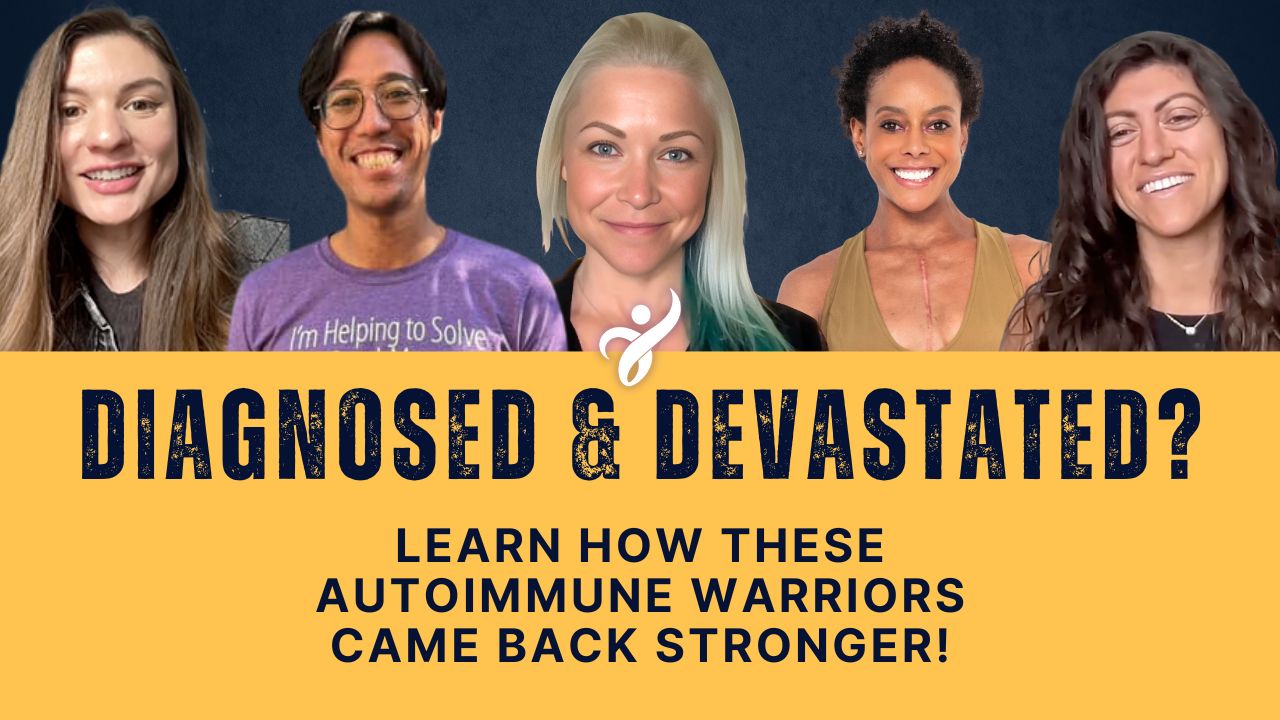
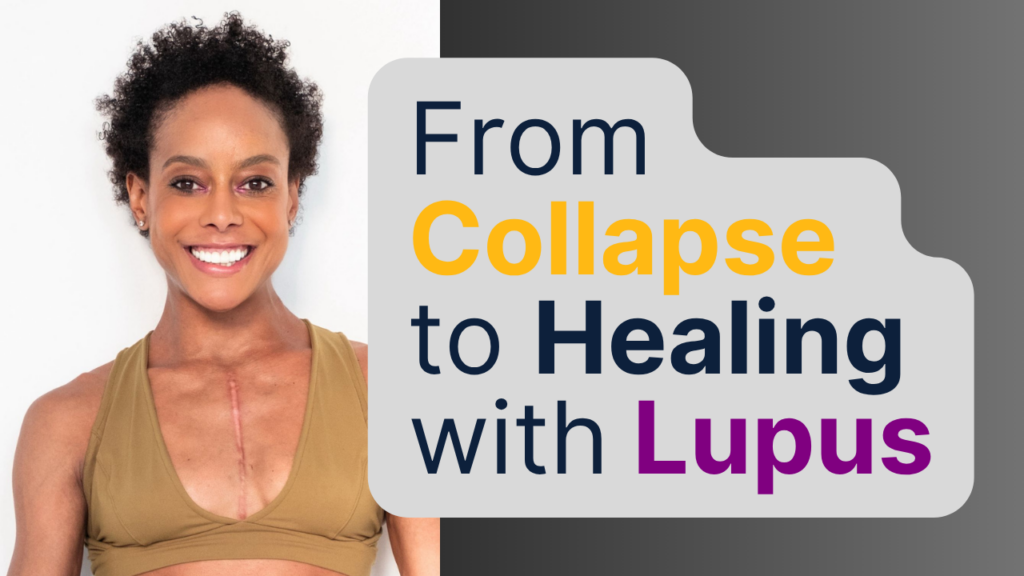
  • Victoria Gibbs, Lupus Warrior – collapsed on stage from lupus nephritis.

    “I had to bury the Wall Street girl who never slept. Until I grieved her, I couldn’t become the yoga teacher healing hundreds.”
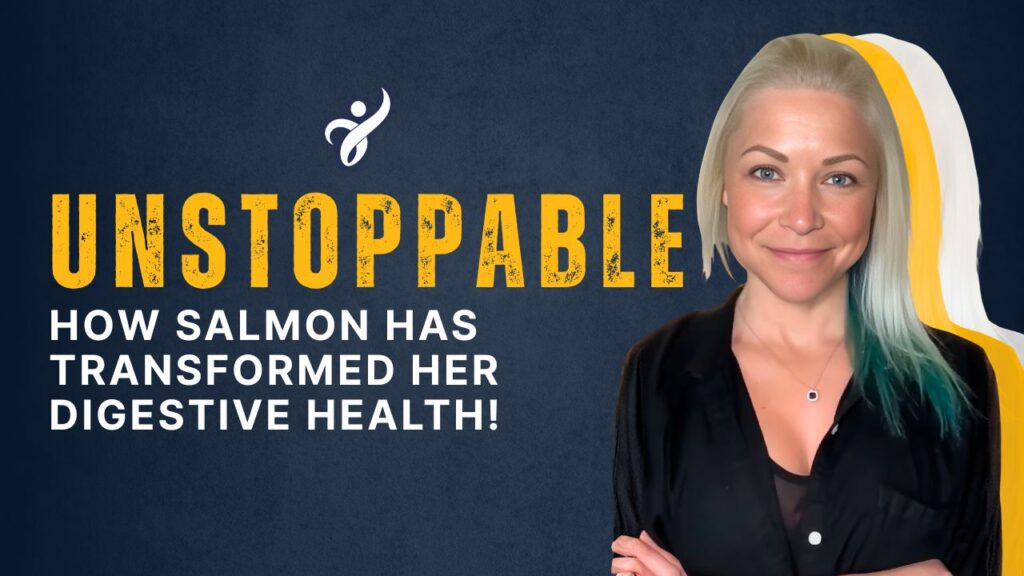
  • Gigi Ashworth, Ulcerative Colitis (UC) and food allergy Warrior – large intestine removed at 21. I was furious that vegetables almost killed me.

    I had to mourn ‘eating like everyone else’ before I could love my 12 lbs of salmon a week.” (Listen to Gigi’s podcast episode here!)
  • Elena – Graves’ + thyroid eye disease stole her face and energy.

    “I literally held a funeral for my old club promoter-self. Only then could I fall in love with slow mornings.”
  • Brian Ung, Lupus and scleroderma Warrior: His finger ulcers were so bad he couldn’t dress himself.

    “I had to grieve the pro-basketball dream before I could become Unstoppable.”
  • Amy Dixon – lost most of her eyesight at age 32, “Blindness had finality. Autoimmune disease keeps stealing. I grieve in waves — and I still swim.”
  • Ernest Reyna – 8th grade, body swollen overnight, RA + fibro “I had to bury my football and basketball dreams. I had to do this before I could step onto a college track and field team.”

If you’re stuck in anger, bargaining, or depression right now — you’re not behind. You’re exactly where you need to be to finally move forward.

And the moment you stop fighting the grief is the exact moment the pivot becomes possible.

These warriors didn’t wake up one day and magically “choose joy.”

They cried.

They raged.

They mourned the old version of themselves.

Then, when the tears dried, they took one tiny, terrifying step into a new chapter.

Here’s what that pivot actually looked like for them:

Invisible Strength – Pivot/Adapt

(Proof your story isn’t over — it’s just changing chapters.)

  • Gigi Ashworth’s large intestine was twisted and removed when she was 21 after ulcerative colitis nearly killed her. She mourned “normal” food forever.

    Then, she turned salmon into her superpower. She authored 2 cookbooks, appeared on MasterChef, and created a viral brand. Gigi proves you can thrive on the weirdest diet imaginable.
  • Victoria Gibbs blacked out on stage from lupus nephritis. Her hair was falling out, and she was swollen beyond recognition. She grieved the Wall Street hustler.

    Now she leads sold-out yoga retreats in Riviera Maya, Mexico. She teaches others how to listen to their bodies before blood work does.
  • Elena Graves’ + thyroid eye disease symptoms stole the face she saw in the mirror and the 4 a.m. party life she loved.

    She held a literal funeral for her old identity.

    Now, she lives by the beach, wakes up for sunrise yoga, and coaches thyroid warriors as an integrative pharmacist.
  • Amy Dixon woke up nearly blind at 32 from uveitis caused by rare juvenile rheumatic arthritis.

    She grieved the loss of her eyesight.

    Then she became a Paralympic triathlete and an 8× national champion. She also founded the No Sight No Limits camp, so no blind athlete ever feels alone.
  • Ernest Reyna was an 8th-grader whose body suddenly ballooned overnight from RA and Fibromyalgia. This condition buried his NBA dream.

    Now, he throws javelin and discus at the collegiate level, proving pain doesn’t get the final word.
  • Roxanne Lerner was diagnosed at 27. She was so sick she couldn’t walk across her apartment. She grieved the “healthy” life she thought was guaranteed.

    Now, she teaches neuroscience-backed movement classes to warriors all over the world from her home studio.

These pivots didn’t happen because they “stayed positive.” They happened because they finally let themselves feel the loss.

They discovered that on the other side of grief is a wide-open space to build something new.

Your pivot is waiting too. And you don’t have to find it alone.

The Good News?

Your story isn’t over. It’s just unfolding differently than you imagined.

“There’s never an end to doing things. There’s just a different way of doing those things.” -Amy Dixon, rare autoimmune disease warrior, Paralympic athlete

Every warrior above got stuck — until they found someone who’d been there and could guide them through.

That’s what we do here at Invigorate.

We help you:

  • Feel the grief without drowning
  • Build a life that works with your body (not against it)
  • Rediscover joy and purpose — right now, not “when you’re better.”

No toxic positivity. No “just push through.”

Just real, shame-free support from people who live this too.

Ready to stop circling and start moving forward?

Take the first step — it’s free and takes 2 minutes:

→ Take our free Grief & Autoimmune Quiz to see where you are on your journey and receive a FREE guide to help you process (2 minutes)

You’ve already survived the hardest parts. Now let us help you build the life that comes next.

You’re not alone anymore.

P.S. The assessment and discovery calls are genuinely free. No catch. We’ve both been exactly where you are — and we’re paying it forward.

Take the first step today. You deserve this. 💜

The next chapter of your story is waiting. It’s going to be even more beautiful than the one you’re grieving.


You’ve got invisible strength. Let us help you see it.

Wishing you joy and peace,

Karin & Chris

Listen to more Autoimmune Warrior and Allies stories on the Invisible Strength Podcast | Discover Invigorate Coaching to rebuild your life with autoimmune conditions.


P.S.S.Start your journey today. Connect with us and discover how small, science-backed adjustments can transform your energy.

They can also transform your mood and health this season.

⚠️ DISCLAIMER: This content is for general education and shared experiences only and is not medical advice. Always consult a qualified healthcare professional before making changes to your care or treatment plan.

Hey Warrior, Let’s Talk About Actually Feeling GOOD Again (Yes, Even With Autoimmune Disease)

Hey Warrior, Let’s Talk About Actually Feeling GOOD Again (Yes, Even With Autoimmune Disease)

Karin W

December 16, 2025

Hey Warrior, Let’s Talk About Actually Feeling GOOD Again (Yes, Even With Autoimmune Disease)

You know those days when you wake up and your body feels like it’s been in a bar fight… with itself? The ones where you cancel plans (again), cry in the shower, and Google “is this my life forever?”

I’ve been there. For 15+ years with lupus. And I’m going to say something that might sound impossible right now:

You can feel calm, clear, and even joyful again — without waiting for a miracle cure.

I’m Karin, and after helping hundreds of people with rheumatoid arthritis, Hashimoto’s, Sjögren’s, psoriasis, and every autoimmune flavor under the sun, I’ve seen it happen over and over.

The secret isn’t another elimination diet, expensive supplement, or “just think positive” nonsense.

It’s the P.A.R.R. Framework — the exact roadmap I wish someone had handed me when I was curled up on the bathroom floor, convinced my life was over.

P.A.R.R. = Peace → Awareness → Resilience → Renewal It’s not another to-do list. It’s a cycle you dance with, not a finish line you sprint to.

Ready? Grab your favorite mug (tea, bone broth, whatever doesn’t hate you today) and let’s do this.

1. Peace: Because Your Nervous System Is Screaming “MAYDAY” 24/7

Autoimmune life = chronic fight-or-flight. Your body literally thinks it’s being chased by a lion while you’re just trying to answer emails.

Stress isn’t “in your head.” It’s pumping out inflammatory cytokines that make flares worse. (Science says hi: Cleveland Clinic, NIH, all the big guns.)

Your new best friends (3–5 minutes max):

  • 4-7-8 Breathing → Inhale 4, hold 7, exhale 8 like you’re blowing through a straw. Do 4 rounds when anxiety is clawing at your throat. I’ve stopped full-blown panic attacks in the grocery store parking lot with this.
  • Hand-on-Heart Magic → One hand on heart, one on belly. Whisper: “I’m safe right now.” Sounds cheesy. Works stupidly well.
  • The 10-Minute Body Scan → Lie down, scan from toes to scalp, let tension melt like ice cream on a summer sidewalk. Insight Timer has free ones that feel like a hug.
Relaxed woman with eyes closed, practicing deep breathing to boost energy and focus—part of simple, science-backed strategies to beat the afternoon slump.

Do one of these today. Your inflamed cells will send you a thank-you note.

2. Awareness: From “Why Is My Body Betraying Me?” to “Ohhh, THAT’S the Pattern!”

Nothing fuels shame like mystery pain. Once you start tracking, the fog lifts and suddenly you’re the detective, not the victim.

Steal-my-coffee level simple:

  • The 30-Second Evening Check-In Open your phone notes and type: Energy today: 4/10 Worst symptom: brain fog + joint fire Suspect trigger: stayed up doom-scrolling + gluten pastry (whoops) Mood: angry-sad cocktail Patterns emerge in a week. It’s wild.
  • The Trigger Spiderweb Draw a circle: “My Flares.” Then legs coming out: “barometric pressure drops,” “people-pleasing,” “nightshades,” “perfectionism.” You’ll stare at it and go, “Well, damn.”
  • Grief Wave Surf Report Every night ask: “What flavor of grief crashed over me today?” (rage? bargaining? numbness?) Then: “What did it need?” (a cry, a nap, a scream into a pillow). Naming it shrinks it.

Knowledge = power. And way less self-gaslighting.

3. Resilience: Plans That Don’t Explode the Second You Have a Flare Day

Rigid routines are trash for autoimmune bodies. We need plans that say, “Cool, you’re at 30% today? Here’s the 30% version.”

Try these immediately:

  • The Energy Budget Game You get 100 points a day. Shower = 20. Work call = 35. Cooking = 30. Anything over 80 points? Tomorrow-you will hate today-you. Keep a 30-point buffer like your life depends on it (because your sanity does).
  • The Flare-Friendly Goal Ladder (my clients are OBSESSED) Goal: Move my body Level 1 (zombie day): wiggle toes in bed Level 3 (meh day): 5-minute walk to mailbox Level 5 (unicorn day): gentle yoga You still “win” every single day.
  • The Politest “No” Scripts Known to Humankind “I’m so grateful you thought of me — I need to honor my body’s limits right now and won’t be able to join. Rain check when I’m higher on the ladder?”

Boundaries aren’t mean. They’re oxygen.

4. Renewal: Remembering You’re Still Allowed to Feel Alive (Right Now)

This one makes people cry happy tears in sessions.

Because joy isn’t a reward for “finally getting better.” It’s medicine.

Start here:

  • Three Magic Things Every night: 3 things that sparked joy or gratitude. Mine yesterday: the smell of rain, my dog’s snoot boop, and the perfect ripe avocado. Tiny proof that life still loves you.
  • Who Was I? Who Am I Becoming? Journal prompt (do it once, sob, thank me later): “The old me loved _____. Parts of her are still here when I _____. This fire has forged new superpowers like _____.” (Clients discover they’re now empathy ninjas, boundary badasses, and deeply hilarious.)
  • Low-Energy Joy Menu List your top values (creativity, connection, beauty). Next to each, one flare-friendly way to feed it this week. Text a meme to a friend = connection. Color in a coloring book = creativity. Boom.

You’re not just surviving. You’re mid-metamorphosis. And the butterfly is going to be epic.

So… What Now?

Pick ONE thing from this post and do it today. Just one. (I vote 4-7-8 breathing — it’s stupidly powerful.)

Then, when you’re ready for someone to hold your hand through the messy, beautiful middle part — where mindset actually becomes momentum — come find me.

Book a free 30-minute Clarity Call and we’ll figure out exactly where you are in the P.A.R.R. cycle and what your very next step feels like joy instead of overwhelm.

Tap here to grab a spot (they go fast)!

You don’t have to do this alone anymore.

You’ve already survived 100% of your worst days. Now let’s make the next ones feel like living.

Dance on, you gorgeous warrior, Karin (The lupus girl who learned to dance in the rain)

P.S. Still here? Do the 4-7-8 breaths right now. I’ll wait. …See? Told you. Magic. ✨

P.S.S.Start your journey today. Connect with us and discover how small, science-backed adjustments can transform your energy.

They can also transform your mood and health this season.

⚠️ DISCLAIMER: This content is for general education and shared experiences only and is not medical advice. Always consult a qualified healthcare professional before making changes to your care or treatment plan.

Grief and Autoimmune Disease: How to Cope with Loss, Change, and Holiday Triggers

Grief and Autoimmune Disease: How to Cope with Loss, Change, and Holiday Triggers

Karin W

December 12, 2025

Grief is something we often associate with the loss of a loved one. But, for those living with autoimmune diseases, grief shows up in more ways than we usually name.

It can be quiet, confusing, and invisible. It can sit in the body as much as in the heart. And it often arrives in seasons—some expected, some not.

Chris and I explored what grief really feels like. We examined how it manifests in chronic illness.

We also discussed how we can move through it with compassion and community.

Here’s a deeper dive into those insights—especially for anyone navigating grief right now.


Grief Isn’t Just Sadness—And It Isn’t Just About Loss of People

Grief is woven into the human experience. As Chris shared, it’s a foundational emotion: a response to losing something meaningful—whether or not it’s a person.

When living with an autoimmune disease, grief can show up as:

  • The ache of losing your old self
  • The frustration of a changing body
  • The fear that life will never look the same
  • The isolation of feeling misunderstood
  • The loss of independence, mobility, or routines
  • The shift in roles, relationships, or career identity
  • The foods or traditions you can no longer partake in

Many people don’t even realize what they’re experiencing is grief. It can look like sadness, but it can also look like:

  • Anger
  • Anxiety
  • Irritability
  • Emotional shutdown
  • Trying to control everything
  • Exhaustion
  • Feeling “behind” or “not yourself.”

Grief doesn’t have one face—and it definitely doesn’t have one timeline.


Grief Happens in Waves, Not Stages

We often hear about “the stages of grief,” but real life is not that tidy.

Grief is more like the ocean:

  • Sometimes waves crash hard.
  • Sometimes they gently wash up and recede.
  • Sometimes the water is calm…
  • …until the next swell rises without warning.

As Chris said, grief creates a hole that doesn’t disappear. Instead, we grow life around it. That’s where hope lives—not in erasing grief, but in enlarging our lives so the grief doesn’t define everything.


Honoring Your Old Self While Embracing Who You’re Becoming

One of the hardest parts of chronic illness is wanting to go “back to normal.”

But there is no going back—and that’s not failure. It’s evolution.

Just as artists move through eras (hello, Beyoncé and Taylor Swift), we do too.

Illness can mark the beginning of a new era—one built not on loss, but on transformation:

  • You gain empathy for others.
  • You learn boundaries you never knew you needed.
  • You discover strength you didn’t know you had.
  • You appreciate moments you used to rush past.

You aren’t leaving your old self behind—you’re integrating that version of you into a wiser, deeper you.


Recognizing When Grief Is Becoming a “Home” Instead of a Visit

It’s normal to feel grief regularly, especially during health setbacks. But it becomes a danger when grief turns into a place you live instead of a place you visit.

How can you tell?

By knowing your baseline.

A helpful practice is checking in daily:

  • Where am I emotionally today?
  • Does this feel like me?
  • Am I forcing cheerfulness?
  • Am I sharper, angrier, or more withdrawn than usual?
  • Do I feel trapped in this feeling?
  • What would help me return to myself?

Self-awareness is a form of self-protection—it helps you know when to seek community, therapy, support, or new coping tools.


The Power of Community in Navigating Grief

Humans are wired for connection. Isolation makes grief heavier.

But chronic illness can make the community tough. Sometimes your closest people don’t get it. Sometimes caregivers struggle too—they’re grieving their own loss of “how life used to be.”

They’re carrying pressure, fear, and responsibility they never voice.

This is why building community before a crisis matters. Check in on people when things are good. Keep nurturing the small connections. Build your circle in seasons of strength, so it’s there in moments of weakness.

Because grief was never meant to be carried alone.


How Grief Shows Up During the Holidays (In Ways We Don’t Always Recognize)

The holidays have a way of magnifying everything—joy, yes…but also grief.

For those living with chronic illness, grief during the holidays can look like:

✨ Missing people who have passed away

Even if it’s been years, memories surface more vividly in December. Traditions bring their absence into sharp focus.

You can feel:

  • Loneliness in moments when they should be there
  • Guilt for celebrating without them
  • Sadness that hits in waves at unexpected times

✨ Grieving your “old healthy self.”

The holidays highlight the contrast between who you were and who you are now:

  • You don’t have the energy to host like you used to.
  • You need to leave early or cancel altogether.
  • You watch others do things your body can’t.
  • You miss feeling carefree during this season.

And that grief is real.

✨ Missing foods, traditions, or routines you can no longer enjoy

This one is so specific to the autoimmune community—and not talked about enough.

You can grieve:

  • The comfort foods you used to love
  • Holiday cooking or baking, you can’t join in
  • Family gatherings revolving around meals you can’t eat
  • The ease of eating “whatever” without consequences

Food is emotional. It’s memory. It’s culture. Losing certain foods is a form of grief.

✨ Feeling the pressure to “put on a happy face.”

While everyone around you is cheerfully posting highlight reels, you’re feeling:

  • Exhausted
  • In a flare
  • Overstimulated
  • Sad
  • Or just…not okay

You’re allowed to protect your peace.
You’re allowed to grieve.
You’re allowed to feel differently from the room you’re in.

And you’re allowed to create new traditions that honor your current needs.


If You’re Supporting Someone Who Is Grieving

You don’t need the perfect words.

You don’t need to fix anything.

What people need most is:

  • To be heard
  • To be seen
  • To be given space without pressure
  • To be reminded of their dignity
  • To be supported rather than rushed

Listening is healing. Presence is healing. Patience is healing.


If You’re Grieving Right Now

Whether this season feels heavy, confusing, lonely, or simply different—you’re not alone.

Grief doesn’t mean you’re broken.
It means you’ve loved deeply, lived fully, and lost meaningfully.

And you deserve support through every wave.

Chris and I are here for you.
Your community is here for you.
Our Invigorate family is here for you.

DM us, comment, reach out—we want to walk with you through it.

Until next time, take care of yourself.
And as Chris always reminds us:

Choose kindness. You never know what someone is carrying.

Integrating These Mindset Shifts with Invigorate Coaching

Science is clear: mindset influences healing, resilience, immunity, energy, and behavior change.

But mindset doesn’t shift through reading alone.
It shifts through:

  • Guided reflection
  • Personalized self-talk strategies
  • Accountability with compassion
  • Habit architecture
  • Identity alignment

That’s exactly what Invigorate Coaching specializes in.

Through our work, you will:

  • Uncover your Why
  • Build a healing mindset
  • Reduce stress-driven inflammation
  • Rewrite inner narratives
  • Adopt sustainable habits
  • Establish routines that support recovery and growth

If you’re ready to turn mindset into momentum:

Book your free clarity call with us:

Let’s map your next level of healing — together.

FAQ

Does mindset affect physical health?
Yes — self-talk influences cortisol, inflammation, and autonomic nervous system activity.

Can self-talk actually help healing?
Supportive inner speech can reduce stress hormones, enhance resilience, and improve recovery.

How can I develop a healing mindset?
Start with your Why, practice compassionate self-talk, and adopt a sliding-scale habit approach.

What coaching is best for mindset change?
Mind-body-based coaching, like Invigorate, helps integrate psychological and lifestyle shifts for long-term change.

Dance on, friends,
Karin

P.S. If you live with an autoimmune condition or love someone who does, know this: You’re not alone. Get in touch with us – we’d love to connect!

P.S.S.Start your journey today. Connect with us and discover how small, science-backed adjustments can transform your energy.

They can also transform your mood and health this season.

⚠️ DISCLAIMER: This content is for general education and shared experiences only and is not medical advice. Always consult a qualified healthcare professional before making changes to your care or treatment plan.