🧠 Turn Down Brain Fog: A Focus Game-Changer for Autoimmune Warriors

🧠 Turn Down Brain Fog: A Focus Game-Changer for Autoimmune Warriors

Karin W

August 14, 2025

Brain fog—difficulty concentrating, remembering, or staying alert—is one of the most common and frustrating symptoms for people with autoimmune diseases. But there are practical, science-backed ways to fight it.

🔊 Binaural Beats: 40 Hz for Focus

Binaural beats are an auditory illusion created when two slightly different frequencies are played in each ear, producing a perceived third tone.

Research shows that 40 Hz gamma-frequency beats can improve focus and cognitive clarity.

Tips to use binaural beats effectively:

  • Use quality headphones.
  • Listen for 20–30 minutes before deep work.
  • Experiment with consistency—daily use primes your brain for better attention.
  • White noise can also help if silence is distracting, but silence is often best for focus.

🖥️ Optimize Your Workspace

According to Andrew Huberman:

  • Position your computer screen at eye level or slightly above—this prevents drowsiness and promotes alertness.
  • Ensure good lighting and maintain upright posture to support mental energy.

⏰ Time Your Deep Work

Your brain has natural windows for optimal cognitive performance:

  • 1–4 hours after waking is ideal for challenging mental tasks.
  • Schedule lighter tasks during afternoon energy dips.

🏃‍♀️ Move to Improve Focus

Moderate-intensity exercise before deep work boosts blood flow to the brain and improves attention and productivity:

  • 20–30 minutes of walking, yoga, or light cardio before mentally demanding tasks.
  • Aim for consistency to maintain cognitive health.

💧 Hydrate Your Brain

Dehydration worsens brain fog. Both water and electrolytes are crucial:

  • Start your day with water.
  • Sip consistently throughout the day.
  • Include electrolyte beverages if active.

🧘‍♀️ Sound vs. Silence

Your auditory environment impacts focus:

  • Silence often works best for concentration.
  • Binaural beats or white noise can improve focus if silence is difficult.

🌟 Putting It All Together

  • Listen to 40 Hz binaural beats or use white noise before deep work.
  • Elevate your screen to eye level.
  • Do mentally demanding work 1–4 hours after waking.
  • Include moderate exercise before tasks.
  • Stay hydrated.
  • Experiment with your sound environment to find what works for you.

Consistency is key. These habits can help reduce brain fog, improve focus, and boost your productivity—despite the challenges of autoimmune disease.

Dance on, friends,
Karin

P.S. If you live with an autoimmune condition or love someone who does, know this: You’re not alone.

P.S.S. Subscribe to our blog and podcast for more inspiring stories and practical strategies from real warriors like Courtney.

Disclaimer: These tools do not replace the advice of a health care professional; if you have concerns about your health, please consult a health care professional.

This page may contain affiliate links that won’t change your price but will share some commission. As an Amazon Associate, we earn from qualifying purchases.

Maya Rogers: Turning Lupus Battles into Beauty, Purpose, and Power

Maya Rogers: Turning Lupus Battles into Beauty, Purpose, and Power

Karin W

August 11, 2025

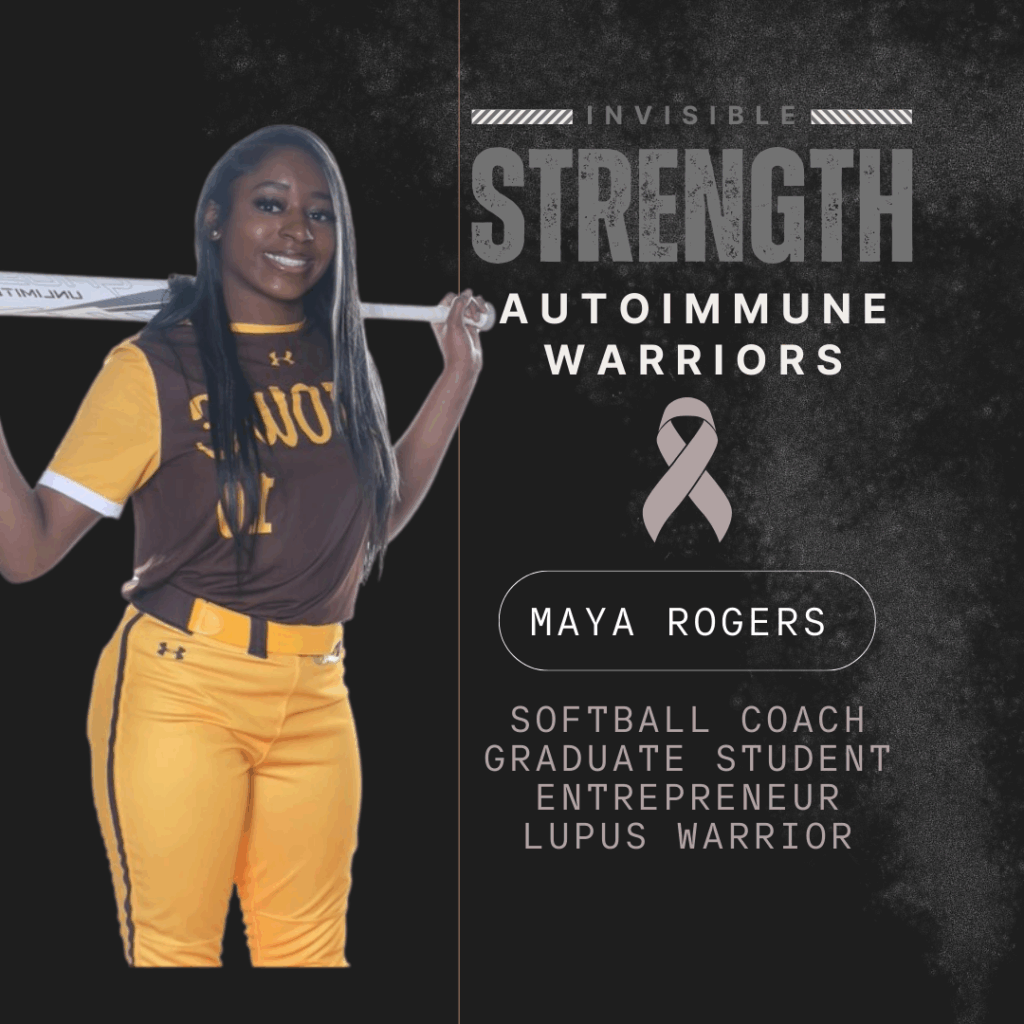
When you first meet Maya Rogers, you notice her energy — the kind that says “I’ve been through it, but I’m still here shining.”

She’s a former standout softball player at Harris-Stowe State University, now coaching high school athletes.

She’s earning her master’s at Morehouse School of Medicine.

She’s the founder of Mocha Beauty, a brand specializing in organic wigs, facials, and hair products designed with chronic illness warriors in mind.

And through it all, she’s navigating life with lupus — an unpredictable, invisible autoimmune disease that took six years to diagnose.

From “Allergic to the City” to an Actual Diagnosis

At 16, Maya started noticing strange symptoms: painful rashes on her elbows during volleyball, unexplained swelling, and flare-ups that got worse in the sun.

In college, her skin would break out, her hair would fall out, and fatigue hit hard.

“I honestly thought I was allergic to the city I was in,” she laughs now. “But it was lupus all along.”

-Maya Rogers, Lupus Warrior

It wasn’t until after graduation that a rheumatologist finally confirmed the diagnosis: systemic lupus — a disease that attacks healthy tissues and organs.

Finding Purpose in the Middle of Pain

Like many of us in Gen Z and Millennial circles who juggle side hustles, school, and dreams, Maya didn’t wait for perfect circumstances to take action.

During COVID shutdowns, she turned her passion for hair and skincare into Mocha Beauty.

Every product is organic, inspired by her own battles with hair loss and skin issues caused by lupus and psoriasis.

“It was slow, jobs were closed, and I had to make money somehow,” she says. “I started braiding hair, taking lash courses, and creating products that actually work for people like me.”

Redefining Success — One Small Win at a Time

For Maya, success isn’t about massive milestones anymore.

“Now, success is the little things,” she says. “Like when my softball players finally get a drill right, or when I knock out my school lectures before the deadline. I give myself grace. I get things done when I can — and that’s enough.”

The Everyday Habits That Keep Her Thriving

Maya’s daily health playbook is simple but powerful:

  • Fruits first – “Fruit takes my flares from 100 to 15%. It’s my go-to.”
  • Hydration always – Water before bed, water upon waking.
  • Organic living – From apple cider vinegar shots to ginger root and Epsom salt baths.
  • Trigger awareness – No red meat or pork, minimal dairy.

And maybe the most important? Protecting her energy. “I used to be hot-tempered. Now I live calmer. Junk food and stress make me feel worse, so I let both go.”

Her Advice for Young Chronic Illness Warriors

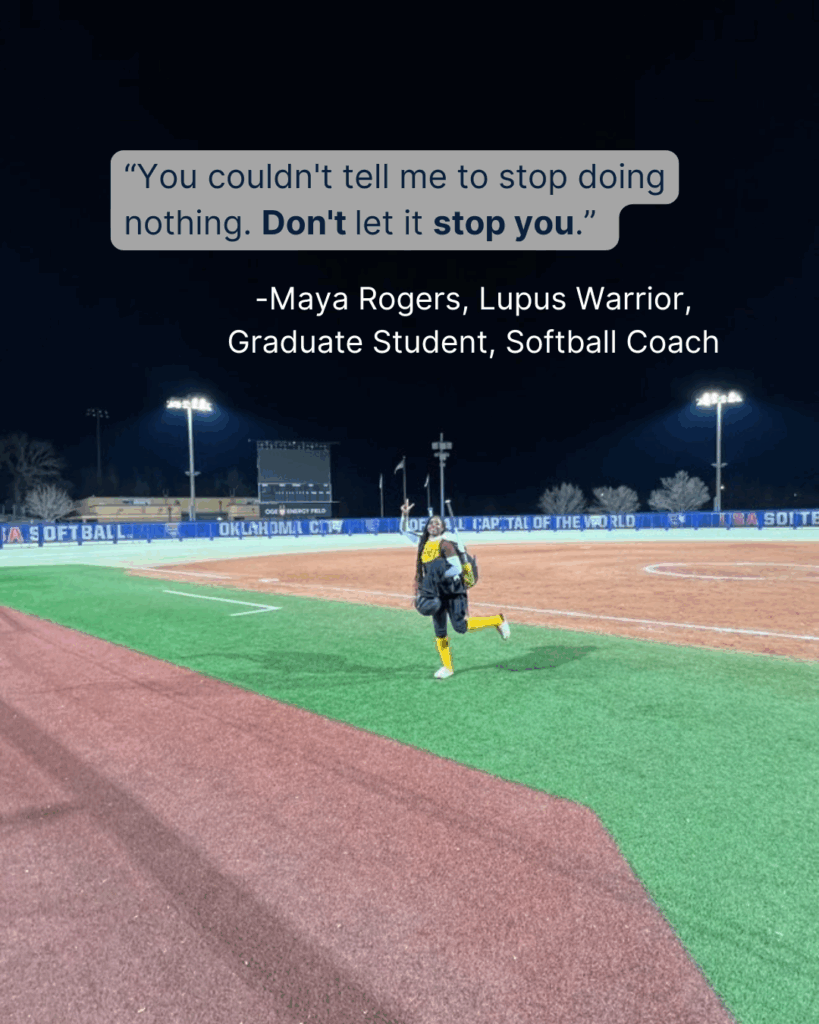
“Live like it’s not there,” Maya says. “We know we have a condition that may never go away, but don’t let it take away your life. Do as much as you were doing before you knew you had it.”

Her biggest wish? That people would extend more grace to those with invisible illnesses.

“You might see me looking fine today, but tomorrow I could be in bed, and I can’t even tell you why. This is a physical, mental, and spiritual battle.”

Big Dreams on the Horizon

Maya plans to apply to medical school, with her sights set on dermatology or cardiology, and a vision to build a three-story Mocha Beauty Dream Lounge — a place where she can see patients upstairs, run a salon downstairs, and offer a cozy community space in between.

She’ll keep coaching, keep building, and keep proving that unseen doesn’t mean unstoppable.

If you’re navigating chronic illness, Maya’s story is a reminder:

✅Your condition doesn’t define you.
✅Your dreams are still valid.
✅And your invisible strength might just inspire the world.

🔔 Listen to Maya’s Full Story

🎧 Invisible Strength Podcast — 🎙️Living with Lupus & Chasing Dreams: Maya Rogers’ Inspiring Story (Athlete to Entrepreneur)

📌 Chapters Include:

  • 0:00 Introduction to Maya Rogers and Her Journey
  • 2:31 Living with Lupus: Diagnosis and Challenges
  • 4:57 Redefining Success: Small Wins Matter
  • 7:19 Faith and Support: Overcoming Tough Times
  • 9:59 Healthy Habits: Diet and Lifestyle Changes
  • 12:11 Advice for Young Athletes: Living Beyond Illness
  • 14:13 Mocha Beauty: Turning Pain into Purpose
  • 15:28 Future Aspirations: Medical School and Community Impact
  • 18:03 Closing Thoughts and Community Support

🎧 Listen now on Apple Podcasts: Invisible Strength Podcast

📺 Watch on YouTube: 🎙️Living with Lupus & Chasing Dreams: Maya Rogers’ Inspiring Story (Athlete to Entrepreneur)

👉 Or search “Invisible Strength Podcast” on your favorite platform!

Dance on, friends,
Karin

P.S. If you live with an autoimmune condition or love someone who does, know this: You’re not alone.

Subscribe to our blog and podcast for more inspiring stories and practical strategies from real warriors like Courtney.

Disclaimer: These tools do not replace the advice of a health care professional; if you have concerns about your health, please consult a health care professional.

This page may contain affiliate links that won’t change your price but will share some commission. As an Amazon Associate, we earn from qualifying purchases.

Ernest Reyna’s Fight: Resilience, Autoimmune Struggles & Thriving in Sports

Ernest Reyna’s Fight: Resilience, Autoimmune Struggles & Thriving in Sports

Karin W

August 4, 2025

📍 Featuring: Ernest Reyna, Collegiate Athlete | Rheumatoid Arthritis & Fibromyalgia Advocate

But for collegiate javelin and discus thrower Ernest Reyna, those diagnoses didn’t end his athletic journey. They redefined it.

Promotional image featuring Ernest Reyna, a track and field athlete from East Texas Baptist University, holding a discus and advocating for autoimmune warrior awareness, including rheumatoid arthritis and fibromyalgia.

In a powerful episode of the Invisible Strength Podcast, Ernest shares what it’s like to live—and thrive—with invisible illness, proving that resilience is more than just a buzzword.

It’s a daily choice.

🏋️‍♂️ From Athlete to Advocate: A Story That Hits Hard

Ernest grew up with hoop dreams.

Before kindergarten, he was already hitting the courts, and later, the football field. Sports were central to his identity.

But in eighth grade, things shifted.

Mysterious weight gain, fatigue, and swelling near his thyroid began a long, confusing diagnostic journey.

A collegiate athlete practicing javelin throw on a grassy field, wearing a white long-sleeve shirt and a blue cap, with another person practicing in the background.

Eventually, he received a dual diagnosis: rheumatoid arthritis (RA) and fibromyalgia.

For most, that would have meant the end of competitive athletics. Not for Ernest.

“I thought I wouldn’t even be able to go out and play basketball with my friends—or with my kids in the future.” — Ernest Reyna

⚡ Reimagining Performance & Pushing Limits

Living with autoimmune diseases meant redefining what “working hard” looked like.

The traditional mindset of pushing to failure was no longer sustainable.

Instead, Ernest learned to train smarter, not harder—prioritizing hydration, electrolytes, inflammation-lowering nutrition, and strategic rest.

“You have to work out halfway so that you can keep working out regularly.” — Chris Burton, co-host

His routine now includes:

  • Recognizing mental fatigue as a signal—not a weakness
  • Evening and morning stretching (30–60 minutes more than teammates)
  • Listening to his body over following a rigid regimen
  • Prioritizing foods that fight inflammation
  • Electrolyte-focused hydration (yes to Gatorade, no to just plain water)

💬 The Mental Battle: More Than Physical Pain

Perhaps the toughest hurdle? The mental toll.

A collegiate track and field athlete wearing a beanie and sunglasses, standing on a field in a white athletic shirt with 'East Texas Baptist University Track and Field' printed on it.

“A rough day starts from the moment I wake up. It feels like I got beat with a bat in my sleep.” — Ernest Reyna

Whether it’s waking up in pain, hiding symptoms from teammates, or coping with dismissive comments (“So you’re an old lady now?”), Ernest has learned the importance of compassion—especially self-compassion.

And while he’s still learning how to balance pushing through with knowing when to rest, one thing is clear: Ernest shows up. Even when others can’t see what he’s fighting.

🧠 Community, Coaching & the Power of Being Seen

Ernest credits much of his comeback to community—supportive coaches, observant teammates, and role models like his mom and grandmother, who also battle autoimmune conditions.

“Even if I trip on a pothole, there’s five or six hands ready to catch me.”

Through it all, Ernest continues to compete at the collegiate level, and he doesn’t just show up—he visualizes himself at the Olympics.

That mindset?

It’s the definition of resilience.

🎯 Why His Story Matters

Ernest’s story isn’t just for athletes.

It’s for anyone living with chronic illness, anyone who’s ever felt unseen, and anyone who’s had to start over—on new terms.

He’s a living reminder that:

  • Resilience is not pretending you’re fine. It’s facing your reality and adjusting.
  • Community support changes everything.
  • You don’t need to look sick to deserve compassion.
  • Invisible illnesses deserve visible respect.

💥 Final Words from Ernest

“When you’re out there—on the field, at work, walking down the street—there are people really struggling just to show up. You might not see it, but it’s real. A little more respect goes a long way.”

Let’s carry that forward.

🎧 Listen now on Apple Podcasts: Invisible Strength Podcast

📺 Watch on YouTube: 🥇 From Pain to Podium: Ernest Reyna’s Battle with RA & Fibromyalgia 💥 | His Athletic Comeback 🚀

👉 Or search “Invisible Strength Podcast” on your favorite platform!

Dance on, friends,
Karin

P.S. If you live with an autoimmune condition or love someone who does, know this: You’re not alone. Send us a message to learn how we can support you on your journey.

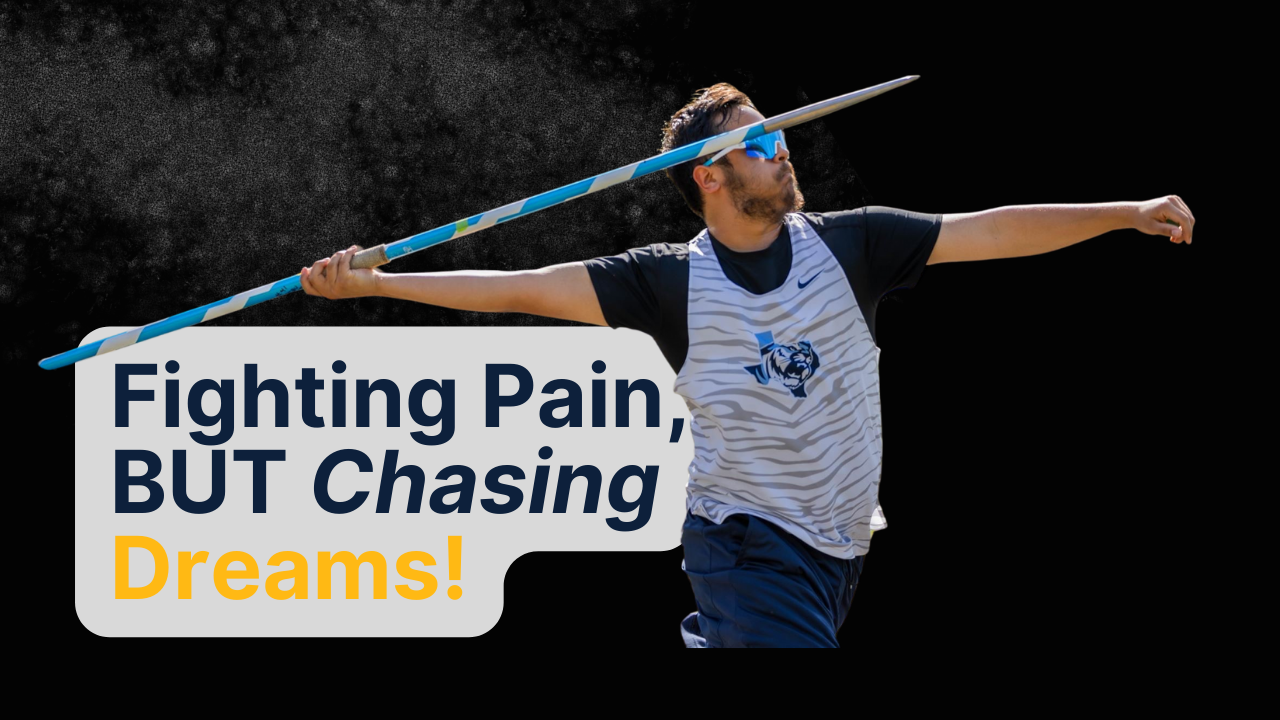
A collegiate athlete, poised to throw a javelin, with text overlay reading 'Fighting Pain, BUT Chasing Dreams!'

Disclaimer: These tools do not replace the advice of a health care professional; if you have concerns about your health, please consult a health care professional.